Rhynchosia caribaea
(Jacq.) DC.
iNaturalist· cc-by-nc
(c) qgrobler, some rights reserved (CC BY-NC), uploaded by qgrobler
iNaturalist· cc-by
(c) Wynand Uys, some rights reserved (CC BY), uploaded by Wynand Uys
iNaturalist· cc0
no rights reserved, uploaded by Di Turner
Description
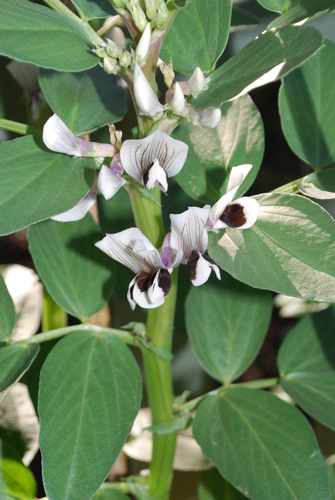
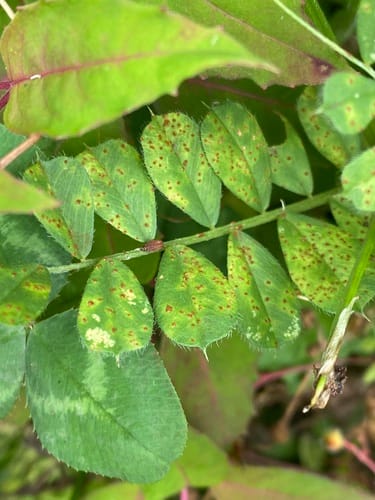
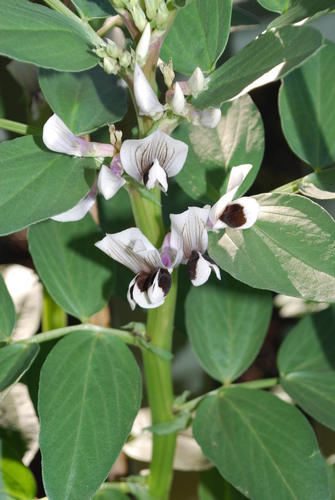
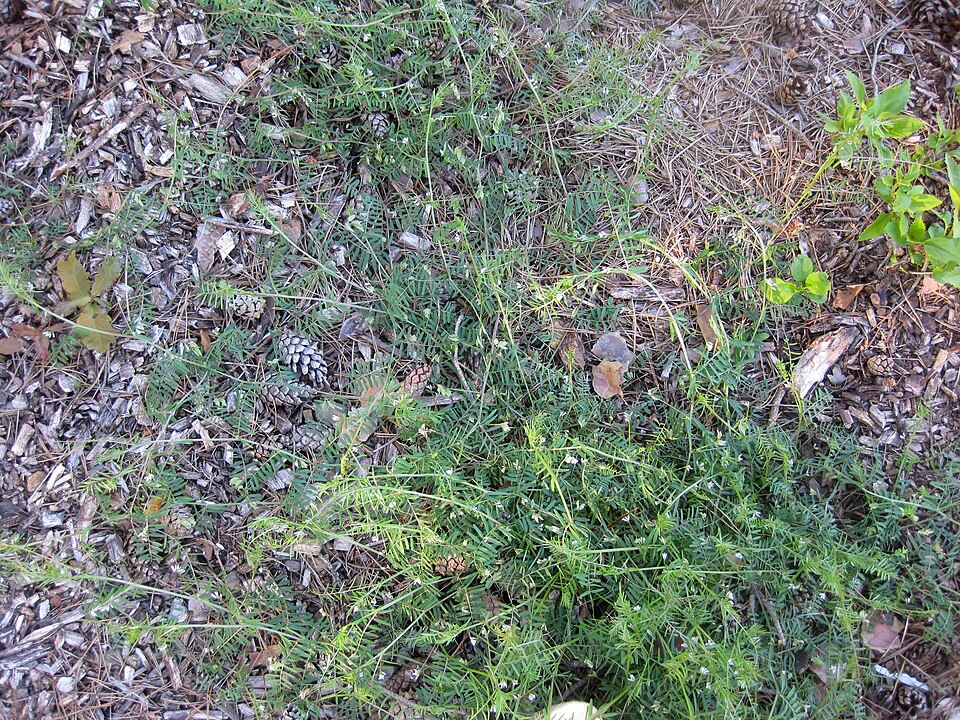
A herb. It keeps growing from year to year. It climbs up shrubs. It grows 1 m high. It has a taproot. The leaves are alternate and have 3 leaflets. The leaflets are 1-7 cm long by 1-7 cm wide. They are oval. The fruit are pods about 3 cm long. They have green veins. There are 2 seeds in each pod. The seeds are 4 mm across.
Edible Uses
The roots are dried, pounded, and cooked into a porridge, often mixed with maize porridge, or prepared as a drink.
Traditional Uses
The roots are used to prepare a porridge or a drink. The roots are dried, pounded and cooked into a porridge. It can be mixed with maize porridge.
This uses section is brief — help expand it
Distribution
It is a subtropical plant. It grows in hot arid places with a marked dry season. It grows between 5-2,000 m above sea level. It can grow in arid places.
Where It Grows
Africa, Botswana, East Africa, Eswatini, Lesotho, Mozambique, Namibia, South Africa, Southern Africa, Swaziland, Zambia, Zimbabwe,
Notes
There are about 200 Rhynchosia species.
Synonyms
Also Known As
Kamba, Momo, Mughomo, Munkoyo
References (8)
- Flora Zambesiaca. http://apps.kew.org/efloras
- Fowler, D. G., 2007, Zambian Plants: Their Vernacular Names and Uses. Kew. p 40
- Leger, S., 1997, A Description of Today's Use of Plants in West Bushmanland (Namibia). German Development Service. PO Box 220035, 14061 Berlin, Germany. http://www.sigridleger.de/book/
- Royal Botanic Gardens, Kew (1999). Survey of Economic Plants for Arid and Semi-Arid Lands (SEPASAL) database. Published on the Internet; http://www.rbgkew.org.uk/ceb/sepasal/internet [Accessed 29th April 2011]
- Ruiters-Welcome, A. K., 2019, Food plants of southern Africa. Ph.D. thesis. Univ. of Johannesburg p 60
Show all 8 references Hide references
- van Wyk, Ben-Erik, 2019, The diversity and multiple uses of southern African legumes. Australian Systematic Botany, 2019, 32, 519–546
- Welcome, A. K. & Van Wyk, B.-E., 2019, An inventory and analysis of the food plants of southern Africa. South African Journal of Botany 122 (2019) 136–179
- World Checklist of Useful Plant Species 2020. Royal Botanic Gardens, Kew