Delonix elata
(L.) Gamble
White gold mohur
iNaturalist· cc-by
(c) Siddarth Machado, some rights reserved (CC BY), uploaded by Siddarth Machado
iNaturalist· cc0
no rights reserved, uploaded by Martin Tlustos
iNaturalist· cc-by
(c) Siddarth Machado, some rights reserved (CC BY), uploaded by Siddarth Machado
Summary
Source: WikipediaDelonix elata is a species of flowering plant in the family Fabaceae. Common names in English include white gul mohur, creamy peacock flower and yellow gul mohur.
Description
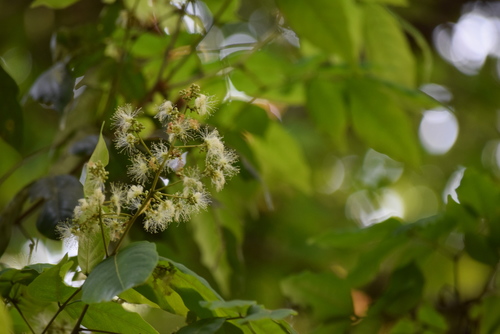
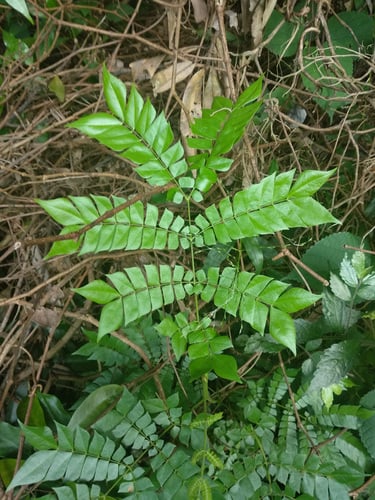
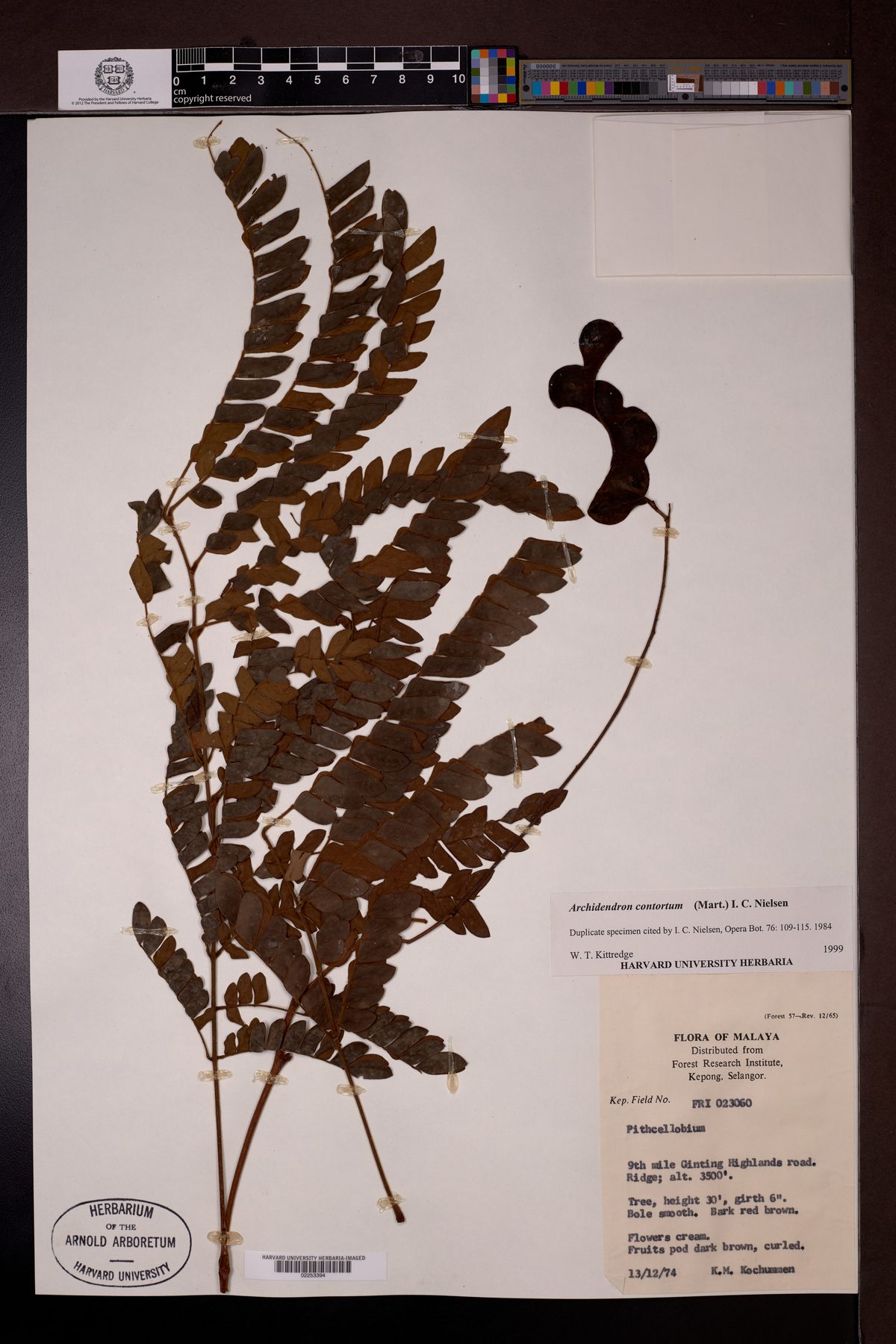
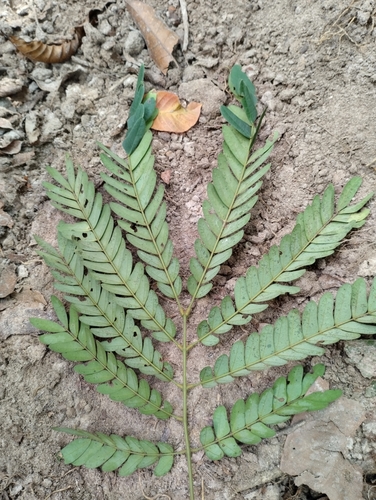
A deciduous tree. It grows 4-15 m high. It has a spreading arching habit. The bark is shiny and smooth and can be flaky. The young leaves are soft grey-green. The leaves are twice divided and feather like. There are 2-12 pairs of leaflets. They are oval and less than 1 cm long. The flowers are 20 cm across. They are white to pale orange. They have 4 wavy white petals and one smaller white petal. The stamens are long and orange-brown. Only one flower in a group opens at a time. The fruit are thin, red-brown pods. They taper at both ends. The pods are 20 cm long and remain on the tree.
Edible Uses
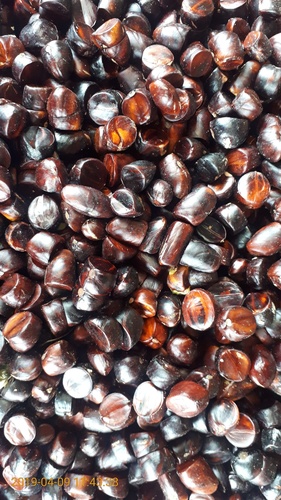
The young leaves are eaten as a spicy relish. The seeds are boiled and eaten, particularly during famine. The fruit are eaten, especially by children.
Traditional Uses
The young leaves are occasionally eaten as relish. They have a spicy taste. The seeds are boiled and eaten during famine.
This uses section is brief — help expand it
Medicinal Uses
A decoction of the boiled roots is used as an antidote for a variety of ingested poisons. The roots are ground on a stone with a little water and the paste is put on an abscess to hasten ripening. The bark is soaked in warm water and the resulting liquid is drunk for several days to treat bilharzia. An infusion from the bark is also used to treat diarrhoea. The leaves are antiinflammatory. They and the twigs are chewed and swallowed as a treatment for mouth ulcers.
Distribution
They are tropical. It grows in the dry thorn bush savannah. It grows between 100-1,000 m altitude in East Africa. It grows in hot arid places. It can grow in arid places.
Where It Grows
Africa, Andaman Is., Asia, Australia, Cambodia, Central Africa, Congo, Djibouti, East Africa*, Egypt, Eritrea, Ethiopia, India, Indochina, Kenya, Maldives, Middle East, Myanmar, Namibia, North Africa, Northeastern India, Oman, Pakistan, Saudi Arabia, SE Asia, Somalia, Southern Africa, Sri Lanka, Sudan, Tanzania, Uganda, Yemen,
Cultivation
Plants can be grown from seed or cuttings. It is often used as a live fence or hedge.
Propagation
Seed - it has a hard seedcoat and may benefit from scarification before sowing in order to speed up and improve germination. This can usually be done by pouring a small amount of nearly boiling water on the seeds (being careful not to cook them!) and then soaking them for 12 - 24 hours in warm water. By this time they should have imbibed moisture and swollen - if they have not, then carefully make a nick in the seedcoat (being careful not to damage the embryo) and soak for a further 12 hours before sowing. Cuttings Air layering.
Other Uses
A dark-coloured, mucilaginous gum is obtained from the tree. The yellow wood is even-grained and easily worked. It is used traditionally for tool handles, grain mortars, beer containers, milk pots, beehives, clogs, wooden spoons and cups and is also suitable for cabinet work, carvings and utensils. The wood is used for fuel. A very promising fuel wood, it has high density, calorific value and carbon percentage, and low silica and nitrogen. The tree is used for shade and is widely grown as a live fence in Tanzania. The plant has potential use in soil conservation projects. It has been successfully used in protecting channel and river banks. Fast-growing and fixing atmospheric nitrogen, it is a good tree for reforestation of difficult sites and, with its low crown, is effective as a shelter belt. The leaves are used as a green manure. Rich in Magnesium, they yield 50 - 200 kg of mulch per year. In Madras, India the leaves are used as mulch in rice fields..
Production
The leaves are collected at the beginning of the rainy season.
Other Information
The fruit are eaten especially by children.
Notes
There are 11 Delonix species. They are mostly in Madagascar. Also as Caesalpinaceae.
Nutrition
| Part | Moisture | kJ | kcal | Protein | Vit A | Vit C | Iron | Zinc |
|---|---|---|---|---|---|---|---|---|
| Leaves | 73 | — | — | 7.1 | — | — | 6.2 | 0.8 |
Synonyms
Also Known As
Aaredesu, Amaito, Arange, Ekurinchanait, Ghui, Ichoro, Kempukenjiga, Lebi, Mashilah, Mfausiku, Misisiviri, Mlele, Monterere, Msele, Mterera, Muangi, Mwangi, Ol-derkesi, Ririron, Sankasura, Sankesula, Sukela, Sukella, Sukeellaa, Vaadha narayana maram, Vadanarayana, Vatanarayana
References (21)
- Ambasta, S.P. (Ed.), 2000, The Useful Plants of India. CSIR India. p 165
- Barwick, M., 2004, Tropical and Subtropical Trees. A Worldwide Encyclopedic Guide. Thames and Hudson p 140
- Bodkin, F., 1991, Encyclopedia Botanica. Cornstalk publishing, p 330
- Dharani, N., 2002, Field Guide to common Trees & Shrubs of East Africa. Struik. p 83
- Fl. Madras 396. 1919
Show all 21 references Hide references
- Flora of Pakistan. www.eFlora.org
- Gemedo-Dalle, T., et al, 2005, Plant Biodiversity and Ethnobotany of Borana Pastoralists in Southern Oromia, Ethiopia. Economic Botany 59(1) pp. 43-65
- Grubben, G. J. H. and Denton, O. A. (eds), 2004, Plant Resources of Tropical Africa 2. Vegetables. PROTA, Wageningen, Netherlands. p 561
- Gupta, S., et al, 2005, Analysis of nutrient and antinutrient content of underutilized green leafy vegetables. LWT 38:339-345
- Kannan, M., et al, 2015, Ethnobotanical survey on wild edible plants of Kalrayan Hills, Salem District, Tamil Nadu, India. Global J. Res. Med Plants & Indigen. med. 4(12): 236-246
- Kew Plants of the World Online
- Martin, F.W. & Ruberte, R.M., 1979, Edible Leaves of the Tropics. Antillian College Press, Mayaguez, Puerto Rico. p 199
- Miller, A. G., Morris, M. & Stuart-Smith, S., 1988, Plants of Dhofar. The Southern Region of Oman, Traditional, Economic and Medicinal Uses. Sultanate of Oman. p 164
- Mutie, F. M., et al, 2023, Important Medicinal and Food Taxa (Orders and Families) in Kenya, Based on Three Quantitative Approaches. Plants 2023, 12, 1145
- Newman, 1970,
- Peters, C. R., O'Brien, E. M., and Drummond, R.B., 1992, Edible Wild plants of Sub-saharan Africa. Kew. p 122
- Royal Botanic Gardens, Kew (1999). Survey of Economic Plants for Arid and Semi-Arid Lands (SEPASAL) database. Published on the Internet; http://www.rbgkew.org.uk/ceb/sepasal/internet [Accessed 21st April 2011]
- Ruffo, C. K., Birnie, A. & Tengnas, B., 2002, Edible Wild Plants of Tanzania. RELMA p 262
- Tamil herbs, 2007, Edible Plants of the Tropical Dry Evergreen Forest.
- Termote, C., et al, 2014, Assessing the potential of wild foods to reduce the cost of a nutritionally adequate diet: An example from eastern Baringo District, Kenya. Food and Nutrition Bulletin, vol. 35, no. 4
- World Checklist of Useful Plant Species 2020. Royal Botanic Gardens, Kew