Dendrolobium umbellatum
(L.) Benth.
Horse bush tree, Sea vetch tree
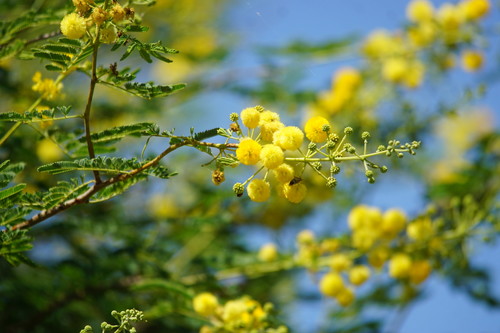
iNaturalist· cc-by-nc
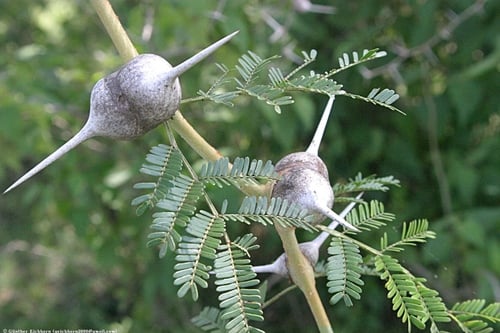
(c) 李成華, some rights reserved (CC BY-NC), uploaded by 李成華
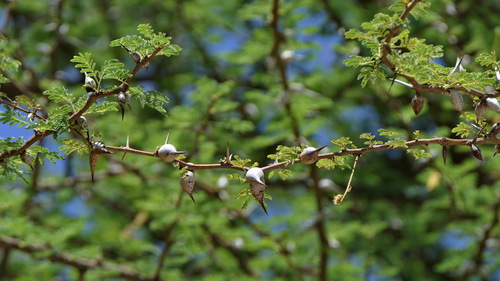
iNaturalist· cc-by-nc
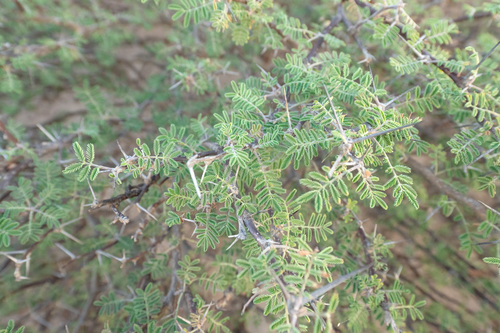
(c) Han-Ting Liu, some rights reserved (CC BY-NC), uploaded by Han-Ting Liu
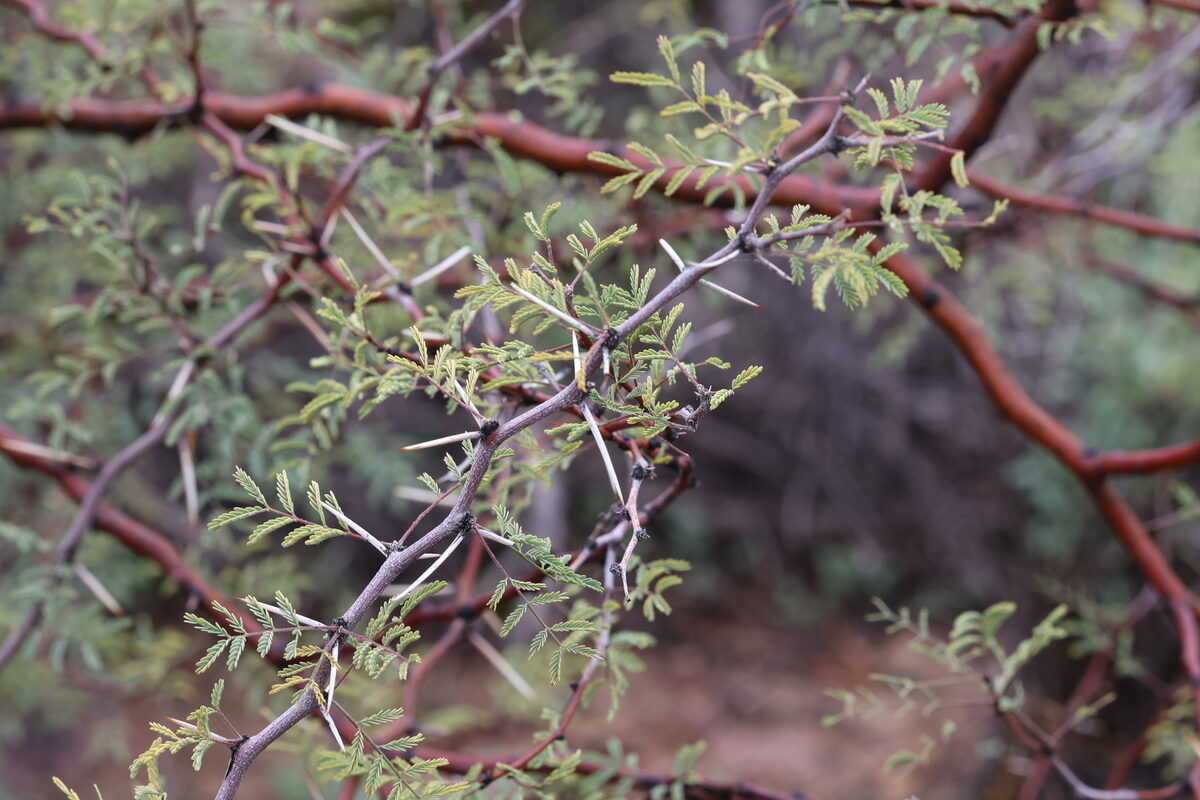
iNaturalist· cc-by-nc
(c) emiemi, some rights reserved (CC BY-NC)
Description
A small tree or shrub. It can grow between 1.5 and 12.5 m tall. The stems are grey brown and finely rough. The leaves have 3 leaflets. They tend to be oval and 5.5-14 cm long by 1.6-10 cm wide. The leaflets are oval with silky hairs underneath. The leaflets are 3-5 cm long by 1.5-3 cm wide. The tip tends to be rounded. The leaf stalk is 2-3 cm long. The flowers are 1.5-2 cm long and have a scent. The flower clusters occur in the axils of leaves on very short stalks. The petals can be white or yellow and often there is a greenish patch near the base of the standard. They are 1 cm across. The fruit are pods 1-5 cm long. They become hard and woody. There are 2-7 segments in the pod. They are only slightly indented along the edge. It does not split open.
Edible Uses
Young leaves are eaten as a vegetable. The roasted fruit are eaten, particularly in the Andaman Islands.
Traditional Uses
The young leaves are used as a vegetable. The roasted fruit are eaten in the Andaman Islands.
This uses section is brief — help expand it
Medicinal Uses
The plant is considered astringent. A decoction of the leaves is drunk locally as a general tonic. The young leaves are an ingredient of a post-partum medicine used by women after childbirth. The crushed leaves and shoots are used to massage an enlarged spleen caused by malaria. A decoction of the leaves is used to bathe the body to prevent a slight chill developing into a fever. The leaves are used to treat scaly skin, A decoction of the flowers is administered to treat gonorrhoea and irregular menstruation.
Distribution
A tropical plant. In Papua New Guinea it occurs from sea level to 180 m altitude. It grows along intertidal rivers and sandy shores and in lowland forests. It needs well drained soil. It needs a sunny position in the drier tropics. It grows near sea shores. It grows on sandy soils and also grows on soils with high pH. It is drought tolerant.
Where It Grows
Africa, Andamans, Asia, Australia, Cambodia, China, East Africa, East Timor, Fiji, India, Indochina, Indonesia, Japan, Madagascar, Malaysia, Maldives, Mascarenes, Myanmar, Pacific, Papua New Guinea, PNG, Philippines, Rotuma, Ryuku, SE Asia, Singapore, Solomon Islands, South America, Sri Lanka, Taiwan, Thailand, Timor-Leste, Tonga, Vietnam,
Cultivation
Plants can be grown from seed.
Other Uses
The wood can be used as posts, and small poles. The wood is used for fuel. The tree is suitable for protection planting and erosion control on beaches and sand dunes418].
Production
It can grow quickly.
Notes
There are about 350 Desmodium species. They are mostly in the tropics.
Synonyms
Also Known As
Blanak, Chillagoe Pea, Damle, Daun buaya, Drejeg, Kenyere laut, Petai belalang, Petai laut, Pohon kanyere laut, Pohon petai laut, Renengan, Sna hua jia mu dou
References (25)
- Ambasta, S.P. (Ed.), 2000, The Useful Plants of India. CSIR India. p 169 (As Desmodium umbellatum)
- Bhargava, N., 1983, Ethnobotanical Studies of the Tribes of Andaman and Nicobar Islands, India. 1. Onge. Economic Botany 37(1): 110-119 (As Desmodium umbellatum)
- Borrell, O.W., 1989, An Annotated Checklist of the Flora of Kairiru Island, New Guinea. Marcellin College, Victoria Australia. p 90 (As Desmodium umbellatum)
- Burkill, I.H., 1966, A Dictionary of the Economic Products of the Malay Peninsula. Ministry of Agriculture and Cooperatives, Kuala Lumpur, Malaysia. Vol 1 (A-H) p 808 (As Desmodium umbellatum)
- Cooper, W. and Cooper, W., 2004, Fruits of the Australian Tropical Rainforest. Nokomis Editions, Victoria, Australia. p 207
Show all 25 references Hide references
- Cowie, I, 2006, A Survey of Flora and vegetation of the proposed Jaco-Tutuala-Lore National Park. Timor-Lests (East Timor) www.territorystories.nt/gov.au p 47
- Doran, J.C., & Turnbull, J.W. (Eds), 1997, Australian Trees and Shrubs: species for land rehabilitation and farm plantings in the tropics. ACIAR Monograph No 24. p 352
- Elliot, W.R., & Jones, D.L., 1984, Encyclopedia of Australian Plants suitable for cultivation. Vol 3. Lothian. p 252
- Franklin, J., Keppel, G., & Whistler, W., 2008, The vegetation and flora of Lakeba, Nayau and Aiwa Islands, Central Lau Group, Fiji. Micronesica 40(1/2): 169–225, 2008
- French, B.R., 2010, Food Plants of Solomon Islands. A Compendium. Food Plants International Inc. p 320 (As Desmodium umbellatum)
- Huang Puhua; H. Ohashi, FABACEAE (Draft), Trib. Desmodieae (Bentham) Hutchinson. Flora of China.
- Lazarides, M. & Hince, B., 1993, Handbook of Economic Plants of Australia, CSIRO. p 78
- F. A. W. Miquel, Pl. jungh. 216, 218. 1852
- Martin, F.W. & Ruberte, R.M., 1979, Edible Leaves of the Tropics. Antillian College Press, Mayaguez, Puerto Rico. p 199 (As Desmodium umbellatum)
- Peekel, P.G., 1984, (Translation E.E.Henty), Flora of the Bismarck Archipelago for Naturalists, Division of Botany, Lae, PNG. p 235, 234
- Pham-Hoang Ho, 1999, An Illustrated Flora of Vietnam. Nha Xuat Ban Tre. p 917
- Prodr. 2:325. 1825
- Schatz, G.E., 2001, Generic Tree Flora of Madagascar. Royal Botanical Gardens, Kew and Missouri Botanical Garden. p 188 (As Desmodium umbellatum)
- Sujanapal, P., & Sankaran, K. V., 2016, Common Plants of Maldives. FAO & Kerala FRI, p 109
- Sukarya, D. G., (Ed.) 2013, 3,500 Plant Species of the Botanic Gardens of Indonesia. LIPI p 225
- Terra, G.J.A., 1973, Tropical Vegetables. Communication 54e Royal Tropical Institute, Amsterdam, p 44 (As Desmodium umbellatum)
- Townsend, K., 1994, Across the Top. Gardening with Australian Plants in the tropics. Society for Growing Australian Plants, Townsville Branch Inc. p 157 (As Desmodium umbellatum)
- Verdcourt, B., 1979, Manual of New Guinea Legumes. Botany Bulletin No 11, Division of Botany, Lae, Papua New Guinea. p 410
- World Checklist of Useful Plant Species 2020. Royal Botanic Gardens, Kew
- Yuncker, T.G., 1959, Plants of Tonga, Bernice P. Bishop Museum, Hawaii, Bulletin 220. p 141