Delonix regia
(Bojer ex Hook.) Rafinesque
Royal Poinciana, Flame Tree
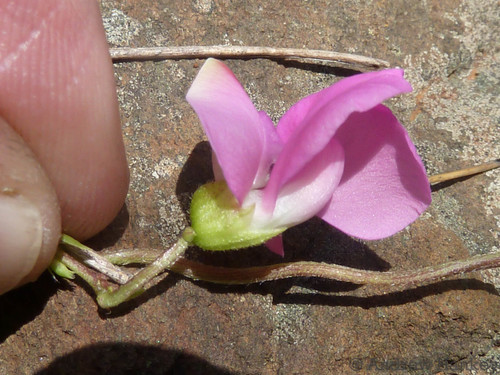
iNaturalist· cc-by-nc
(c) iles-ecologiques, some rights reserved (CC BY-NC), uploaded by iles-ecologiques
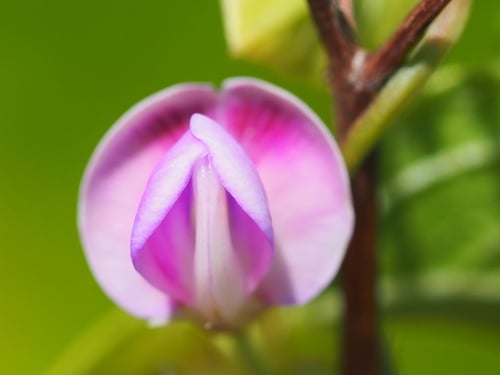
iNaturalist· cc-by-nc
(c) Julio César Schadek Barbosa, some rights reserved (CC BY-NC), uploaded by Julio César Schadek Barbosa
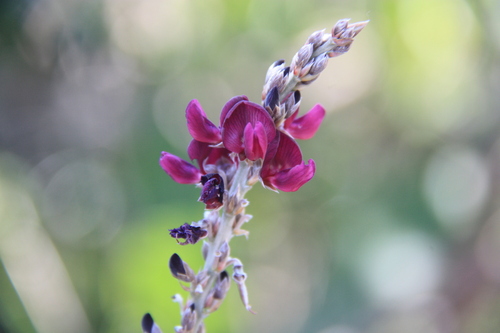
iNaturalist· cc-by-nc
(c) kmn, some rights reserved (CC BY-NC), uploaded by kmn
Summary
Source: WikipediaDelonix regia is a species of flowering plant in the bean family Fabaceae, subfamily Caesalpinioideae native to Madagascar. It is noted for its fern-like leaves and flamboyant display of orange-red flowers over summer. In many tropical parts of the world it is grown as an ornamental tree. It is a non-nodulating legume. Although its country of origin was unknown, it had been in widespread cultivation for centuries. Finally, in 1932, a natural colony was discovered on the west coast of Madagascar by J. Leandri.
Description
A tree which loses its leaves during the year in places with a long dry season. It grows to 12 m tall and spreads to 6 m wide. The trunk is stout and has knots. The bark is thick and greyish brown. The leaves are twice divided and are feathery. The leaves are bright green. They are 30-50 cm long divided into 10-25 pairs of leaflets. The flowers are orange to scarlet. They have 5 club shaped petals. Flowers are 10-13 cm across. The fruit are reddish brown long pods. The pods can be 60 cm long. They are green and flexible when young and hard and brown when mature. They contain mottled yellow seeds which are oblong.
Edible Uses
In addition to its ornamental value, it is a useful shade tree in tropical conditions, because it usually grows to a modest height (mostly 5 m or 15 ft, but it can reach a maximum height of 12 m or 40 ft) but spreads widely, and its dense foliage provides full shade. In areas with a marked dry season, it sheds its leaves during the drought, but in other areas it is virtually evergreen.
Traditional Uses
The young leaves are sometimes eaten as a vegetable. The flower buds are eaten as a pot herb. The seeds contain a gum. They are eaten. The green fruit are roasted and eaten.
Medicinal Uses
The leaves, flowers, seed and bark of this plant contain a range of medicinally active compounds, though the leaves are generally the richest source of most of these compounds. The plant is reported to have antibacterial, antidiabetic, antidiarrhoeal, antifungal, antiinflammatory, antimalarial, antimicrobial, antioxidant, cardio-protective, gastro-protective, hepato-protective and wound healing activity. It is used in folk medicine to treat a range of disorders, including constipation, inflammation, rheumatoid arthritis, diabetes, pneumonia, and malaria. The active compounds include flavonoids, alkaloids, saponins, sterols, beta-sitosterol, lupeol, tannins, carotenoids, and phenolic acids. Flavonoids and triterpenes have been shown to have analgesic activities and the flavonoids are also powerful antioxidants. The bark has medicinal properties. An aqueous extract has shown emetic properties. An aqueous extract of the flowers is active against roundworm. The metabolite-rich fractions of the sequentially extracted flowers and seeds have shown antifungal activity against Aspergillus niger, Aspergillus flavus, Rhizopus bataticola and Fusarium auxisporum A leaf decoction presumably has anti-rheumatic effects. In eastern Nigeria the leaves are used traditionally for treating pain. The leaves contain flavonoids, phenolic compounds, triterpenes and sterols. A methanolic extract of the leaves has shown a significant analgesic potential. An ethanol extraction of the leaves has been shown to exert a cardio-protective effect, at least partly due to its vasodilatory and antiinflammatory activity. It has also shown potential for improving liver and kidney functions whilst showing no negative side effects. An essential oil obtained from the leaves has shown fungicidal properties.
Distribution
A tropical plant. It is native to Madagascar. They are frost tender. They need full sunlight. They need a fertile, moist but well drained soil. The temperatures need to be above 18-21°C for seeds to grow. Trees must have a temperature above 7°C. In Nepal it grows up to 1000 m altitude. It suits hardiness zones 11-12.
Where It Grows
Africa, Andaman Is., Angola, Asia, Australia, Bahamas, Bangladesh, Belize, British Indian Ocean Terr., BIOT, Burkina Faso, Burundi, Cambodia, Cameroon, Caribbean, Central America, Chad, China, Christmas Island, Colombia, Comoros, Cook Is., Congo DR, Costa Rica, Cuba, Dominican Republic, East Africa, East Timor, Ecuador, Egypt, El Salvador, Eswatini, Ethiopia, Gambia, Ghana, Guatemala, Guiana, Guianas, Guyana, Haiti, Hawaii, Himalayas, India, Indochina, Indonesia, Ivory Coast, Jamaica, Kenya, Laos, Libya, Madagascar*, Malawi, Malaysia, Maldives, Mali, Mariana Islands, Marquesas, Mauritius, Mediterranean, Mexico, Mozambique, Myanmar, Nauru, Nepal, New Caledonia, Niger, Niue, North America, Northeastern India, Oman, Pacific, Pakistan, Panama, Papua New Guinea, PNG, Pakistan, Peru, Philippines, Puerto Rico, Reunion, Rotuma, SE Asia, Sikkim, Solomon Islands, Somalia, South Africa, Southern Africa, South America, Sri Lanka, Suriname, Swaziland, Taiwan, Tanzania, Thailand, Timor-Leste, Togo, Tonga, Trinidad-Tobago, Tuvalu, Uganda, USA, Vanuatu, Venezuela, Vietnam, West Indies, Yap, Yemen, Zambia, Zimbabwe,
Cultivation
Trees can be grown from seed or cuttings. Cuttings grow best in soil with bottom heat. The seeds can be placed in boiling water for 2 minutes, then soaked in cold water for 24 hours to help them germinate.
Propagation
Seed - has a hard, woody testa and takes a long time to germinate. It may lie for 2 - 3 years in the soil without germinating and usually take 12 - 349 days to germinate. To break this dormancy the seed needs to be scarified by carefully abrading a small part of the seed coat, being careful not to damage the embryo. Alternatively, pour a small quantity of almost boiling water over the seed, making sure it cools down before the seed is cooked, then soak the seed for 12 - 24 hours in warm water prior to sowing. After treated seeds are sown in unshaded nursery beds, they germinate within 5 - 10 days, with a germination rate of up to 90%. Subsequent growth in the nursery is quite fast. Seedlings watered and weeded regularly are planted out in the rainy season, with a total time required in the nursery being 3 - 5 months. Keeping the plants for more than 9 months is not desirable, as they become too tall to handle, but seedlings can be transplanted even when 20 - 25 cm tall. Seeds can be stored for a long time if insect attack is avoided, which can be done by adding ash to the seeds. Seed storage behaviour is orthodox and a germination rate of 47% has been recorded after 9 years of storage at room temperature; with no loss in viability following 4 years of storage. Trees can also be propagated from branch cuttings.
Other Uses
The tree yields a thick mucilage of gum, produced in yellowish or reddish-brown warty tears. The gum is soluble in water, forming a thick opalescent mucilage. It contains a large quantity of calcium oxalate. The seeds contain gum that may find use in the textile and food industries. The seeds contain around 17.2% oil. This oil contains normal glycerides, low unsaturation and will be very good for the production of soaps and shampoos. The hard, elongated seeds are occasionally used as beads and to make necklaces. The aqueous extracts of the plant contain allelopathic compounds, including phenolic acids, alkaloids and flavonoids; these can be used as natural herbicides and pesticides to increase the productivity of agricultural crops. An essential oil obtained from the leaves is fungicidal. The heartwood is yellowish to light brown; the sapwood light yellow. The wood is soft, heavy, coarse grained, weak, brittle, takes a good polish and is rather resistant to moisture and insects although very susceptible to attack by dry-wood termites. A very durable construction timber, but large dimension wood is rarely available. The large pods as well as the wood are used for fuel. The wood is made into charcoal. The tree is planted to provide shade in tea plantations, compounds etc. The tree can be planted as live fence posts. It is grown on eroded sites for erosion control, and for soil rehabilitation and improvement through atmospheric nitrogen fixation.
Production
The pods take about 2 years to ripen.
Notes
There are 2 (10) Delonix species. Also as Caesalpinaceae.
Nutrition
| Part | Moisture | kJ | kcal | Protein | Vit A | Vit C | Iron | Zinc |
|---|---|---|---|---|---|---|---|---|
| Seeds | 82.8 | 272 | 65 | 6.1 | — | — | 1.1 | — |
Synonyms
Also Known As
Ai-akasi, Alamboronala, Diep bong do, Diep tay, Fang daeng, Fang hang nhoung, Flamboyant Tree, Fuaitansanga, Ginimaa, Gold mohur, Golmaar, Gulmohr, Gulmohur, Hahng-nok-yoong, Kngaok barang, Kok fang nyung, Krishnachura, Mak fang, Mayarum, Merqaya, Mjohoro, Mkakaya, Phuong, Phuongvi, Poyon flamboyant, Shima sankesula
References (61)
- Addis, G., et al, 2013, The Role of Wild and Semi-wild Edible Plants in Household Food Sovereignty in Hamer and Konso Communities, South Ethiopia. Ethnobotany Research & Applications. 11:251-271
- Ambasta, S.P. (Ed.), 2000, The Useful Plants of India. CSIR India. p 165
- Barrau, J., 1976, Subsistence Agriculture in Polynesia and Micronesia. Bernice P. Bishop Museu, Bulletin 223 Honolulu Hawaii. Kraus reprint. p 56
- Barwick, M., 2004, Tropical and Subtropical Trees. A Worldwide Encyclopedic Guide. Thames and Hudson p 140
- Blamey, M and Grey-Wilson, C., 2005, Wild flowers of the Mediterranean. A & C Black London. p 110
Show all 61 references Hide references
- Bodkin, F., 1991, Encyclopedia Botanica. Cornstalk publishing, p 330
- Bole, P.V., & Yaghani, Y., 1985, Field Guide to the Common Trees of India. OUP p 49
- Borrell, O.W., 1989, An Annotated Checklist of the Flora of Kairiru Island, New Guinea. Marcellin College, Victoria Australia. p 93
- Brickell, C. (Ed.), 1999, The Royal Horticultural Society A-Z Encyclopedia of Garden Plants. Convent Garden Books. p 350
- Cooper, W. and Cooper, W., 2004, Fruits of the Australian Tropical Rainforest. Nokomis Editions, Victoria, Australia. p 102
- Cundall, P., (ed.), 2004, Gardening Australia: flora: the gardener's bible. ABC Books. p 478
- Dharani, N., 2002, Field Guide to common Trees & Shrubs of East Africa. Struik. p 84
- Dunlop, C.R., Leach, G.J. & Cowie, I.D., 1995, Flora of the Darwin Region. Vol 2. Northern Territory Botanical Bulletin No 20. p 32
- Ekman Herbarium records Haiti
- Engel, D.H., & Phummai, S., 2000, A Field Guide to Tropical Plants of Asia. Timber Press. p 99
- Etherington, K., & Imwold, D., (Eds), 2001, Botanica's Trees & Shrubs. The illustrated A-Z of over 8500 trees and shrubs. Random House, Australia. p 258
- Fl. tellur. 2:92. 1837
- Flora of Australia Volume 12, Mimosaceae (excl. Acacia) Caesalpiniaceae. Melbourne: CSIRO Australia (1998) p 59 Fig 22 p xviii
- Food Composition Tables for use in East Asia FAO http://www.fao.org/infoods/directory No. 313
- Fowler, D. G., 2007, Zambian Plants: Their Vernacular Names and Uses. Kew. p 80
- Hall, N. et al, 1972, The Use of Trees and Shrubs in the Dry Country of Australia, AGPS, Canberra. p 202
- Hearne, D.A., & Rance, S.J., 1975, Trees for Darwin and Northern Australia. AGPS, Canberra p 51, Pl 12
- Hibbert, M., 2002, The Aussie Plant Finder 2002, Florilegium. p 84
- Kew Plants of the World Online
- Krishen P., 2006, Trees of Delhi, A Field Guide. DK Books. p 296
- Llamas, K.A., 2003, Tropical Flowering Plants. Timber Press. p 204
- Lord, E.E., & Willis, J.H., 1999, Shrubs and Trees for Australian gardens. Lothian. p 53
- Luczaj, L., et al, 2021, Wild food plants and fungi sold in the markets of Luang Prabang, Lao PDR. Journal of Ethnobiology and Ethnomedicine (2021) 17:6
- Lulekal, E., et al, 2011, Wild edible plants in Ethiopia: a review on their potential to combat food insecurity. Afrika Focus - Vol. 24, No 2. pp 71-121
- Marinelli, J. (Ed), 2004, Plant. DK. p 100
- Mbuya, L.P., Msanga, H.P., Ruffo, C.K., Birnie, A & Tengnas, B., 1994, Useful Trees and Shrubs for Tanzania. Regional Soil Conservation Unit. Technical Handbook No 6. p 230
- McMakin, P.D., 2000, Flowering Plants of Thailand. A Field Guide. White Lotus. p 21
- Menninger, E.A., 1977, Edible Nuts of the World. Horticultural Books. Florida p 93
- Morley, B. & Everard, B., 1970, Wild Flowers of the World. Ebury press. Plate 113
- Paczkowska, G. & Chapman, A.R., 2000, The Western Australian Flora. A Descriptive Catalogue. Western Australian Herbarium. p 190
- Partha, P., 2014, Ethnobotany of the Laleng (Patra) Community in Bangladesh. Journal of Pharmacognosy and Phytochemistry. 2(6):173-184
- Peekel, P.G., 1984, (Translation E.E.Henty), Flora of the Bismarck Archipelago for Naturalists, Division of Botany, Lae, PNG. p 221, 222
- Pham-Hoang Ho, 1999, An Illustrated Flora of Vietnam. Nha Xuat Ban Tre. p 840
- Phon, P., 2000, Plants used in Cambodia. © Pauline Dy Phon, Phnom Penh, Cambodia. p 224
- Plants of Haiti Smithsonian Institute http://botany.si.edu/antilles/West Indies
- Prixar, S., et al, 2006, Species composition, distribution and management of trees in paddy fields in central Laos. p 22
- Rajasab, A. H. et al, 2004, Documentation of folk knowledge on edible wild plants of North Karnataka. Indian Journal of Traditional Knowledge. Vol 3(4) pp 419-429
- Recher, P, 2001, Fruit Spirit Botanical Gardens Plant Index. www.nrg.com.au/~recher/ seedlist.html p 5
- Rivers, M. C., 2011, Range-wide Analysis of the Spatial distribution and genetic diversity of Delonix S. L. (Leguminosae) in Madagascar Ph D Thesis University of St Andrews. p 213
- Sam, H. V. et al, 2004, Trees of Laos and Vietnam: A Field Guide to 100 Economically or Ecologically Important Species. BLUMEA 49: 201-349
- Selvam, V., 2007, Trees and shrubs of the Maldives. RAP Publication No. 2007/12 p 78
- Slik, F., www.asianplant.net
- Sujanapal, P., & Sankaran, K. V., 2016, Common Plants of Maldives. FAO & Kerala FRI, p 108
- Sukarya, D. G., (Ed.) 2013, 3,500 Plant Species of the Botanic Gardens of Indonesia. LIPI p 226
- Swaziland's Flora Database http://www.sntc.org.sz/flora
- Thaman, R.R., 1976, The Tongan Agricultural System, University of the South Pacific, Suva, Fiji. p 395
- Thaman, R. R, 2016, The flora of Tuvalu. Atoll Research Bulletin No. 611. Smithsonian Institute p 90
- Topp, J. M. W., 1988, An Annotated Check List of the Flora of Diego Garcia, British Ocean Territory. Atoll Research Bulletin No. 313
- Van Sam, H. et al, 2004, Trees of Laos and Vietnam: A Field Guide to 100 Economically or Ecologically Important Species. Blumea 29 (2004) 201-349
- van Wyk, B, van Wyk, P, and van Wyk B., 2000, Photographic guide to Trees of Southern Africa. Briza. p 115
- Verdcourt, B., 1979, Manual of New Guinea Legumes. Botany Bulletin No 11, Division of Botany, Lae, Papua New Guinea. p 30
- Williamson, J., 2005, Useful Plants of Malawi. 3rd. Edition. Mdadzi Book Trust. p 96
- World Checklist of Useful Plant Species 2020. Royal Botanic Gardens, Kew
- Young, J., (Ed.), 2001, Botanica's Pocket Trees and Shrubs. Random House. p 317
- Yuncker, T.G., 1959, Plants of Tonga, Bernice P. Bishop Museum, Hawaii, Bulletin 220. p 136
- Zuchowski W., 2007, Tropical Plants of Costa Rica. A Zona Tropical Publication, Comstock Publishing. p 32