Caesia calliantha
R. Henderson
Pale grass lily, Blue grass lily
iNaturalist· cc-by-nc
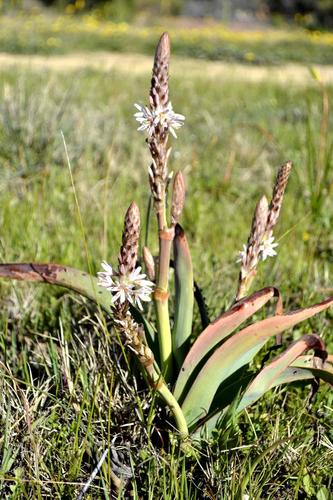
(c) lancebreguet, some rights reserved (CC BY-NC)
iNaturalist· cc-by-nc
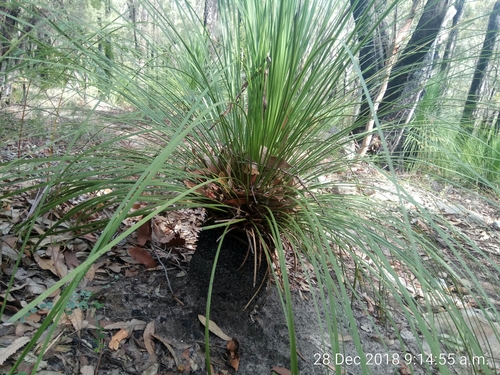
(c) Heidi Clark, some rights reserved (CC BY-NC), uploaded by Heidi Clark
iNaturalist· cc-by-nc
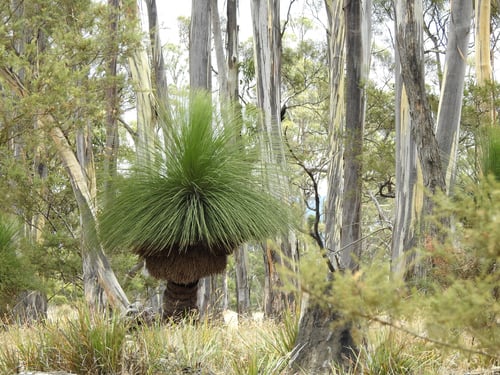
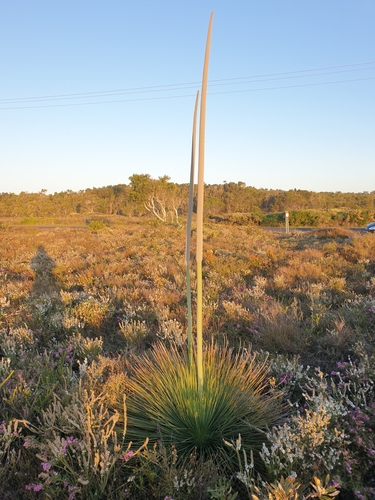
(c) parwanfarm, some rights reserved (CC BY-NC)
Summary
Source: WikipediaCaesia calliantha, commonly known as the blue grass lily or blue star lily, is a species of herbaceous flowering plant. It is a member of the Asphodelaceae family, subfamily Hemerocallidoideae, native to Australia found predominantly along the East coast in Victoria, New South Wales, South Australia and Tasmania.
Description
A lily which keeps growing from year to year. The roots are fibrous with tuber swellings towards the end. The leaves are in tufts near the base. The leaves are flattened and grass like. They are 9 mm wide. The flower stems are 60 cm long. They have several flowers. The flowers are deep blue to purple. The stamens have bright orange stalks. The fruit capsules have 3 lobes.
Edible Uses
Edible Parts: Root Edible Uses: Root. We have no more details other than that the roots are fibrous and grasslike with tubers at their tips.
Medicinal Uses
None known
Distribution
It is a temperate plant. It grows in grassy forests and woodlands. Tasmanian Herbarium.
Where It Grows
Australia*, Tasmania*,
Cultivation
We have very little information on this species and do not know if it will be hardy in this country. It tolerates temperatures down to -7°c in Australian gardens but, because of our cooler summers and longer, colder and wetter winters this cannot be directly translated to British gardens. This plant is widespread in Australia so it is possible that some provenances will succeed here. Plants are likely to require a well-drained soil in a sunny position and some sort of protection in the winter. This species is considered to be no more than a variety of C. parviflora by some botanists.
Propagation
Seed - we have no details on this species but suggest that it can be sown as soon as it is ripe in a warm greenhouse. Stored seed should be sown in the spring in a warm greenhouse. Sow the seed thinly and grow the plants on in the seed pot for their first year, giving liquid feeds if necessary. Pot the plants up into individual pots in early spring and grow them on in the greenhouse for a second year before planting them out in early summer. Division.
Other Uses
None known Special Uses
Notes
There are 7 Caesia species. It has also been put in the family Liliaceae and Anthericaceae.
References (10)
- Clarke, P. A., 2013, The Aboriginal Ethnobotany of the Adelaide Region, South Australia. Transactions of the Royal Society of South Australia. (2013), 137(1): 97-126
- Curtis, W.M., & Morris, D.I., 1994, The Student's Flora of Tasmania. Part 4B St David's Park Publishing, Tasmania, p 386
- Dashorst, G.R.M., and Jessop, J.P., 1998, Plants of the Adelaide Plains & Hills. Botanic Gardens of Adelaide and State Herbarium. p 158
- Gilfedder, L et al, 2003, The Nature of the Midlands. Midlands Bushweb. PO Box 156 Longford, Tasmania. p 68
- Gott, B & Conran, J., 1991, Victorian Koorie Plants. PO Box 666 Hamilton, Victoria 3300, Australia. p 14
Show all 10 references Hide references
- Lim, T. K., 2015, Edible Medicinal and Non Medicinal Plants. Volume 9, Modified Stems, Roots, Bulbs. Springer p 19
- Low, T., 1991, Wild Food Plants of Australia. Australian Nature FieldGuide, Angus & Robertson. p 102
- Plants for a Future database, The Field, Penpol, Lostwithiel, Cornwall, PL22 0NG, UK. http://www.scs.leeds.ac.uk/pfaf/
- Tasmanian Herbarium Vascular Plants list p 69
- www.fsd.monash.edu.au/files/bethgottpamphley_po.pdf