Pradosia lactescens
(Vell.) Radlk.
Buranhem, Bacupari, Bacuri
iNaturalist· cc-by
(c) Victor Farjalla Pontes, some rights reserved (CC BY), uploaded by Victor Farjalla Pontes
iNaturalist· cc-by-nc
(c) Geovane Siqueira, some rights reserved (CC BY-NC)
iNaturalist· cc-by-nc
(c) Geovane Siqueira, some rights reserved (CC BY-NC)
Summary
Source: WikipediaPradosia lactescens is a species of large tree in the family Sapotaceae. It is endemic to the Atlantic forests of Brazil, and is most commonly known by the name buranhém. The species is cauliflorous, with red flowers being followed by small, edible, yellow fruit.
Description
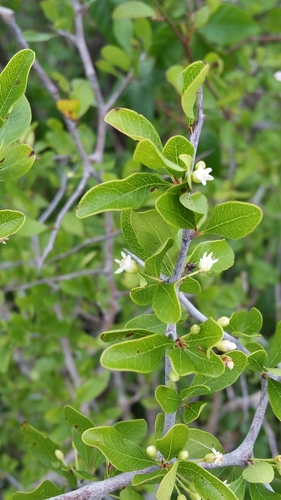
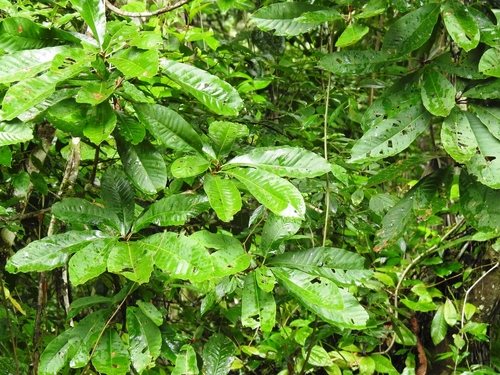
An evergreen tree. It grows 12-20 m high. The trunk is erect and 20-30 cm across. The leaves are towards the tips of the branches. They are narrowly oval and narrow wedge shaped at the base. They are 7-22 cm long by 3-9 cm wide. The flowers are in groups on the trunk and large branches. The fruit is oval and has one seed. They turn from green to yellow when ripe.
Edible Uses
Fruit - raw. A slightly sweet, gelatinous pulp surrounding a single large seed. The yellow fruit is about 3cm long and 2cm wide, containing a single, large seed.
Medicinal Uses
The bark is astringent, haemostatic and tonic. It is used in the treatment of leucorrhoea, gonorrhoea, metrorrhagia, haemoptysis, diarrhoea, asthma, scrofula and dyspepsia.
Distribution
It is a tropical plant. It grows in humid forests near the Atlantic in Brazil.
Where It Grows
Brazil*, South America,
Cultivation
Plants are grown from seeds. The seeds are collected from ripe fruit that are put in piles for a few days to allow them to partly decompose to make removing seeds more easy. The seeds are washed under running water. Seeds need to be planted fresh and with light shade. Seedlings emerge in 70-90 days.
Propagation
Seed - best sown as soon as it is ripe in a partially shaded position in a nursery seedbed. A germination rate of almost 100% can be expected, with the seed sprouting within 70 - 90 days.
Other Uses
The wood is of average texture, irregular-grained, moderately heavy, slightly susceptible to wood-eating organisms. It can be used internally for general construction.
Production
Plants grow at a moderate rate.
Synonyms
Also Known As
Mama-de-cachorro, Marmixa
References (5)
- Kermath, B. M., et al, 2014, Food Plants in the Americas: A survey of the domesticated, cultivated and wild plants used for Human food in North, Central and South America and the Caribbean. On line draft. p 700
- Lorenzi, H., Bacher, L., Lacerda, M. & Sartori, S., 2006, Brazilian Fruits & Cultivated Exotics. Sao Paulo, Instituto Plantarum de Estuados da Flora Ltda. p 310
- Lorenzi, H., 2009, Brazilian Trees. A Guide to the Identification and Cultivation of Brazilian Native Trees. Instituto Plantarum de Estuados da Flora Ltda. Vol. 3 p 346
- Sitzungsber. Math.-Phys. Cl. Koenigl. Bayer. Akad. Wiss. Munchen 18:407. 1888
- www.colecionandofrutas.org
More from Sapotaceae
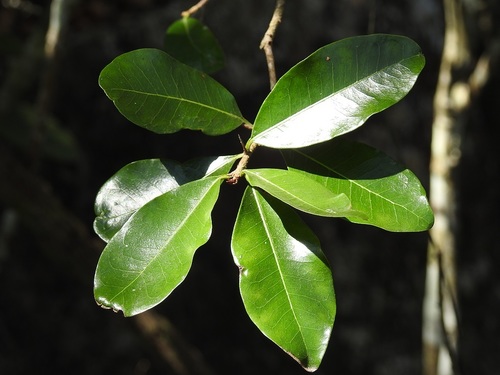
Sideroxylon palmeri
Bebelama
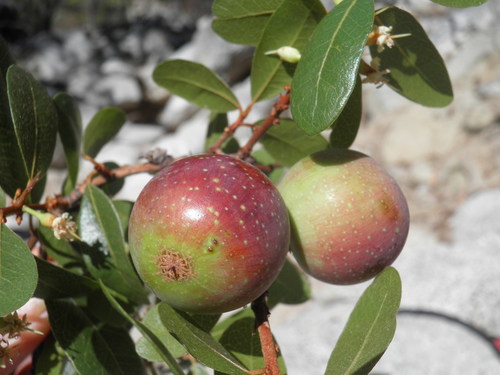
Sideroxylon peninsulare
Babelama, Western bumelia
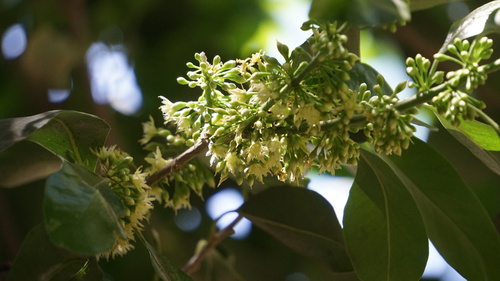
Sideroxylon persimile
Acoma piquant, Limoncillo
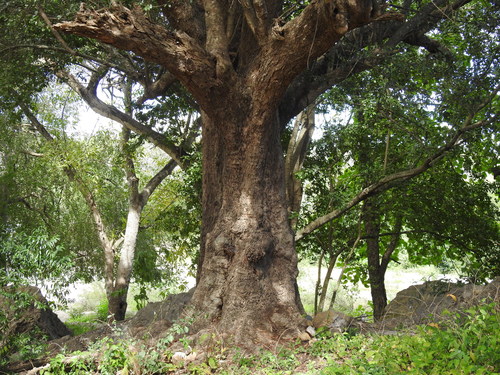
Sideroxylon persimile subsp. subsessiliflorum
Bebelama, Chuwa, Cupilla
Sideroxylon reclinatum
Western Buckthorn, Smooth buckthorn
Sideroxylon stevensonii
Chicle faisan, Faisan