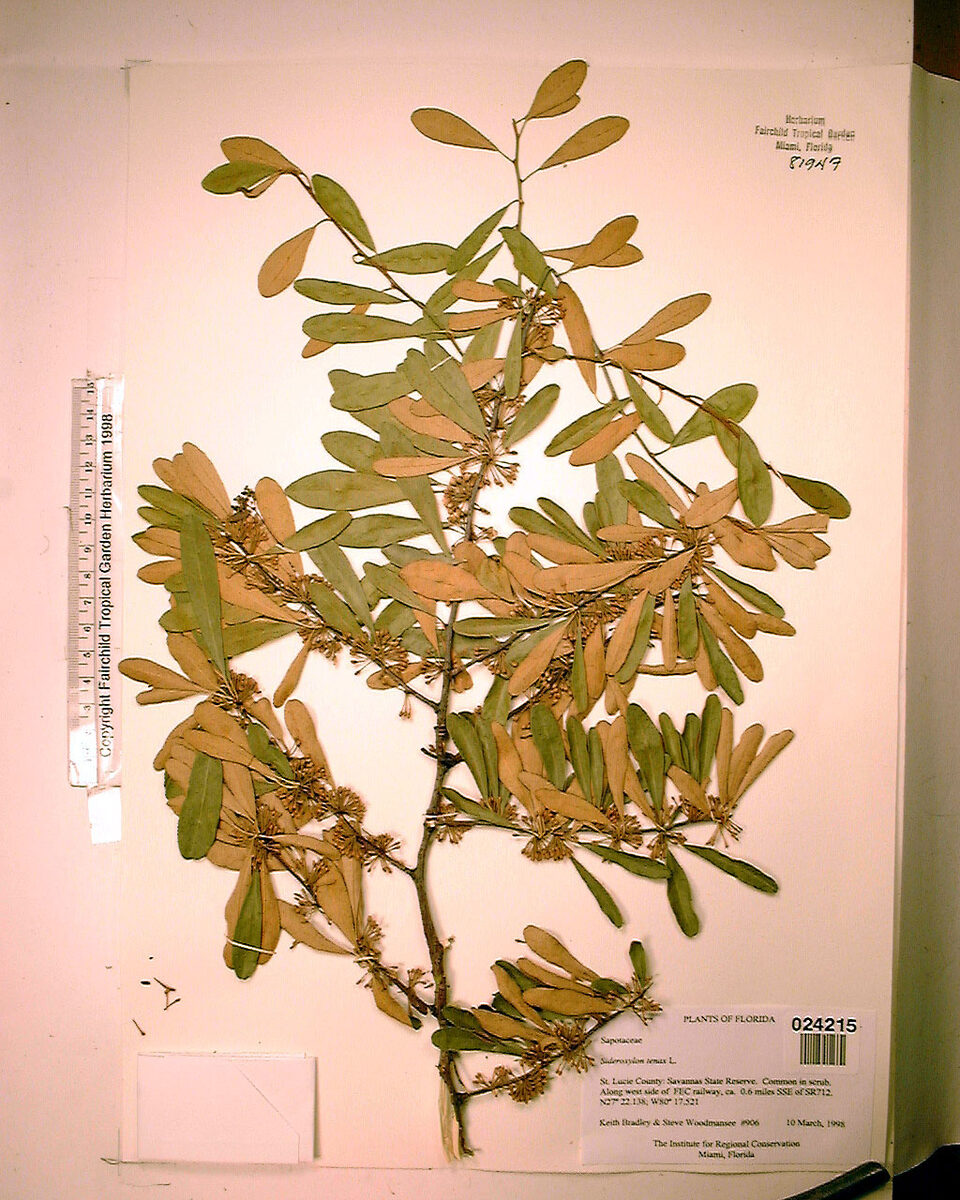
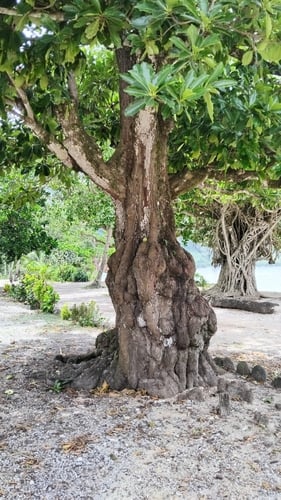
Pradosia beardii
(Monachino) Pennington
Beard pradosia
Sapotaceae Edible: Fruit
gbif· cc0
Conveyor Belt
gbif· cc-by
Royal Botanic Gardens, Kew
gbif· cc-by
Royal Botanic Gardens, Kew
Description
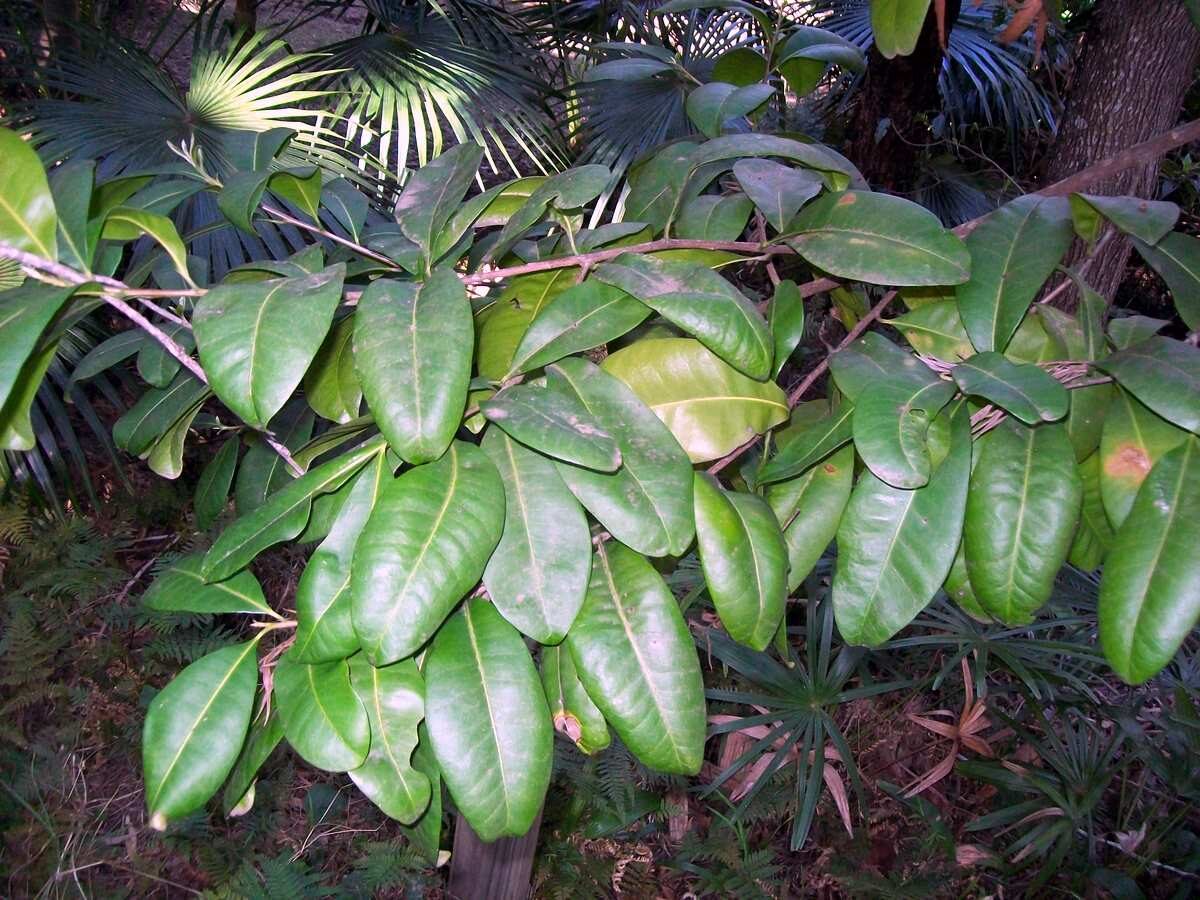
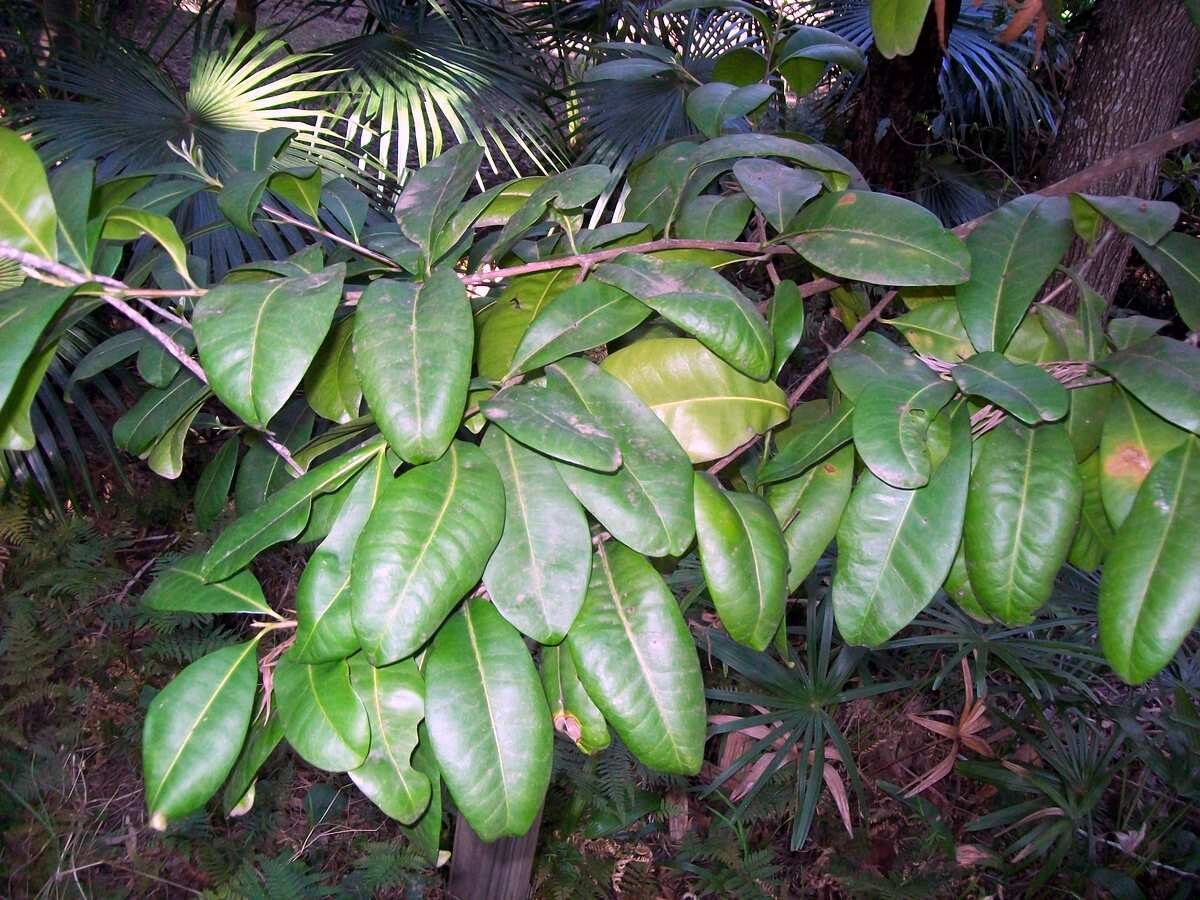
A tree. The young shoots have a dense brown covering. The leave are in loose clusters. They are 5-14 cm long by 3-8 cm wide. The fruit are about 1.5 cm long. There is a single seed. This is about 1.3 cm long.
Edible Uses
The fruit is edible.
Distribution
A tropical plant. It can grow from sea level up to about 1,800 m altitude.
Where It Grows
Central America, Guyana, South America, Trinidad, Venezuela,
Notes
There are 23 Pradosia species in tropical America.
Synonyms
Chrysophyllum beardii MonachinoEcclinusa beardii (Monachino) Aubreville,
Chrysophyllum monachinoanum Steyermark,
Glycoxylon rubrum Aubreville,
Also Known As
Cakak-orai-yek, Kakaruna
References (5)
- Grandtner, M. M. & Chevrette, J., 2013, Dictionary of Trees, Volume 2: South America: Nomenclature, Taxonomy and Ecology. Academic Press p 531
- Kermath, B. M., et al, 2014, Food Plants in the Americas: A survey of the domesticated, cultivated and wild plants used for Human food in North, Central and South America and the Caribbean. On line draft. p 699
- Pennington, T.D., 1990, Sapotaceae in Flora Neotropica Monograph 52. New York Botanical Gardens. p 665
- Reis, S. V. and Lipp, F. L., 1982, New Plant Sources for Drugs and Foods from the New York Botanical Garden herbarium. Harvard. p 234
- Smith, N., Mori, S.A., et al, 2004, Flowering Plants of the Neotropics. Princeton. p 340