Araucaria cunninghamii
Aiton ex D. Don
Moreton Bay pine, Hoop pine
iNaturalist· cc-by-nc
(c) leithallb, some rights reserved (CC BY-NC), uploaded by leithallb
iNaturalist· cc-by-nc
(c) bundalafarm, some rights reserved (CC BY-NC)
iNaturalist· cc-by
(c) Shaun Swanepoel, some rights reserved (CC BY), uploaded by Shaun Swanepoel
Summary
Source: WikipediaAraucaria cunninghamii is a species of Araucaria known as hoop pine. Other less commonly used names include colonial pine, Queensland pine, Dorrigo pine, Moreton Bay pine and Richmond River pine. The scientific name honours the botanist and explorer Allan Cunningham, who collected the first specimens in the 1820s. It is the earliest-diverging extant lineage within the genus, and the only species within section Eutacta native to continental mainland areas; all other species in the section are naturally confined to islands.
Description
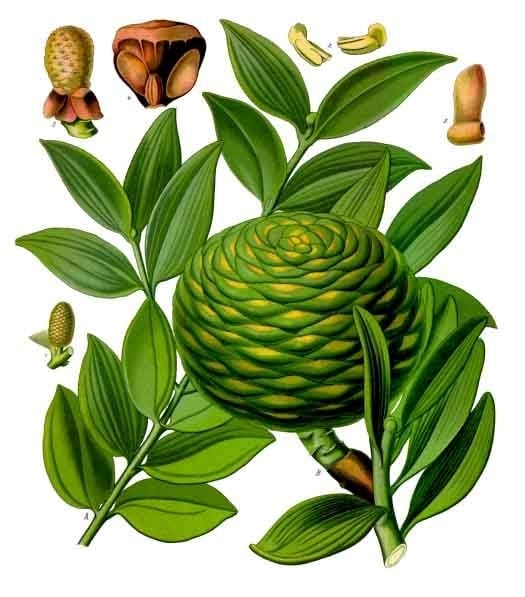
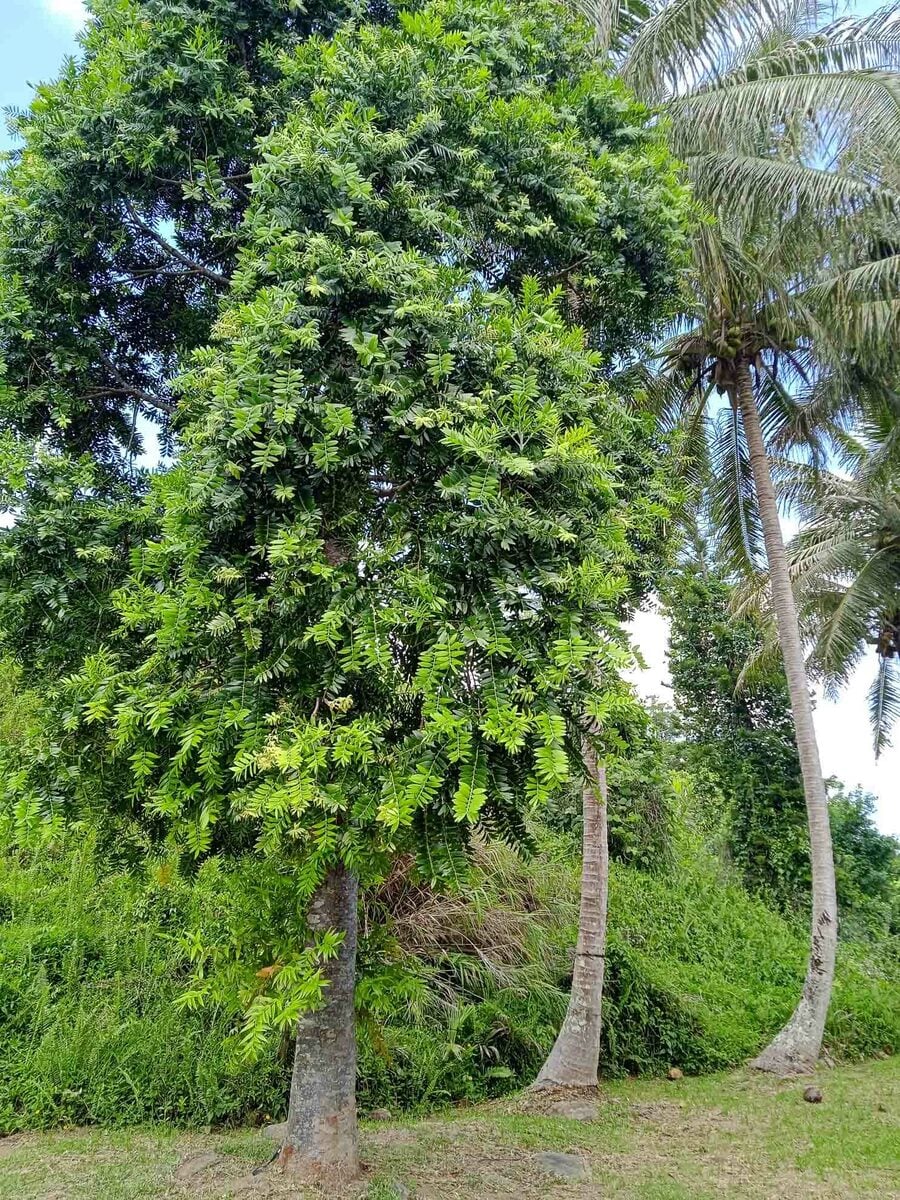
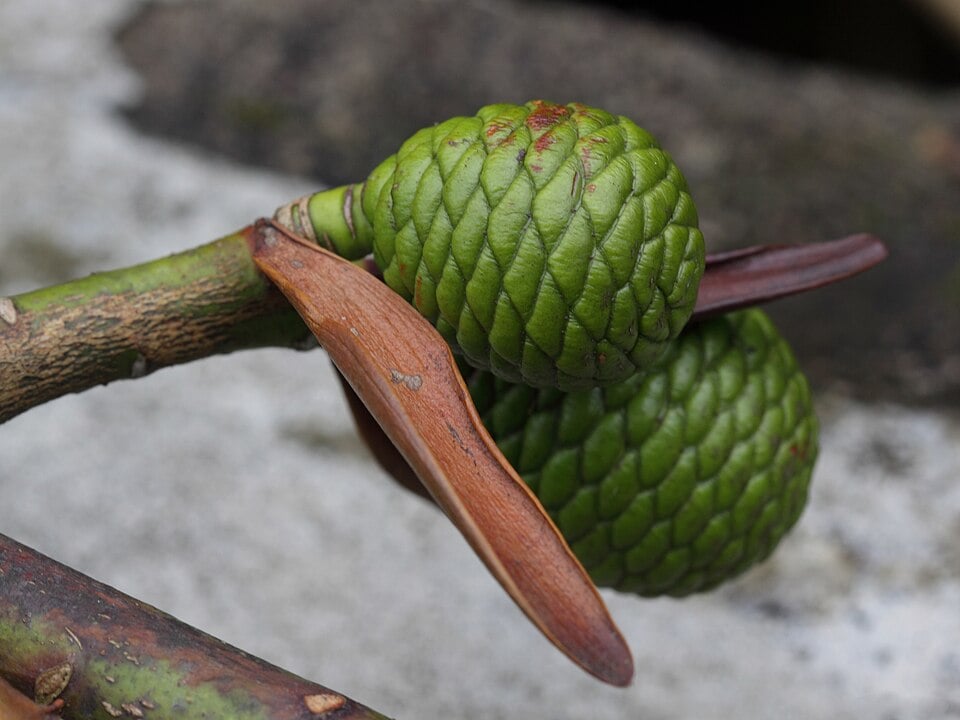
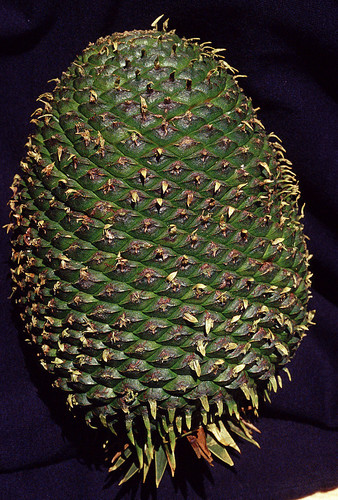
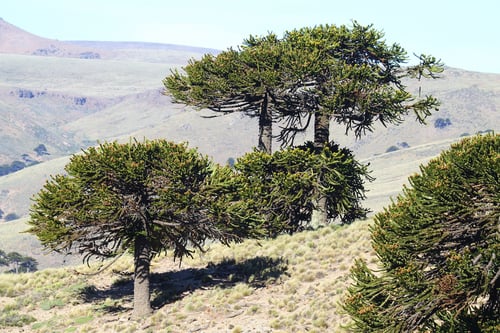
A large tree. It grows 60 m high. The trunk is 1 m across. It is straight and often only forms branches high up. The bark is reddish brown. The leaves are arranged in spirals and crowded. The male cones are 8 cm long and hang down. The female cones are 6-10 cm long by 5-8 cm wide. The seeds are triangle shaped and 2-3 cm long by 1 cm wide.
Edible Uses
The triangle-shaped seeds are apparently eaten in Tropical America.
Medicinal Uses
The bark exudes a resin when cut. This resin can be dissolved in alcohol to treat kidney ailments.
Distribution
It is a subtropical plant. In Papua New Guinea it grows from 1,000-2,750 m altitude. It grows in areas with high rainfall and temperatures between 9-26°C. It can tolerate light frosts. In Yunnan. Arboretum Tasmania.
Where It Grows
Argentina, Asia, Australia*, Central Africa, Central America, China, Congo, Costa Rica, Côte d'Ivoire, East Africa, Guatemala, India, Indochina, Indonesia, Ivory Coast, Madagascar, Malaysia, Mauritius, Myanmar, Nigeria, Pacific, Papua New Guinea, PNG, Philippines, SE Asia, Slovenia, Solomon Islands, South Africa, Southern Africa, South America, Tasmania, Thailand, Uganda, Venezuela, Vietnam, West Africa, Zimbabwe,
Cultivation
Plants are grown from seed. Seed are collected from ripe cones.
Propagation
Seed - Seedlings can be raised by pregermination techniques or by sowing into beds. A. cunninghamii can also be successfully grafted by using scion budding with material taken from the apical leader of the main stem, or by side-approach grafting and bottle grafting using the apical shoot of the main stem. Grafted branch material produces plagiotropic grafts and has little use other than for pollen production. Seed storage behaviour is orthodox. Mature seeds collected at about 36% mc tolerate desiccation to about 7 % mc or even 2% mc without loss in viability. A germination rate of 43% has occurred after 8 years of hermetic air-dry storage at -15 deg. C. The viability of seeds that have been dried to moisture contents in equilibrium with ambient environment was maintained for 8 years at -9 deg. C to -15 deg. C. Similarly, 50% germination after 50 weeks of air-dry storage at -12 deg. C has been reported. If mature seeds are dried to 5% mc, long-term storage is possible in sealed containers at 3 deg. C. or lower.
Other Uses
The bark is heavily impregnated with resin. The wood varies in colour from almost white to cream or light brown. The wood is strong, finely and evenly textured, virtually without odour. It is durable if kept dry, though may be susceptible to fungal attack. It is easy to work, readily accepting a wide variety of stains and finishes. A medium-quality softwood, it is suitable for use as general-purpose construction timber; better grades are suitable for internal finishes for buildings, furniture and cabinet making. It is also an excellent veneer species and is used as such for making plywood. It is directly or indirectly suitable for pulping through the use of wood residues. A pioneer species in disturbed habitats where the soils may be very poor, leached, podzolic and acid. It is potentially capable of being an important plantation enrichment planting species in Africa and tropical America.
Production
Young trees grow slowly. Trees start to produce cones after 15-25 years. Female cones take about 2 years to ripen.
Notes
The seeds are apparently eaten in Tropical America.
Synonyms
Also Known As
Pohon arukaria hup
References (7)
- Anderson, E. F., 1993, Plants and people of the Golden Triangle. Dioscorides Press. p 202
- Bircher, A. G. & Bircher, W. H., 2000, Encyclopedia of Fruit Trees and Edible Flowering Plants in Egypt and the Subtropics. AUC Press. p 37
- Lemmens, R.H.M.J., 2006. Araucaria cunninghamii Aiton ex D.Don. [Internet] Record from Protabase. Louppe, D., Oteng-Amoako, A.A. & Brink, M. (Editors). PROTA (Plant Resources of Tropical Africa / Ressources végétales de l’Afrique tropicale), Wageningen, Netherlands. < http://database.prota.org/search.htm>. Accessed 13 October 2009.
- Soerianegara, I. & Lemmens, R. H. M. L., (Eds.) 1993, Timber trees: Major commercial timbers. Plant Resources of South-East Asia. Wageningen. No. 5(1). p 103
- Sukarya, D. G., (Ed.) 2013, 3,500 Plant Species of the Botanic Gardens of Indonesia. LIPI p 133
Show all 7 references Hide references
- World Checklist of Useful Plant Species 2020. Royal Botanic Gardens, Kew
- www.eFloras.org Flora of China