Fagraea fragrans
Roxb.
Fragrant ironwood tree
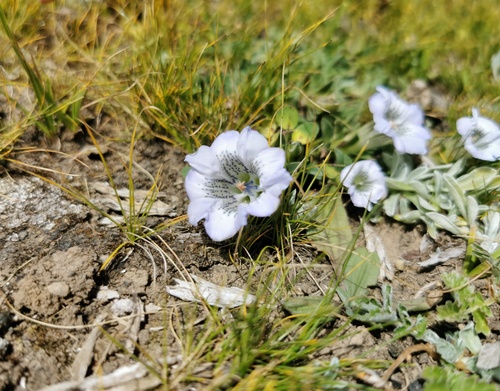
iNaturalist· cc-by-nc
(c) SunGW, some rights reserved (CC BY-NC)
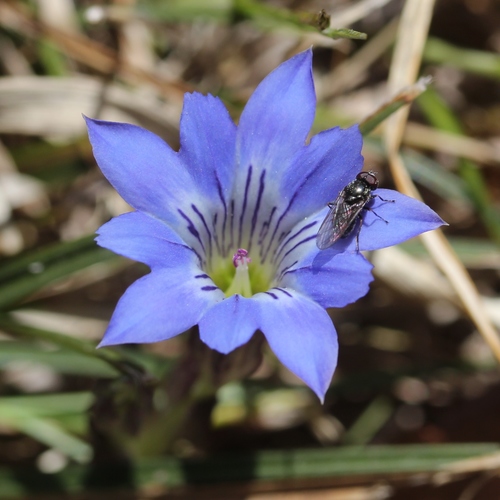
iNaturalist· cc-by-nc
(c) SunGW, some rights reserved (CC BY-NC)
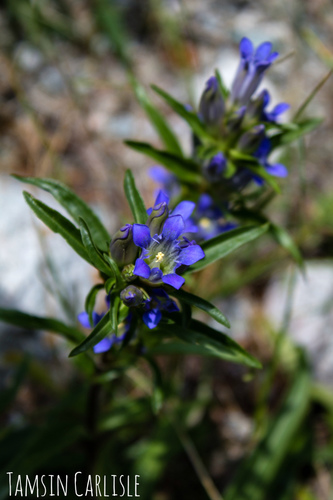
iNaturalist· cc-by-nc
(c) zannatul_sanzida, some rights reserved (CC BY-NC)
Summary
Evergreen tree reaching 25 m tall and 20 m wide, growing slowly. Hardy to UK zone 10 and frost tender. Flowers pollinated by insects, birds, and bats. Attracts wildlife. Grows in light sandy, medium loamy, and heavy clay soils tolerating poor nutrition. Suitable for mildly acid to alkaline pH and very acid conditions. Requires full sun and prefers moist or wet soil. Used as street tree, public landscape specimen, and in bonsai culture.
Description
A tree. It grows 10-25 m tall. It usually has an irregular shape. The trunk is dark brown with deeply cracked bark. The leaves are oval and light green. The flowers are yellow. The flowers unfurl at sunset and have a strong scent. The fruit are red berries.
Edible Uses
The root may be edible.
Medicinal Uses
A decoction of the bark is used as a febrifuge to treat conditions such as malaria. A decoction of the twigs and leaves is used to control dysentery and severe diarrhoea.
Known Hazards
Skin rashes may develop when handling green logs with bark on.
Distribution
It is a tropical plant. It can grow in poor soils including poorly-aerated and poorly-drained soils. At FRIM in Malaysia.
Where It Grows
Andamans, Asia, Australia, Cambodia, Fiji, India, Indochina, Indonesia, Japan, Laos, Malaysia, Myanmar, Pacific, Papua New Guinea, PNG, Philippines, Myanmar, SE Asia, Singapore, Solomon Islands, Thailand, Vietnam,
Cultivation
A plant of the wet, lowland tropics, where it is found at elevations up to 400 metres. It grows best in areas where annual daytime temperatures are within the range 20° - 30°c, but can tolerate 10° - 36°c. It prefers a mean annual rainfall in the range 2,000 - 3,000mm, but tolerates 1,000 - 4,000mm. Grows best in a sunny position. Thrives in well-drained to swampy, periodically inundated habitats, occasionally even on permanently inundated localities, often along rivers or creeks. It can succeed on poor or degraded soils so long as they are well-drained, and even in lalang (Imperata cylindrica) grasslands, where it suppresses this noxious grass. Prefers a pH in the range 5 - 6, tolerating 4.5 - 6.5. Established plants are moderately drought tolerant. Considered a useful plantation species, as it is adaptable and hardy. The corky bark gives it some resistance to fire - an 8-year-old plantation in Alang Alang grassland suffered no damage from a passing fire. The lower branches are very persistent and pruning these promotes height growth. Trees coppice freely; locally, trees may often be pollarded for poles. Large trees are frequently hollow.
Propagation
Seed has quite long viability — when sown fresh it germinates at 65–80% within 15–60 days or more. The very fine seed should be mixed with fine sand and sown under light shade, with protection from ants. Water by gentle spraying to avoid disturbing seed. Seedlings can be transplanted to open nursery beds or containers after 2 months when 5–7cm tall, and planted out when 30–45cm high with an adhering soil clump. Initial viability of 80% drops to 65% after 3 months in airtight containers. Seeds can be stored for up to 6 months but lose viability quickly inside the fruit. Macerate the fruit by hand to extract seeds, then wash and dry them. Allowing seed to ripen for 1 month after collection is reported, though immediate sowing also gives good results. Whole berries can be sown, but seedlings will not emerge until after 6 weeks. Root suckers are an easy propagation method. Cuttings from mature branch wood failed to root, but cuttings taken from coppice shoots rooted successfully.
Other Uses
The latex found under the skin of the fruit is used as an adhesive. The heartwood is light yellowish-brown and the sapwood light yellow with an unpleasant smell. The wood is medium-weight, hard, and very durable, and is the main source of tembesu timber, considered first-class for turnery. Nailing properties are good, and the wood can be peeled into 1.5mm veneer at a 90° peeling angle without pre-treatment with good results. It is used as sawn and round wood for posts and piles in houses, bridges, and ships, and for railway sleepers, electric and telephone line posts, barrels, chopping blocks, furniture, cabinetwork, door and window sills, and wood carvings. The wood yields very high-quality fuel and charcoal. The tree is used for reforestation, partly due to its ability to suppress dense weed cover including Imperata cylindrica and Gleichenia linearis. It is planted to control soil erosion and occurs naturally as a pioneer on burnt-over areas and poor sites such as alang alang grassland.
Other Information
An important timber tree but very very minor as a food.
Notes
It is also put in the Loganiaceae and the Potaliaceae families. The bark has been used in medicine.
Synonyms
Also Known As
Ahnyin, Anan, Ananma, Buabua, Kan krao, Man pa, Munpla, Pohon tembusu, Tatrao, Ta trav, Temasuk, Tembesu, Tembusu, Trai, Trai nam bo, Urung
References (4)
- Delang, C. O., 2007, Ecological Succession of Usable Plants in an Eleven-Year Fallow Cycle in North Lao P.D.R., Ethnobotany Research and Applications. Vol. 5:331-350
- GRIN
- Sukarya, D. G., (Ed.) 2013, 3,500 Plant Species of the Botanic Gardens of Indonesia. LIPI p 278
- Van Sam, H. et al, 2004, Trees of Laos and Vietnam: A Field Guide to 100 Economically or Ecologically Important Species. Blumea 29 (2004) 201-349