Frasera speciosa
Douglas ex Griseb.
Green gentian, Gentian root, Yellow gentian
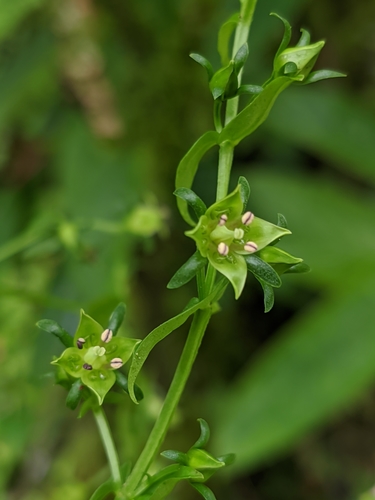
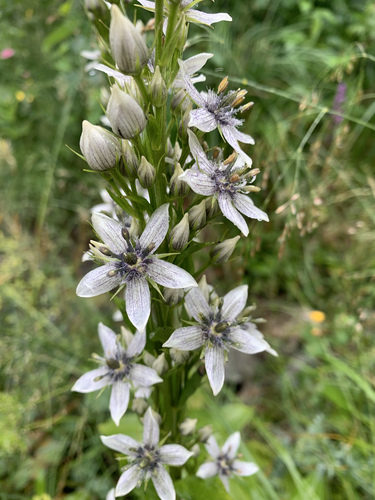
iNaturalist· cc-by-nc
(c) Scott F Smith, some rights reserved (CC BY-NC), uploaded by Scott F Smith
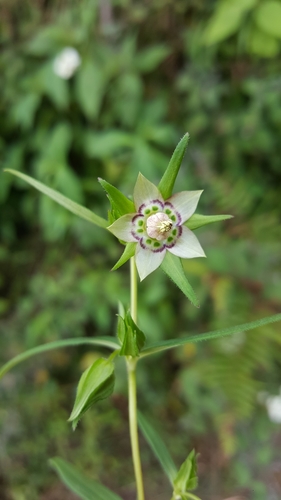
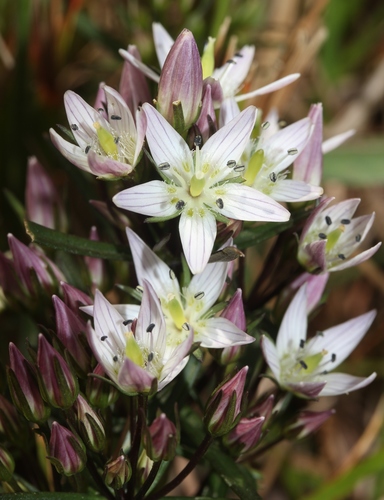
iNaturalist· cc-by-nc
(c) Morgan Stickrod, some rights reserved (CC BY-NC), uploaded by Morgan Stickrod
iNaturalist· cc-by-nc
(c) Eric Hough, some rights reserved (CC BY-NC), uploaded by Eric Hough
Summary
Source: WikipediaFrasera speciosa is a species of flowering plant in the gentian family (Gentianaceae) known by the common names elkweed, monument plant, and green gentian. When blooming it grows a tall stalk with numerous flowers that have purple dotted green petals. Each plant can flower just once before it dies.
Description
A herb. It grows 1.5 m tall. It can grow for 2 or several years. The stem is stout and upright. The leaves on the stem are oblong to sword shaped and in rings. They have pointed tips. They can be 50 cm long. Flowers are produced in clusters along the stem. The plant dies after flowering.
Edible Uses
The fleshy root has reportedly been eaten by Native American peoples, but caution is advised as roots of closely related plants are used medicinally as emetics and cathartics.
Medicinal Uses
The whole plant is febrifuge, pectoral, laxative, and tonic. An infusion of dried, powdered leaves or root has been used to treat diarrhoea. A cooled decoction of the roots has been used for asthma, colds, and digestive complaints. An infusion of the plant has been used as a contraceptive. Caution is advised in the use of this plant.
Known Hazards
When used medicinally, large doses of the powdered root have proved fatal.
Distribution
It is a temperate plant. It grows between 1,500-3,000 m above sea level.
Where It Grows
North America, USA,
Cultivation
Requires a moist but well-drained position and a stony peaty soil. Requires an acidic soil. A very ornamental plant.
Propagation
Sow seed in spring in a greenhouse. Prick seedlings out into individual pots when large enough to handle and grow on in the greenhouse for at least their first winter. Plant out into permanent positions in late spring or early summer, after the last expected frosts. Can also be propagated by division in late winter.
Other Uses
The root, ground to a powder and mixed with oil, has been used as a parasiticide to kill lice.
Synonyms
Also Known As
Deer's ears, Elkweed
References (5)
- Beckstrom-Sternberg, Stephen M., and James A. Duke. "The Foodplant Database." http://probe.nalusda.gov:8300/cgi-bin/browse/foodplantdb.(ACEDB version 4.0 - data version July 1994)
- Fl. bor.-amer. 2:66, t. 153. 1838
- Kiple, K.F. & Ornelas, K.C., (eds), 2000, The Cambridge World History of Food. CUP p 1777
- Moerman, D. F., 2010, Native American Ethnobotany. Timber Press. p 238
- Plants for a Future database, The Field, Penpol, Lostwithiel, Cornwall, PL22 0NG, UK. http://www.scs.leeds.ac.uk/pfaf/