Chironia baccifera
L.
iNaturalist· cc-by-nc
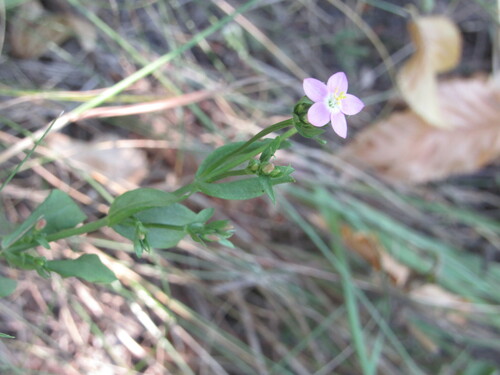
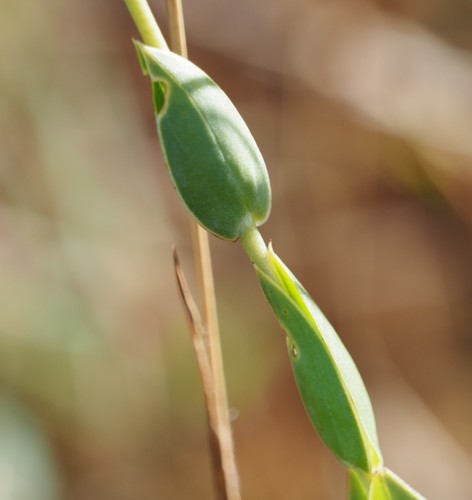
(c) Peter Slingsby, some rights reserved (CC BY-NC), uploaded by Peter Slingsby
iNaturalist· cc-by-nc
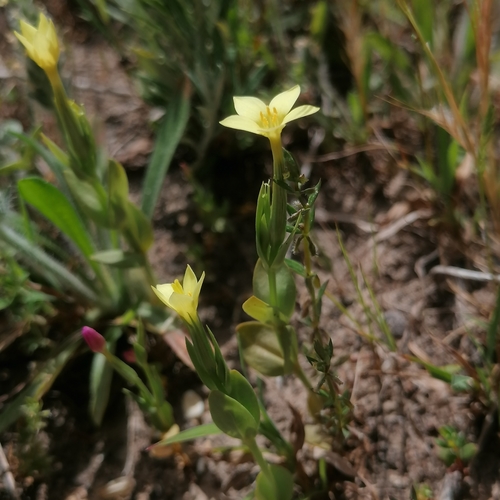
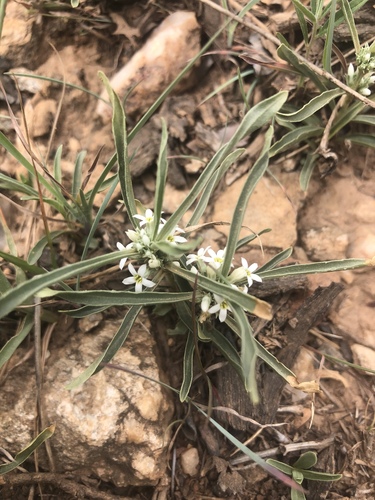
(c) Rolf Theodor Borlinghaus, some rights reserved (CC BY-NC), uploaded by Rolf Theodor Borlinghaus
iNaturalist· cc-by-nc
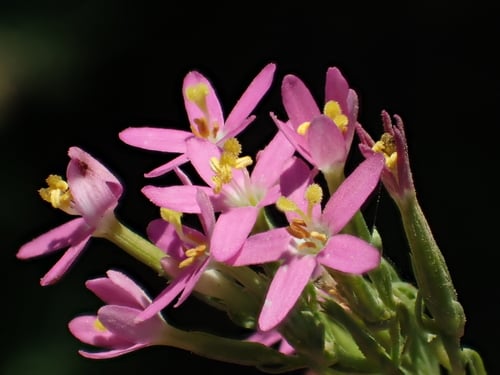
(c) Carina Lochner, some rights reserved (CC BY-NC), uploaded by Carina Lochner
Summary
Source: WikipediaChironia baccifera, known as Christmas berry (a name it shares with Passerina ericoides), bitterbossie or aambeibessie, is species of Chironia native to southern South Africa. A bushy shrub, it can reach 1 m (3 ft 3 in), but is typically 0.5 m (1 ft 8 in) in width and height. Its Afrikaans name aambeibessie refers to its supposed medicinal use in treating haemorrhoids. It is used as an ornamental, preferring sandy soils. It is mildly toxic.
Description
A small shrub. It grows 1 m tall. The branches can be angled or with wings. The leaves are narrow and spreading. They are 5-20 mm long by 1-2.5 mm wide. The edges are curved. The flowers occur singly at the ends of branches. They are pink. The fruit are red when ripe. There are many seeds.
Edible Uses
The fruit are eaten raw as a snack.
Traditional Uses
The fruit are eaten raw as a snack.
This uses section is brief — help expand it
Distribution
It is a subtropical plant. It grows on sandy flats.
Where It Grows
Africa, South Africa*, Southern Africa,
Synonyms
Also Known As
Bitterbos, Bitterbessiebos, Spreeubos
References (3)
- De Vynk, J. C., et al, 2016, Indigenous edible plant use by contemporary Khoe-San descendants of South Africa's Cape South Coast. South African Journal of Botany. 102 (2016) 60-69
- Ruiters-Welcome, A. K., 2019, Food plants of southern Africa. Ph.D. thesis. Univ. of Johannesburg p 63
- Welcome, A. K. & Van Wyk, B.-E., 2019, An inventory and analysis of the food plants of southern Africa. South African Journal of Botany 122 (2019) 136–179