Omphalocarpum elatum
Miers
iNaturalist· cc-by
(c) Mahomed Desai, some rights reserved (CC BY), uploaded by Mahomed Desai
iNaturalist· cc-by
(c) Mahomed Desai, some rights reserved (CC BY)
Summary
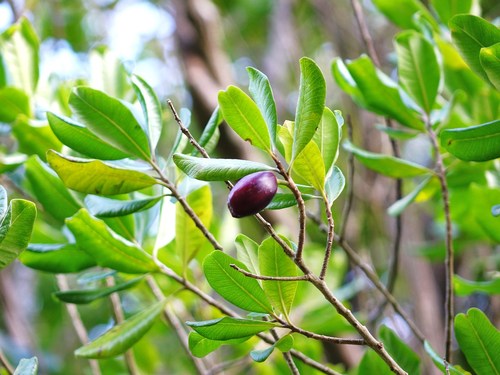
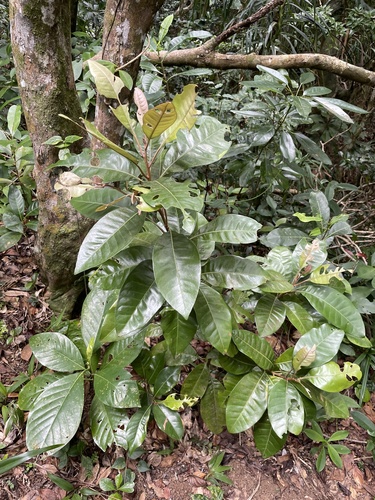
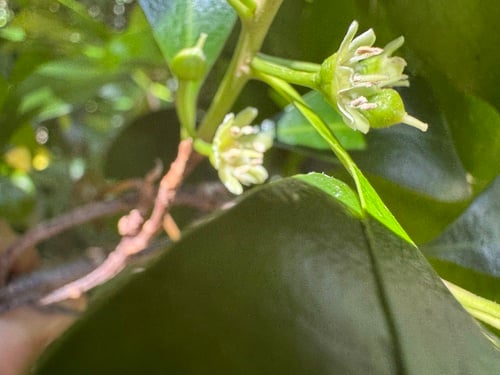
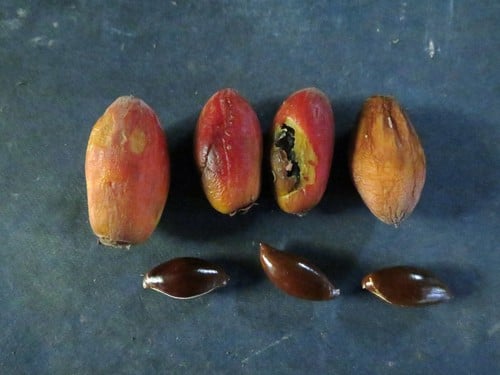
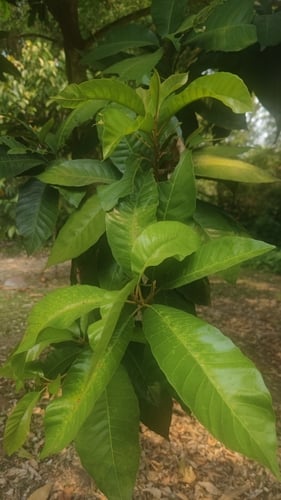
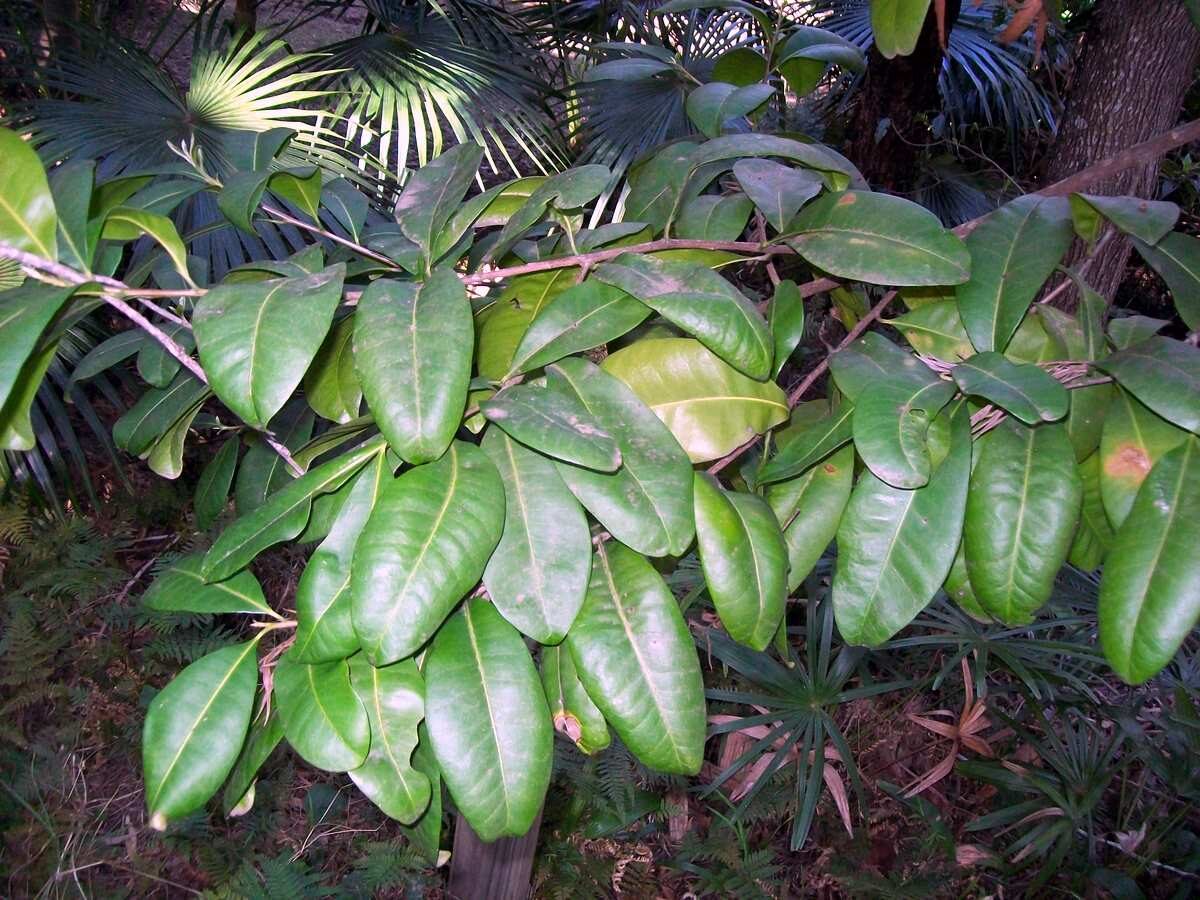
Source: WikipediaOmphalocarpum elatum Miers ('omphalocarpum' = navel fruit, 'elatum' = lofty) is a tall, tropical African tree belonging to the family Sapotaceae, remarkable for the large fruits growing directly from the trunk, and in many ways resembling the Lecythidaceae genus Napoleonaea. It is found in Equatorial Guinea, Sierra Leone, Ghana, the Central African Republic, Gabon, the Democratic Republic of the Congo, Nigeria, Liberia, Cameroon, Côte d’Ivoire and Angola in the south. The fruits are favoured by elephants, the only animals able to break through the hard shell. They do this by skewering the fruit with a tusk while using their trunk to brace it against the ground. Having passed through the elephant's digestive tract, seeds germinate more readily. Although not yet endangered, the tree's life cycle is tied to that of forest elephants, and may become threatened in regions where elephant populations are under pressure. The tree is some 30 m (98 ft) tall and about 80 cm (31 in) in diameter at breast height, with a straight trunk which is fluted near its base and having no buttresses. Its bark is scaly and reddish-brown in color with lenticels in vertical rows, its slash showing as pinkish-brown with copious white latex. Leaves are alternate and simple, up to 25 x 8 cm in clusters at the ends of branchlets, oblanceolate with obtuse-rounded apex, and decurrent base. The secondary venation is parallel and the abaxial leaf surfaces are glabrous. The flowers resemble those of Mimusops, the inflorescences occurring in fascicles, with 4-6 flowers per fascicle. The calyx is made up of 5 sepals, each 5–12 mm long; the corolla tube and lobes are 9–17 mm long; the stamens are 12 mm long. The ovary is 5-locular. Fruits grow from the trunk, are flattened sub-globose in shape (oblate spheroid), some 15 x 8 cm, with a hard exocarp and whitish pulp, holding numerous seeds. The species may be found flowering and fruiting throughout the year where climatic conditions are suitable. The fruit takes about one year to mature and ripen. Its uses include planks, mortars and bowls, handles, seats and drums, and dugout canoes. A decoction of the bark is used to treat constipation, malaria, and as a cure for lactation failure, while a decoction of the young leaves is used to treat coughs. A mixture of the seeds and bark, soaked in palm wine, is used as a purgative, while the seeds are also used in the treatment of yaws, for jewellery such as bangles and necklaces, and in rattles. The bark of this species is an effective anthelmintic against larvae of the parasitic worm Haemonchus contortus, while the seeds contain alkaloids and saponins.
Description
A tropical tree in the Sapotaceae family. The fruit is edible.
This description is brief — help expand it
Edible Uses
The fruit is eaten.
Medicinal Uses
A decoction of the bark is used in traditional medicine to treat constipation and restore milk flow in nursing mothers. A decoction of the bark, combined with the fruits of peppers (Capsicum annuum) and Solanum anguivi, is used to treat malaria. A decoction of the young leaves is used for the treatment of cough. A mixture of the seeds and crushed bark, diluted in palm wine, is used as a purgative in case of poisoning and to treat scrotal elephantiasis. The seeds are used in the treatment of yaws. In tests the bark showed high in-vitro anthelmintic activity against Haemonchus contortus larvae. The seeds contain alkaloids and saponins.
Distribution
It is a tropical plant.
Where It Grows
Africa, Central Africa, Congo DR,
Cultivation
The plant flowers and fruits throughout the year, the fruits taking about one year to ripen. They are eaten by elephants, which are the only animals able to crack open the hard, thick shell. The elephants swallow the pulp together with the seeds, which are deposited in the dung and thus dispersed. It seems that the presence of elephants is needed for successful seed germination under natural conditions, because the seeds of rotten fruits on the ground are destroyed by insects and seedlings are not found under trees in regions where elephants have disappeared.
Propagation
Seed - those that have passed through an elephant’s gut germinate after about 2 weeks; seeds extracted from the fruits take 3 - 9 weeks. The seedlings are probably shade tolerant.
Other Uses
An oil is obtained from the seed. The latex has been used as an adulterant of rubber. The seeds are used for decorative purposes such as making necklaces. The heartwood is pale reddish brown or pale brown with a pinkish tinge, and indistinctly demarcated from the whitish sapwood. The grain is straight or slightly wavy, texture is moderately fine. Fresh wood has a foetid smell, but dry wood is odourless. The wood is fairly easy to work and finishes smoothly. It is only moderately durable. The wood is used for planks, implements such as mortars and bowls, handles, seats and drums. It is also used for dugout canoes.
Synonyms
References (1)
- Ichikawa, M., Determinismes Ecologiques et Culturels Des Choix Alimentaires de chasseurs-cueilleurs Mbuti du Zaire. p 759 in L'Alimentation en Foret Tropicale UNESCO