Burkea africana
Hook.
Rhodesian ash, Red syringa
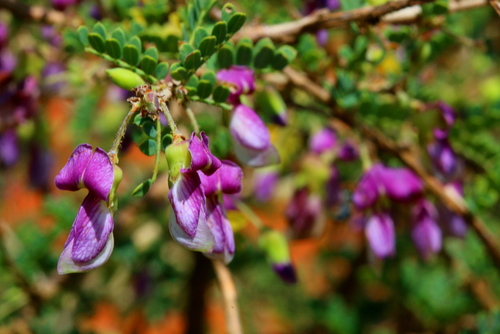
iNaturalist· cc-by-nc
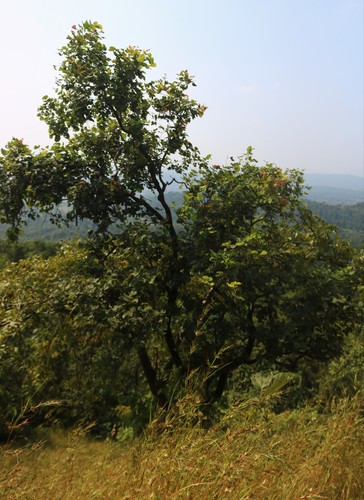
(c) Bart Wursten, some rights reserved (CC BY-NC), uploaded by Bart Wursten
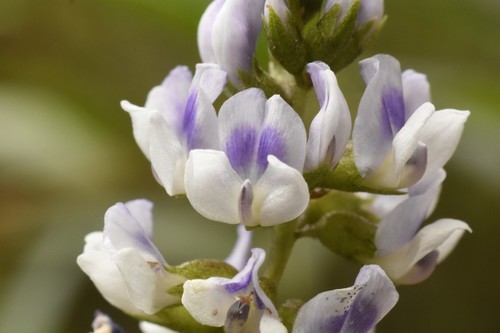
iNaturalist· cc-by-nc
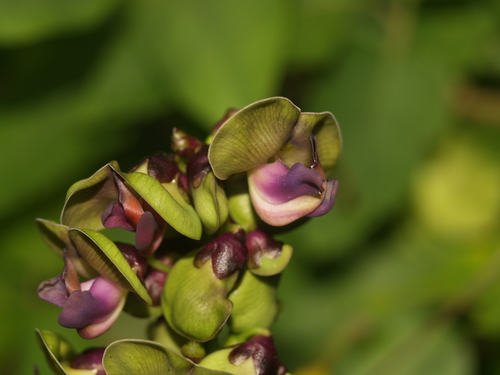
(c) Christine Sydes, some rights reserved (CC BY-NC)
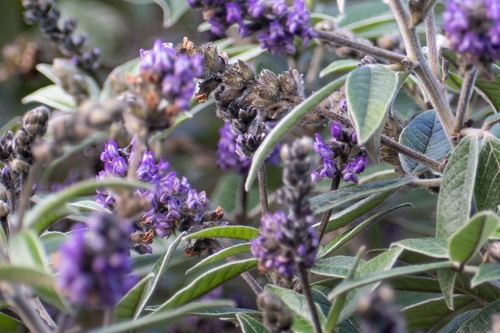
iNaturalist· cc-by-nc
(c) Christine Sydes, some rights reserved (CC BY-NC)
Summary
Source: WikipediaBurkea africana, the wild syringa (Bambara: siri), is a deciduous, medium-sized, spreading, flat-topped tree which grows in the woodlands and savannas of sub-Saharan Africa. It is the sole species in genus Burkea, which belongs to the subfamily Caesalpinioideae of the family Fabaceae. The genus was named in honour of Joseph Burke, the botanist and collector.
Description
It can be a small or medium sized tree. It is often 5-8 m tall but also up to 21 m tall. It has a flat crown. The bark is dark and rough and flakes off. The twigs are robust ending in a stubby tip. The young growing tips are covered with velvety red hairs. The leaves are blue-green. The leaves are up to 38 cm long and droop. They are clustered near the ends of branches. The leaves are twice divided with 2-4 pairs of side branches and these have 5-11 leaflets. The leaflets are oval and 2.5 cm long by 1.9 cm wide. They are silvery when young. The flower buds are small and greenish-yellow. They occur in long strings at the ends of branches. The flowers are yellow with a sweet scent. The pods are 3-8 cm long and 1.9-2.5 cm wide. They are flat, brown and woody. They normally only have one seed.
Edible Uses
If cut from the heartwood, it produces durable, insect-resistant timber with a moderately fine, wavy grain which is dark brown to reddish brown, and is used for parquet flooring and fine cabinet and furniture work.
Medicinal Uses
The bark, roots and leaves are commonly used in traditional medicine. The bark is used to treat fevers, coughs, colds, catarrh, pneumonia, stomach obstruction, menorrhoea, headaches, inflammation of tongue and gums, poisoning and skin diseases. The pounded bark is used as an arrow poison antidote. The powdered bark is applied externally to ulcers and wounds, and to treat scabies. An infusion (of the bark?) is used as a treatment against gonorrhoea and syphilis. The gum is aphrodisiac. The roots are used to treat stomach-ache, abscesses, oedema, epilepsy, bloody diarrhoea, gonorrhoea, syphilis and toothache. They have also been used as antidote against arrow poison. The leaves are used in the treatment of fever, headache, epilepsy, ascites and conjunctivitis.
Known Hazards
The bark contains alkaloids and is poisonous to grazing animals. The pounded bark is used to stupefy fish. The foliage is toxic to grazing animals.
Distribution
A tropical plant. It occurs in sandy areas of dry open bush. In South Africa it grows from 600-1370 m altitude. It needs an annual rainfall above 450 mm. In Zimbabwe it grows in areas with a rainfall between 850-950 mm per year. It can grow in salty soils. It does not suit wet soils. It can grow in arid places.
Where It Grows
Africa, Angola, Benin, Botswana, Burkina Faso, Cameroon, Central Africa, Congo, East Africa, Ethiopia, Ghana, Guinea, Guinée, Malawi, Mali, Mozambique, Namibia, Nigeria, Senegal, Sierra Leone, South Africa, Southern Africa, Sudan, Tanzania, Togo, Uganda, West Africa, Zambia, Zimbabwe,
Cultivation
A plant of the moist to semi arid tropics, where it is found at elevations from near sea level to 1,740 metres. It grows best in areas where annual daytime temperatures are within the range 14 - 36°c, but can tolerate 8 - 44°c. Mature plants can be killed by temperatures of -8°c or lower, but young growth can be severely damaged at 0°c. It prefers a mean annual rainfall in the range 650 - 850mm, but tolerates 600 - 900mm. The mean annual rainfall in its area of distribution is 1,000 - 1,200mm. The plant shows a strong preference for deep, loose, sandy soil. Prefers a pH in the range 5 - 7, tolerating 4.5 - 7.5. The root system is often shallow and can extend for many metres from the bole. Young trees reach sexual maturity when the bole diameter is about 12.5 cm. Plants with a bole diameter of 12.5cm or more generally recover after forest fires, being protected by the thickness of their bark. Trees usually respond well to coppicing.
Propagation
Seed - it often has a low germination rate, and the germination time is very variable, from 10 days to 6 months or more. Because it has a hard seedcoat, it may benefit from scarification before sowing to speed up germination. This can usually be done by pouring a small amount of nearly boiling water on the seeds (being careful not to cook them!) and then soaking them for 12 - 24 hours in warm water. By this time they should have imbibed moisture and swollen - if they have not, then carefully make a nick in the seedcoat (being careful not to damage the embryo) and soak for a further 12 hours before sowing. It has been reported that seedlings often die off in the seed tray or when transplanted. However, experiments showed that if the seedlings are transplanted into a well-drained, sandy soil with superphosphate, the rates of survival can be quite high. Seedlings should be given 70 - 80% shade and water once every week. Red sandy soil gives the best results. Cuttings produce leaves and shoots that often soon die off.
Other Uses
A dark coloured soluble gum is obtained from the stem. It is of fair quality. The roots, bark and seedpods are a source of tannins. A black dye is obtained from the bark. The bark is used as a dye to make the roots of Combretum zeyheri become grey to blackish; these roots are then woven into baskets. The twigs are used as chewing sticks in order to clean the teeth and maintain healthy gums. The twigs showed antimicrobial activity against a wide variety of bacteria and fungi; this supports the use as chewing-stick for dental care. The heartwood is reddish-brown to dark brown, the sapwood light brown with concentric rows filled with gum looking like annual rings. The grain is interlocked or wavy; texture fine to moderately fine and even; the wood is lustrous and displays a nice stripe figure. The wood is hard, heavy and durable. It is not difficult to saw, but difficult to work with hand tools, amenable to a fine polish but liable to split on nailing. It has a variable resistance to insect/borers. The wood is used for poles (e.g. For heavy construction and fences), parquet flooring, furniture, railway sleepers, utensils such as mortars, tool handles, drums and other musical instruments such as xylophones and balafons. It has been claimed by wagon makers that the wood is the best for making hubs because it does not shrink or split. It is also suitable for joinery, interior trim, ship building, mine props, sporting goods, toys, novelties, draining boards, carving and turnery. The wood makes a good fuel and charcoal. It has been used commonly for iron smelting because of the hot flame and little ash produced.
Notes
In Africa a popular caterpillar eats this tree and these are roasted and eaten by people. This legume tree does not form nodules. Also as Caesalpinaceae.
Also Known As
Djinnou, Kassinamunho, Kauidze, Mosheshe, Mufhulu, Mukarati, Mukoso, Omutundungu, Umnondo, Wild seringa
References (24)
- Achigan-Dako, E, et al (Eds), 2009, Catalogue of Traditional Vegetables in Benin. International Foundation for Science.
- Bonou, A., et al, 2013, Valeur economique des Produits Forestiers Non Ligneux (PFNL) au Benin. Editions Universitaires Europeennes p 94
- Chapman, J. D. & Chapman, H. M., 2001, The Forest Flora of Taraba and Andamawa States, Nigeria. WWF & University of Canterbury. p 182
- Drummond, R. B., 1981, Common Trees of the Central Watershed Woodlands of Zimbabwe, National Herbarium Salisbury. p 60
- Fowler, D. G., 2007, Zambian Plants: Their Vernacular Names and Uses. Kew. p 30
Show all 24 references Hide references
- Fox, F. W. & Young, M. E. N., 1982, Food from the Veld. Delta Books. p 225
- Grivetti, 1976, 1979,
- Grivetti, L. E., 1980, Agricultural development: present and potential role of edible wild plants. Part 2: Sub-Saharan Africa, Report to the Department of State Agency for International Development. p 30
- Icon. Pl. 6: t. 593-594. 1843
- Lee, 1979,
- Mannheimer, C. A. & Curtis. B.A. (eds), 2009, Le Roux and Muller's Field Guide to the Trees and Shrubs of Namibia. Windhoek: Macmillan Education Namibia. p 136
- Mbuya, L.P., Msanga, H.P., Ruffo, C.K., Birnie, A & Tengnas, B., 1994, Useful Trees and Shrubs for Tanzania. Regional Soil Conservation Unit. Technical Handbook No 6. p 142
- Palgrave, K.C., 1996, Trees of Southern Africa. Struik Publishers. p 266
- Palmer, E and Pitman, N., 1972, Trees of Southern Africa. Vol. 2. A.A. Balkema, Cape Town p 841
- Peters, C. R., O'Brien, E. M., and Drummond, R.B., 1992, Edible Wild plants of Sub-saharan Africa. Kew. p 121
- Rodin, 1985,
- Roodt, V., 1998, Trees & Shrubs of the Okavango Delta. Medicinal Uses and Nutritional value. The Shell Field Guide Series: Part 1. Shell Botswana. p 187
- Royal Botanic Gardens, Kew (1999). Survey of Economic Plants for Arid and Semi-Arid Lands (SEPASAL) database. Published on the Internet; http://www.rbgkew.org.uk/ceb/sepasal/internet [Accessed 21st April 2011]
- Ruiters-Welcome, A. K., 2019, Food plants of southern Africa. Ph.D. thesis. Univ. of Johannesburg p 56
- van Wyk, B, van Wyk, P, and van Wyk B., 2000, Photographic guide to Trees of Southern Africa. Briza. p 75
- van Wyk, Ben-Erik, 2019, The diversity and multiple uses of southern African legumes. Australian Systematic Botany, 2019, 32, 519–546
- Welcome, A. K. & Van Wyk, B.-E., 2019, An inventory and analysis of the food plants of southern Africa. South African Journal of Botany 122 (2019) 136–179
- World Checklist of Useful Plant Species 2020. Royal Botanic Gardens, Kew
- www.zimbabweflora.co.zw 2011