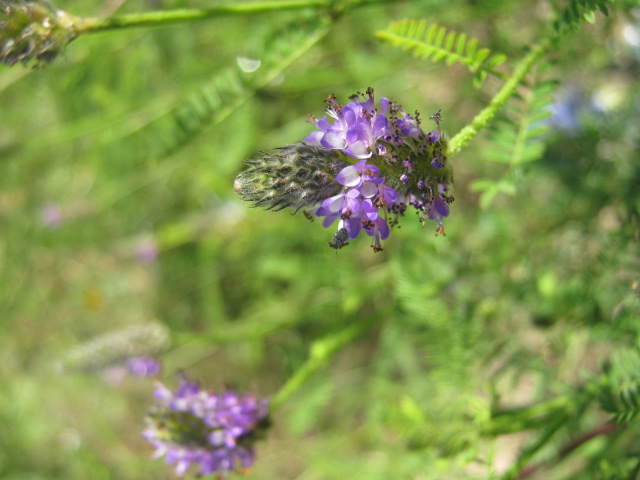
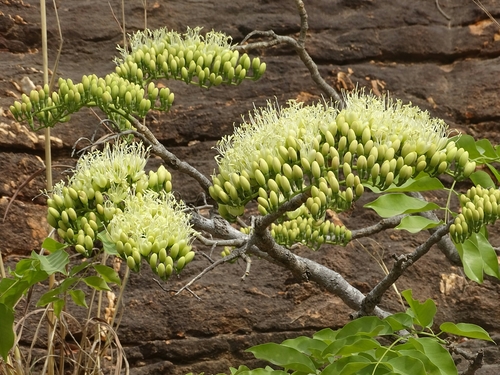
Ormocarpum trichocarpum
(Taub.) Engl.
iNaturalist· cc-by-nc
(c) tjeerd, some rights reserved (CC BY-NC), uploaded by tjeerd
iNaturalist· cc-by-nc
(c) sjgoodman, some rights reserved (CC BY-NC)
iNaturalist· cc-by-nc
(c) JP, some rights reserved (CC BY-NC)
Description
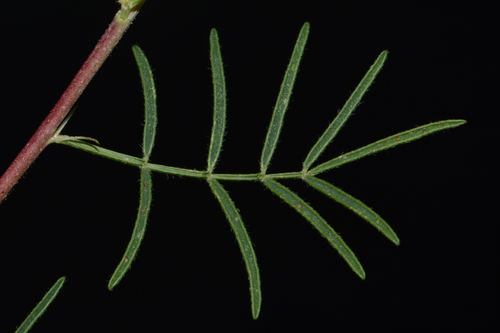
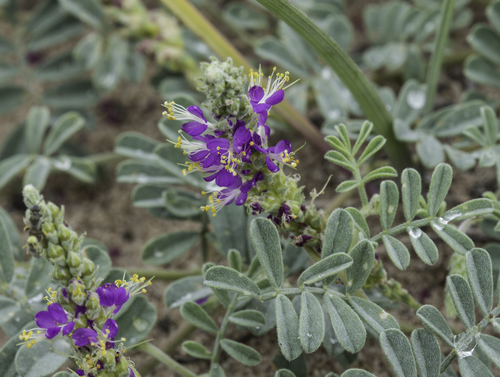
A shrub or small tree. It grows 1-5 m tall. It has white hairs. The bark on old stems is cracked and corky. The leaves have 7-15 leaflets. They are 3-11 mm long by 1.5-3.5 mm wide.
Edible Uses
The dried leaves are pounded and sieved. This powder is stirred into warm water, which is then boiled while stirring to form a thick paste, which may then be mixed with pounded groundnuts and eaten with a staple food such as ugali or rice.
Traditional Uses
The leaves are eaten as a vegetable.
This uses section is brief — help expand it
Medicinal Uses
Ash from the plant is rubbed onto swollen parts of the body after scarification in order to reduce oedema and relieve allergic conditions. The roots are used to treat rheumatism and stomach problems. The crushed leaves are rubbed on to the forehead to treat headache.
Distribution
It is a tropical plant.
Where It Grows
Africa, Botswana, Central Africa, East Africa, Eswatini, Ethiopia, Kenya, Rwanda, South Africa, Southern Africa, Sudan, Swaziland, Tanzania, Uganda,
Cultivation
This species possibly hybridizes with O. Kirkii in the wild.
Other Uses
The wood is used for walking sticks and poles. The wood is used for fuel.
Synonyms
Also Known As
Kiumbu, Shubde
References (6)
- Harkonen, M. & Vainio-Mattila, K., 1998, Some examples of Natural Products in the Eastern Arc Mountains. Journal of East African Natural History 87:265-278
- Lulekal, E., et al, 2011, Wild edible plants in Ethiopia: a review on their potential to combat food insecurity. Afrika Focus - Vol. 24, No 2. pp 71-121
- Ruiters-Welcome, A. K., 2019, Food plants of southern Africa. Ph.D. thesis. Univ. of Johannesburg p 59
- Vainio-Mattila, K., 2000, Wild vegetables used by the Sambaa in the Usumbara Mountains, NE Tanzania. Ann. Bot. Fennici 37:57-67
- van Wyk, Ben-Erik, 2019, The diversity and multiple uses of southern African legumes. Australian Systematic Botany, 2019, 32, 519–546
Show all 6 references Hide references
- Welcome, A. K. & Van Wyk, B.-E., 2019, An inventory and analysis of the food plants of southern Africa. South African Journal of Botany 122 (2019) 136–179