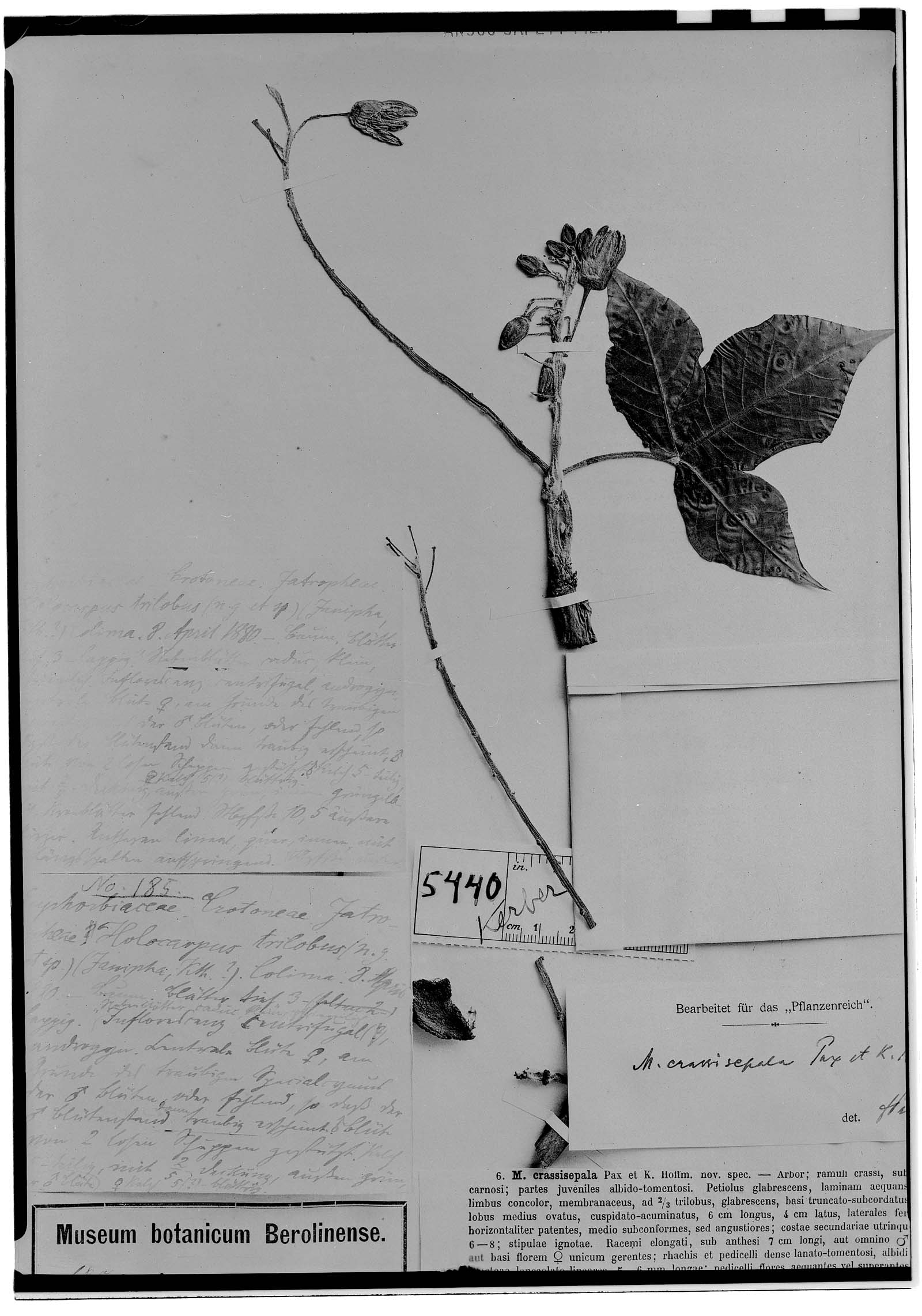
Sapium sebiferum
(L.) Roxb.
Chinese tallow tree
iNaturalist· cc-by-nc
(c) Jason J Brunet, some rights reserved (CC BY-NC)
iNaturalist· cc-by-nc
(c) J. Richard Abbott, some rights reserved (CC BY-NC)
iNaturalist· cc-by-nc
(c) J. Richard Abbott, some rights reserved (CC BY-NC)
Summary
Source: WikipediaA fast-growing deciduous tree reaching 9 m tall and 5 m wide, hardy to UK zone 9. Flowers appear from January to February with seeds maturing in November. The tree is monoecious and wind-pollinated. It thrives in light, medium, or heavy soils with mildly acidic to basic pH, tolerates saline conditions, and requires full sun and moist soil.
Description
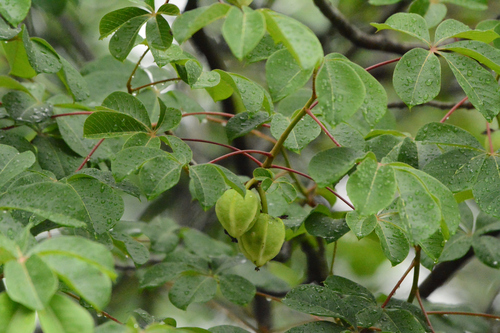
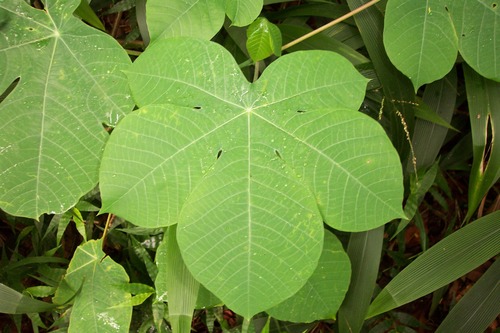
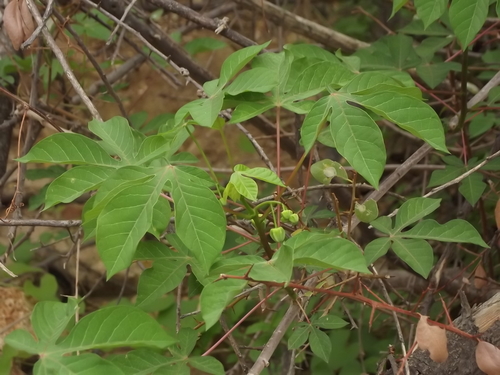
A small shrub. It grows 6 m high. The stem is crooked and often gnarled. The twigs are slender. The leaf blades are 2-8 cm long by 1-7 cm wide. They are broadly oval. The fruit has 3 lobes and are 9 mm long by 11 mm wide. The seeds are 7 mm long by 6 mm wide. They have a white waxy layer around the seeds.
Edible Uses
The wax from the seed is used as a lard substitute or in place of cacao butter. The seed contains 8.1–9.2% protein and 40.5–50.7% fat.
Medicinal Uses
The leaves and roots are depurative, diuretic, and laxative. A decoction is used to treat oedema, constipation, poisoning by Polygonum perfoliatum and Tripterygium wilfordii, and skin diseases. The leaves are particularly useful for treating boils. The seed is antidote, emetic, hydragogue, and purgative; in China it is taken internally, which is considered a questionable practice given its toxic nature. The root bark is diuretic and is used to treat snake bites and skin ulcers. The sap of the tree is acrid and vesicant.
Known Hazards
The seed's white waxy aril is used in soap making (stillingia tallow). While the seed's inner oil (stillingia oil) is toxic but has industrial applications in the manufacturing of cloth dressing and drying oils. The nectar is non-toxic, and it has become a major honey plant for beekeepers. The honey produced from the plant is reputedly clear and of high quality. It is produced copiously during the month of June on the US Gulf Coast. In that region, beekeepers migrate with their honey bees to good tallow locations near the gulf. The tree is ornamental, fast growing, and provides shade. It is especially noteworthy if grown in areas that have strong seasonal temperature ranges with the leaves becoming a multitude of colours rivaling maples in the autumn. It is not choosy about soil types or drainage, but will not grow in deep shade. It has naturalized all over in Japan, and is reasonably hardy. It should not be planted outside of its native range due to its invasive tendencies.
Distribution
It is a temperate plant. In Pakistan it grows near rivers and up to 1,200 m altitude. It can grow in salty soils. It can grow in arid places. Arboretum Tasmania.
Where It Grows
Africa, Asia, Australia, Bangladesh, China, Cuba, East Africa, Himalayas, India, Indochina, Japan, Madagascar, Malawi, Myanmar, Northeastern India, Pakistan, SE Asia, Sikkim, Taiwan, Tasmania, USA, Vietnam, West Indies, Zimbabwe,
Propagation
Seed should not be cold stratified, as this can cause secondary dormancy. Sow in April in a warm greenhouse; germination usually occurs within 4 weeks. Prick out seedlings into individual pots when large enough to handle. Overwinter in a greenhouse for at least the first 2 winters and plant out in late spring. Cuttings of half-ripe wood can be taken in July/August in a frame.
Other Uses
The seed is coated with a wax that comprises about 24% of the seed's weight. This wax can be used to make candles and soap, and has excellent burning quality, producing an odourless, clear, bright flame. It is also used for cloth dressing and fuel. Known in commerce as Pi-yu, the pure tallow fat is separated by steeping the seed in hot water and skimming off the floating wax; it is solid below 40°C and is said to change grey hair to black. The seed also contains about 20% of a drying oil used to make candles, soap, varnishes, and native paints due to its quick-drying properties. It is additionally used in machine oils and as a crude lamp oil. The pure oil from the inner seed is known in commerce as Ting-yu. The residual cake after oil extraction is used as manure, particularly for tobacco fields. The leaves are rich in tannin; boiling them in alum water yields a black dye. The plant is used as a soil binder along roadsides and canals. The wood is white, even, close-grained, light, and soft to moderately hard, suitable for carving and used for making blocks for Chinese printing, furniture, and incense. The wood is also used as fuel.
Other Information
It is sold in local markets in China. It is cultivated.
Nutrition
| Part | Moisture | kJ | kcal | Protein | Vit A | Vit C | Iron | Zinc |
|---|---|---|---|---|---|---|---|---|
| Seed | — | — | 75 | — | — | — | — | — |
Synonyms
Also Known As
Arbol de sebo, Hong shu, Payaung
References (6)
- Flora of Pakistan. www.eFloras.org
- Li, D. et al, 2017, Ethnobotanical survey of herbal tea plants from the traditional markets in Chaoshan, China. Journal of Ethnopharmacology. 205 (2017) 195-206
- Manju, S., and Sundriyal, R. C., 2001, Wild Edible Plants of the Sikkim Himalaya: Nutritive Values of Selected Species. Economic Botany 55(3): 377-390
- Miguel, E., et al, 1989, A checklist of the cultivated plants of Cuba. Kulturpflanze 37. 1989, 211-357
- Royal Botanic Gardens, Kew (1999). Survey of Economic Plants for Arid and Semi-Arid Lands (SEPASAL) database. Published on the Internet; http://www.rbgkew.org.uk/ceb/sepasal/internet [Accessed 16th April 2011]
Show all 6 references Hide references
- Zeven, A. C. & de West, J. M. J., 1982, Dictionary of cultivated plants and their regions of diversity. Wageningen. p 36