Combretum glutinosum
Perr. ex DC.
Kuilinga
iNaturalist· cc-by-nc
(c) AMADOU BAHLEMAN FARID, some rights reserved (CC BY-NC), uploaded by AMADOU BAHLEMAN FARID
iNaturalist· cc-by-nc
(c) ONG OeBenin, some rights reserved (CC BY-NC), uploaded by ONG OeBenin
iNaturalist· cc-by-nc
(c) Oumarou HAMADOU, some rights reserved (CC BY-NC), uploaded by Oumarou HAMADOU
Summary
Source: WikipediaCombretum glutinosum is a shrub species of the genus Combretum, found in the Sahel belt in parts of Senegal, Burkina Faso, Ghana, Mali, the Gambia, Niger, Nigeria and Cameroon, across to parts of Sudan. It is known as dooki in Pulaar, Kantakara in Hausa, rat in Wolof and jambakatan kè in Maninka. Its synonyms are Combretum cordofanum Engl. & Diels, C. passargei Engl. & Diels, C. leonense Engl. & Diels.
Description
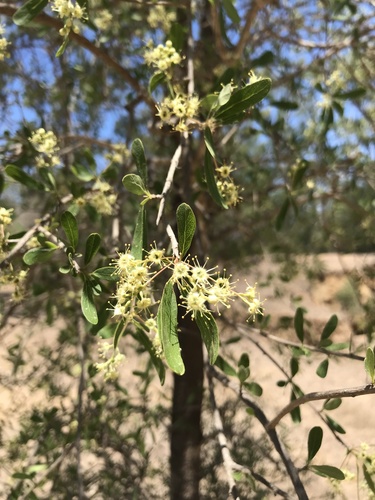
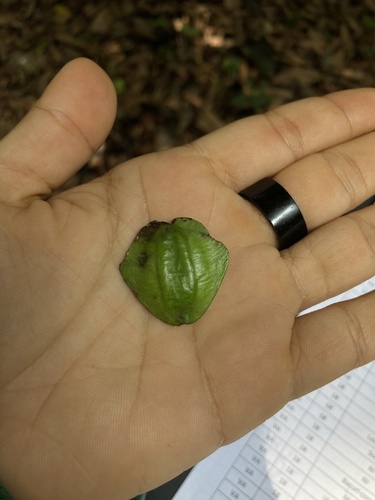
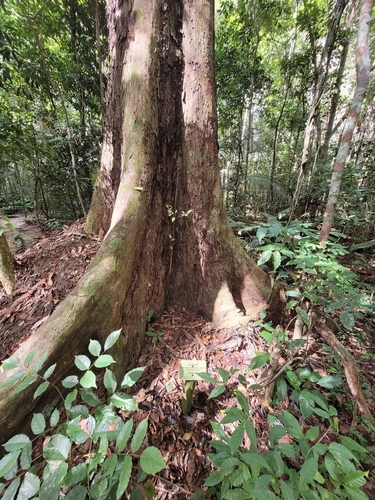
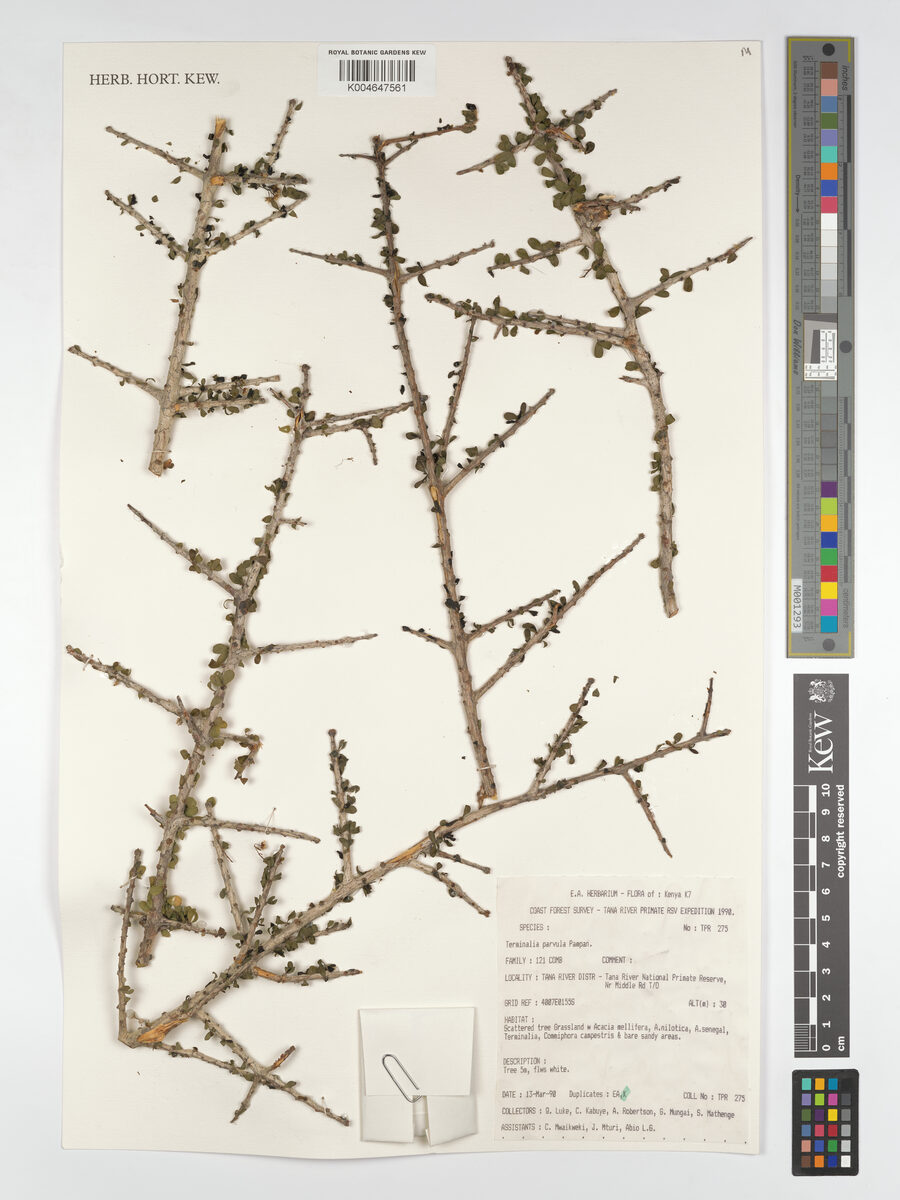
A shrub or small tree. It can be a woody climber. It grows 12 m tall. The leaves are bug and thick and whitish underneath. The young leaves are covered with a sticky secretion. The leaf shape varies. The flowering shoots are in the axils of leaves and are in yellow-green clusters 6-10 cm long. The fruit have 4 wings. They are about 3 cm long. They are green when young and light red when mature.
Edible Uses
The bark, leaves and roots are used by the people inhabiting Sahel Africa to produce yellow dye. The yellowish wood is "hard and extremely durable," and is used for building frames and tools, as well as fuel. The brownish or brownish yellow dyes are used in the textile industry and also in leather tanning and to dye mats. The plant is foraged by cattle, giraffes and other animals, and its young leaves are sometimes eaten as a vegetable by humans, sometimes with taro. The plant is in growing demand for the manufacture of bogolan textiles both in the local and international fashion world.
Traditional Uses
The dried leaves are used for tea.
This uses section is brief — help expand it
Medicinal Uses
Medicinal The plants bark, leaves and roots are extracted for traditional medicinal uses for treating various ailments from influenza, and rheumatism, to sexual issues such as impotence and syphilis. It is commonly brewed as a tea in tropical West Africa to relieve stomach issues, and to treat malaria in a decoction with a number of other leaves obtained in the bush. In the Senegambia region, it is one of a number of trees whose twigs are used as "chewing sticks," used in lieu of toothbrushes to clean teeth, remove food particles after eating, and to chew for pleasure. It is also used to fill cavities of carious teeth, to dress wounds, for fumigation and as incense. A decoction of the leaves is used for baths to relieve fatigue. Amongs the Serer people of the Senegambia region (Senegal, Gambia, and Mauritania, and Guinea-Bissau), it is also used for the medicinal purposes described above, sometimes mixed with sugar as it is very bitter.
Distribution
It is a tropical plant. It grows in the Sahel. It grows in savannah woodland. It grows in the Sahara on dunes and poor soils. It grows in areas with an annual rainfall between 200-900 mm. It can grow in arid places. In Nigeria it has been recorded at 900 m above sea level.
Where It Grows
Africa, Benin, Burkina Faso, Cameroon, Central Africa, Côte d'Ivoire, Gambia, Ghana, Guinea, Guinée, Guinea-Bissau, Ivory Coast, Mali, Mauritania, Niger, Nigeria, Sahel, Senegal, Sierra Leone, Sudan, West Africa,
Cultivation
A plant of the arid to semi-arid tropics, succeeding in areas where the annual mean rainfall is in the range 200 - 900mm. Thrives best on sandy and other free-draining soils. Established plants are very drought tolerant. Plants are particularly resistant to arid conditions, surviving where grasses will not, and recovering quickly from burning. Flowering is in the dry season after bush fires to which it is very resistant. Once established in an area, it easily forms dense stands. The tree coppices well. Plants are often infected by Loranthaceae plant parasites.
Propagation
Seed - removing the covering structures from the seeds improves the rate of germination. Extraction is done manually by pulling apart opposite wings. The optimum temperature for germination is between 25 and 30C, where 100% of seeds germinate. Germination rates of 70% or more are achieved at temperatures between 15 to 35C. The seed stores well. Germination rates up to 86% have been achieved after 18 month storage in a cool room at 4C.
Other Uses
The leaves, stems and root bark, collected from the wild, are important sources of yellow to brownish yellow dyes for cotton textiles. These dyes are also used to dye mats made of various vegetable fibres. The main importance of Combretum glutinosum however, is in the preparation of the internationally renowned 'bogolanfini' or 'bogolan' textiles. The black designs of bogolan are obtained by the reaction of plant tannins with iron salts contained in local fermented mud. While the basic process of making black dyes with tannin-plants and mordanting with iron-rich mud has been known all over the world and is still very much used in other parts of Africa for barkcloth and vegetable fibres, the special art of bogolan originally belongs to the women of several peoples of the Mande group: Bamanan, Dogon, Malinke, Minianka, Bobo and Senoufo. Formerly it was used to decorate garments for special groups of people and special occasions, imparting them symbolic protective and curative powers, but recently these cloths have attracted the attention of the international fashion world. The plant is also used in indigo dyeing; the wood ash being particularly appreciated to maintain the indigo vat at the optimum alkaline pH. The wood smoke is used for fumigation and as an incense. The wood is yellowish, hard, heavy and very durable. It is used in house construction, for tool handles and general carpentry. The wood makes a good fuel and is used in making charcoal.
Synonyms
Also Known As
Djambacatam, Jamba katang, Jambkato
References (9)
- Choudhary, S., 1999, Ethnobotany of Janjangbureh Island, The Gambia, West Africa. Honors thesis Dept. Biology City University of New York.
- Codjia, J. T. C., et al, 2003, Diversity and local valorisation of vegetal edible products in Benin. Cahiers Agricultures 12:1-12
- Grubben, G. J. H. and Denton, O. A. (eds), 2004, Plant Resources of Tropical Africa 2. Vegetables. PROTA, Wageningen, Netherlands. p 560
- Lykke, A. M., Mertz, O, and Ganaba, S., 2002, Food Consumption in Rural Burkina Faso, Ecology of Food and Nutrition, 41:119-152
- Maydell, H. von, 1990, Trees and shrubs of the Sahel: their characteristics and uses. Margraf. p 235
Show all 9 references Hide references
- Mertz, O., Lykke, A. M., and Reenberg, A., 2001, Importance and Seasonality of Vegetable Consumption and Marketing in Burkina Faso. Economic Botany, 55(2):276-289
- Royal Botanic Gardens, Kew (1999). Survey of Economic Plants for Arid and Semi-Arid Lands (SEPASAL) database. Published on the Internet; http://www.rbgkew.org.uk/ceb/sepasal/internet [Accessed 10th April 2011]
- World Checklist of Useful Plant Species 2020. Royal Botanic Gardens, Kew
- Zika, A., et al, 2015, Traditional plant use in Burkina Faso (West Africa): a national-scale analysis with focus on traditional medicine. Journal of Ethnobiology and Ethnomedicine 2015, 11:9