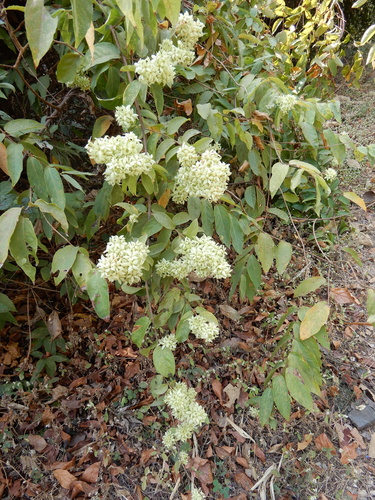
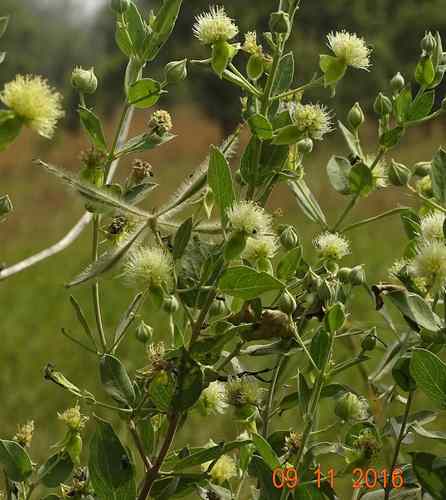
Combretum racemosum
P. Beauv.
Christmas rose
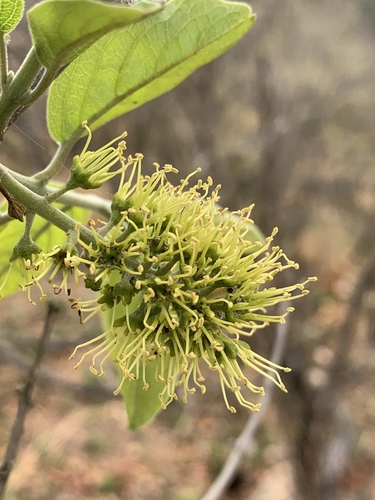
iNaturalist· cc-by-nc
(c) Bart Wursten, some rights reserved (CC BY-NC), uploaded by Bart Wursten
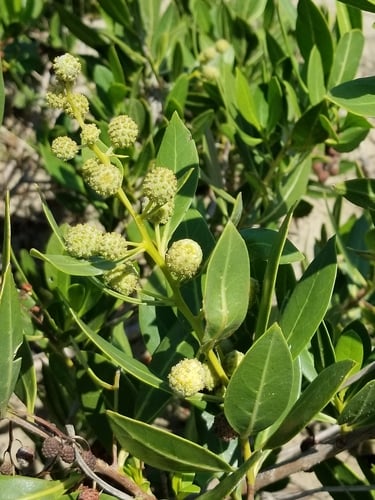
iNaturalist· cc-by-nc
(c) GMarques, some rights reserved (CC BY-NC)
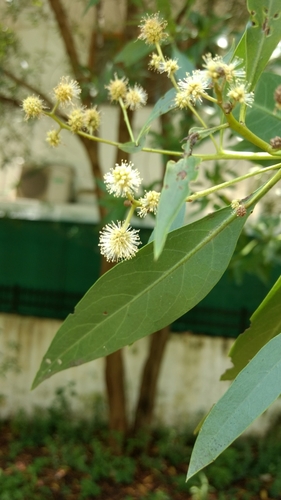
iNaturalist· cc-by-nc
(c) GMarques, some rights reserved (CC BY-NC)
Description
A straggling tropical shrub of the Combretaceae family that can grow as a woody creeper up to 15 m long. It is native to West Africa, particularly in mixed deciduous forests and palm groves, and has been recorded at elevations between 850 and 1,360 m in Nigeria.
Edible Uses
The leaves and stems are used in sauces and for flavouring, with stem juice also being consumed. The leaves serve as a vegetable and spice.
Traditional Uses
The leaves are used in sauces and for flavouring.
This uses section is brief — help expand it
Medicinal Uses
The leaves are used in traditional preparations for sauces and flavouring.
Distribution
A tropical plant. It grows in mixed deciduous forest in West Africa. It can be in palm groves. In Nigeria it has been recorded between 850 and 1,360 m above sea level.
Where It Grows
Africa, Angola, Benin, Burkina Faso, Central Africa, Central African Republic, CAR, Congo, Côte d'Ivoire, Gambia, Ghana, Guinea, Guinée, Guinea-Bissau, Ivory Coast, Mali, Nigeria, Senegal, Sierra Leone, Sudan, Uganda, West Africa,
Notes
There are about 255 Combretum species.
Synonyms
Also Known As
Cototura, Ohwirem, Topp, Usonsumbi
References (11)
- Bongers, F. et al (Eds), Forest Climbing Plants of West Africa: Diversity, Ecology and Management. CABI
- Burkill, H. M., 1985, The useful plants of west tropical Africa, Vol. 1. Kew.
- Codjia, J. T. C., et al, 2003, Diversity and local valorisation of vegetal edible products in Benin. Cahiers Agricultures 12:1-12
- Dalziel, J. M., 1937, The Useful plants of west tropical Africa. Crown Agents for the Colonies London.
- Dansi, A., et al, 2008, Traditional leafy vegetables and their use in the Benin Republic. Genet Resour Crop Evol (2008) 55:1239–1256
Show all 11 references Hide references
- Grubben, G. J. H. and Denton, O. A. (eds), 2004, Plant Resources of Tropical Africa 2. Vegetables. PROTA, Wageningen, Netherlands. p 560
- Jardin, C., 1970, List of Foods Used In Africa, FAO Nutrition Information Document Series No 2.p 69
- Martin, F.W. & Ruberte, R.M., 1979, Edible Leaves of the Tropics. Antillian College Press, Mayaguez, Puerto Rico. p 183
- Peters, C. R., O'Brien, E. M., and Drummond, R.B., 1992, Edible Wild plants of Sub-saharan Africa. Kew. p 86
- Seidemann J., 2005, World Spice Plants. Economic Usage, Botany, Taxonomy. Springer. p 115
- World Checklist of Useful Plant Species 2020. Royal Botanic Gardens, Kew