Combretum platypterum
(Welw.) Hutch. et Dalz.
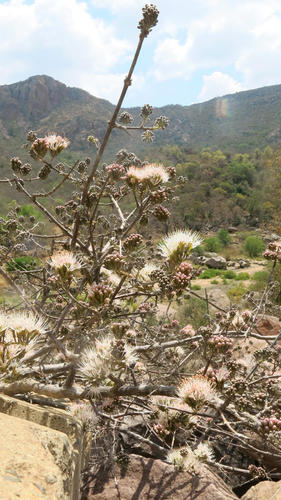
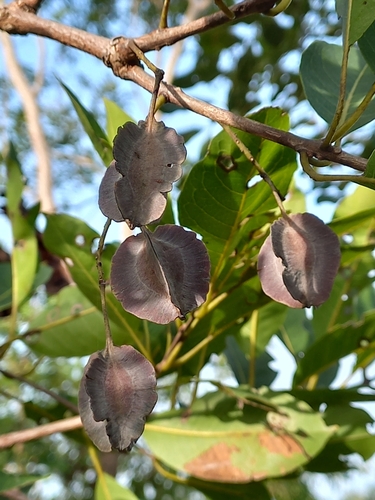
iNaturalist· cc-by-nc
(c) joe_cutler, some rights reserved (CC BY-NC)
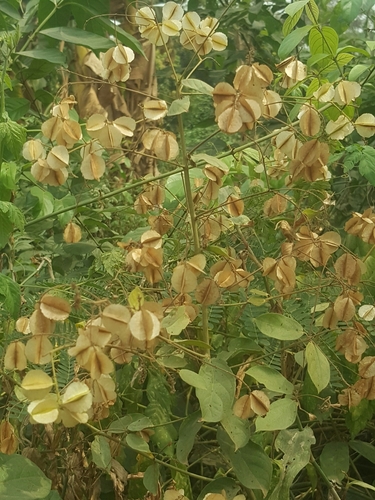
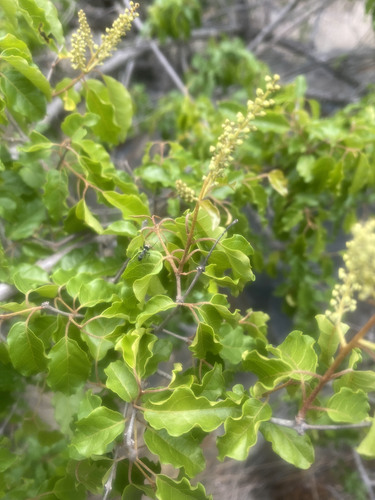
iNaturalist· cc-by-nc
(c) Carel Jongkind, some rights reserved (CC BY-NC), uploaded by Carel Jongkind
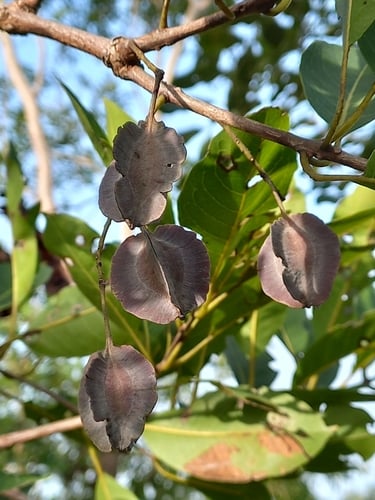
iNaturalist· cc-by-nc
(c) Babajide Agboola, some rights reserved (CC BY-NC), uploaded by Babajide Agboola
Description
A straggling shrub. It can be a creeper. Flowers are yellow to red. The fruit are red and 5 cm across.
This description is brief — help expand it
Edible Uses
The young leaves are sometimes added to soup. The flower nectar is sucked, especially by children.
Traditional Uses
The young leaves are sometimes put in soup.
This uses section is brief — help expand it
Distribution
A tropical plant. It grows in secondary deciduous forest.
Where It Grows
Africa, Angola, Cameroon, Central Africa, Central African Republic, CAR, Congo, Ghana, Guinea, Guinée, Liberia, Nigeria, Sierra Leone, Sudan, West Africa,
Other Information
The flower nectar is sucked especially by children.
Notes
There are about 255 Combretum species.
Synonyms
Also Known As
A-kati, Itado dudu, Kyeramoa
References (6)
- Burkill, H. M., 1985, The useful plants of west tropical Africa, Vol. 1. Kew.
- Dalziel, J. M., 1937, The Useful plants of west tropical Africa. Crown Agents for the Colonies London.
- Grubben, G. J. H. and Denton, O. A. (eds), 2004, Plant Resources of Tropical Africa 2. Vegetables. PROTA, Wageningen, Netherlands. p 560
- Jardin, C., 1970, List of Foods Used In Africa, FAO Nutrition Information Document Series No 2.p 69
- Peters, C. R., O'Brien, E. M., and Drummond, R.B., 1992, Edible Wild plants of Sub-saharan Africa. Kew. p 86
Show all 6 references Hide references
- World Checklist of Useful Plant Species 2020. Royal Botanic Gardens, Kew