Combretum psidioides subsp. dinteri
Welw., (Schinz) Exell
Dinter’s combretum, Silver bush-willow
iNaturalist· cc-by-nc
(c) Peter Erb, some rights reserved (CC BY-NC), uploaded by Peter Erb
iNaturalist· cc-by-nc
(c) Peter Erb, some rights reserved (CC BY-NC)
Description
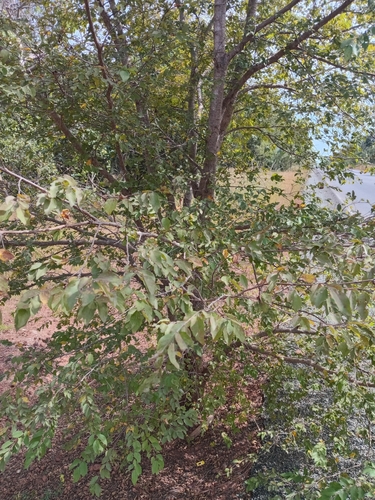
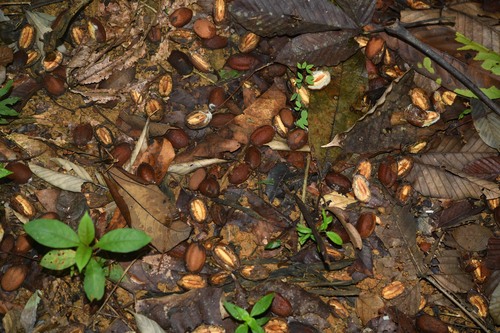
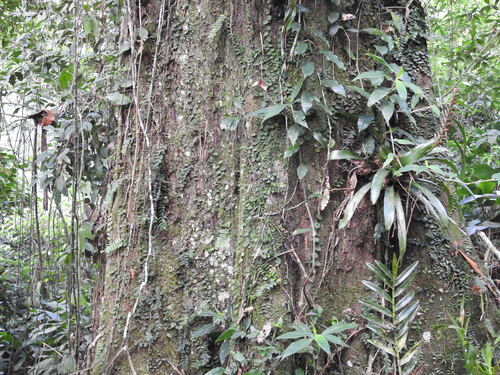
A small to medium sized tree. The crown is dense and silvery. The branches droop. The bark is rough and dark. The leaves are grey and velvety. They are 3.5-9 cm long by 2.5-5 cm wide. They are oblong and on short furry stalks. The lower surface of the leaf is densely covered with hairs. The flowers are in spikes 10 cm long. They are greenish-yellow. The fruit has wings. The fruit is 3 cm across. It is a wine red colour.
Edible Uses
The gum produced when trees are wounded is edible, and the bark is also edible.
Traditional Uses
The gum produced when trees are wounded is edible.
This uses section is brief — help expand it
Distribution
A tropical plant. They grow at low altitudes in dry areas.
Where It Grows
Africa, Angola, Botswana, Central Africa, East Africa, Mozambique, Namibia, South Africa, Southern Africa, Zimbabwe,
Notes
There are about 255 Combretum species.
Synonyms
Also Known As
Iwupu, Peeling twig combretum
References (4)
- Mannheimer, C. A. & Curtis. B.A. (eds), 2009, Le Roux and Muller's Field Guide to the Trees and Shrubs of Namibia. Windhoek: Macmillan Education Namibia. p 364
- Palgrave, K.C., 1996, Trees of Southern Africa. Struik Publishers. p 674
- Palmer, E and Pitman, N., 1972, Trees of Southern Africa. Vol. 3. A.A. Balkema, Cape Town p 1651
- Peters, C. R., O'Brien, E. M., and Drummond, R.B., 1992, Edible Wild plants of Sub-saharan Africa. Kew. p 86