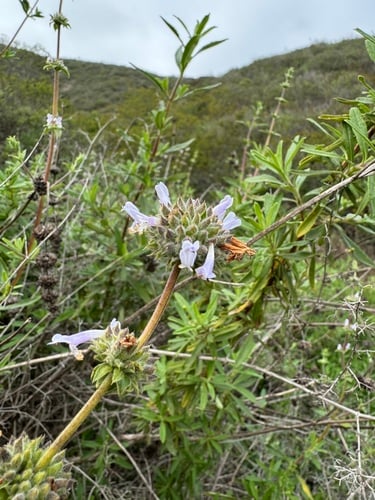
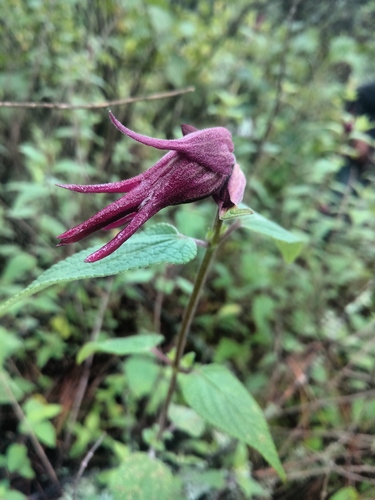
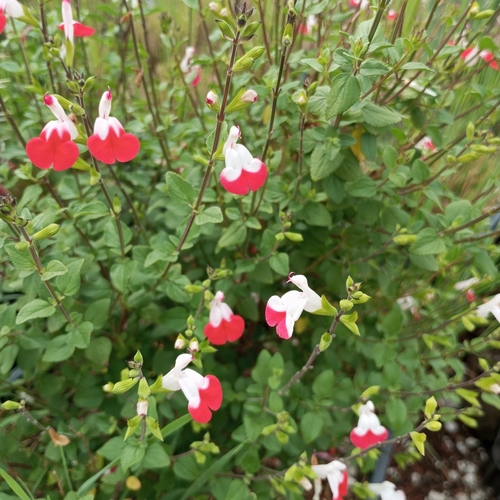
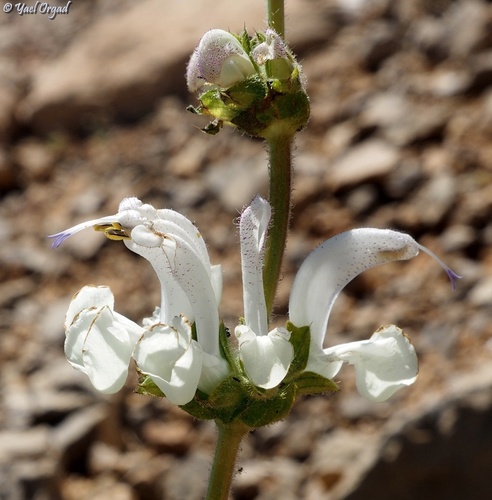
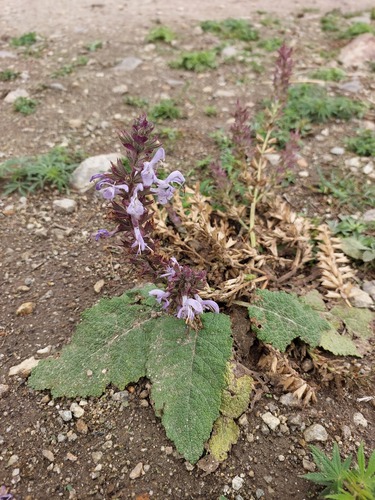
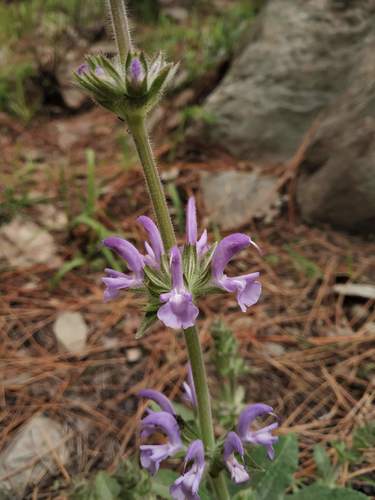
Mentha longifolia subsp. typhoides
(Brig.) Harley
iNaturalist· cc-by
(c) Dimitǎr Boevski, some rights reserved (CC BY), uploaded by Dimitǎr Boevski
iNaturalist· cc0
no rights reserved, uploaded by Jean-Paul Boerekamps
iNaturalist· cc-by-nc
(c) Aleksandr_Levon, some rights reserved (CC BY-NC), uploaded by Aleksandr_Levon
Summary
Source: WikipediaMentha longifolia, also known as horse mint, brookmint, fillymint or St. John's horsemint, is a species of plant in the family Lamiaceae. It is native to Europe excluding Britain and Ireland, western and central Asia (east to Nepal and far western China), and northern and southern (but not tropical) Africa.
Description
An herb in the Lamiaceae (mint) family native to Mediterranean regions.
This description is brief — help expand it
Edible Uses
The fresh leaves are added to salads and cooked as a vegetable. Dried leaves are used as a spice and flavoring. The leaves are also brewed as a herbal tea.
Traditional Uses
The leaves are added to salads. The dried leaves are used as a spice. The leaves are cooked as a vegetable. The leaves are also used as a herbal tea.
Medicinal Uses
Nicholas Culpeper's Complete Herbal (1653) states that "It is good for wind and colic in the stomach ... The juice, laid on warm, helps the King's evil or kernels in the throat ... The decoction or distilled water helps a stinking breath, proceeding from corruption of the teeth, and snuffed up the nose, purges the head. It helps the scurf or dandruff of the head used with vinegar." In addition, Mentha longifolia, like other Mentha species, is known to have important medicinal properties.
Distribution
It is a Mediterranean plant.
Where It Grows
Turkey, Türkiye,
Synonyms
Also Known As
Dere nanesi, Doguma, Kopek nanesi, Nana, Nane, Pune, Pung, Puni, Punk, Su yarpuzu, Yabani nane, Yabannanesi, Yarpiz, Yarpuz
References (13)
- Ari, S., et al, 2015, Ethnobotanical survey of plants used in Afyonkarahisar-Turkey. Journal of Ethnobiology and Ethnomedicine 11:84
- Demir, I. & Ayaz, N., 2022, Wild edible plants contributing to the traditional foods of Mardin (Turkey) Province. Indian Journal of Traditional Knowledge Vol 21(3), July 2022, pp 569-582
- Dogan, A. & Tuzlaci, E., 2015, Wild Edible Plants of Pertek (Tunceli-Turkey). Marmara Pharmaceutical Journal 19: 126-135
- Ertug, F., 2000, An Ethnobotanical Study in Central Anatolia (Turkey). Economic Botany Vol. 54. No. 2. pp. 155-182
- Ertug, F, Yenen Bitkiler. Resimli Türkiye Florası -I- Flora of Turkey - Ethnobotany supplement
Show all 13 references Hide references
- Kargioglu, M. et al, 2010, Traditional Uses of Wild Plants in the Middle Aegean Region. Human Ecology 38:429-450
- Kaya, O. M., et al, 2020, An ethnobotanical research in Sanhurfa central district and attached Villages (Turkey). Indian Journal of Traditional Knowledge. Vol. 19(1) pp 7-23
- Kizilarslan, C. & Ozhatay, N., 2012, An ethnobotanical study of the useful and edible plants of İzmit. Marmara Pharmaceutical Journal 16: 134-140, 2012.
- Özdemir, E. and Kültür, S., 2017, Wild Edible Plants of Savaştepe District (Balıkesir, Turkey), Marmara Pharm J 21/3: 578-589
- Polat, R., et al, 2015, Survey of wild food plants for human consumption in Elazig (Turkey). Indian Journal of Traditional Knowledge. Vol. 1(1): 69-75
- Polat, R., et al, 2017, Survey of wild food plants for human consumption in Bingol, (Turkey). Indian Journal of Traditional Knowledge. Vol. 16(3) July 2017, pp. 378-384
- Senkardes, I & Tuzlaci, E., 2016, Wild Edible Plants of Southern Part of Nevsehir inTurkey. Marmara Pharmaceutical Journal 20:34-43
- Yesil, Y., et al, 2019, Traditional knowledge of wild edible plants in Hasankeyf (Batman Province, Turkey). Acta Societatis Botanicorum Poloniae. 88(3):3633