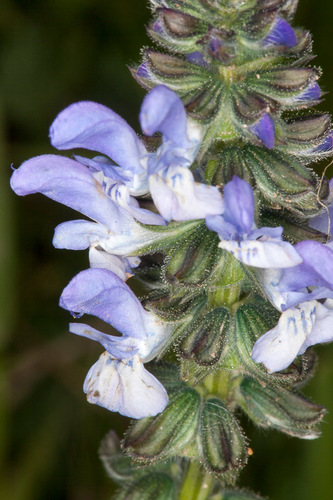
Salvia microphylla
Kunth
Blackcurrant sage
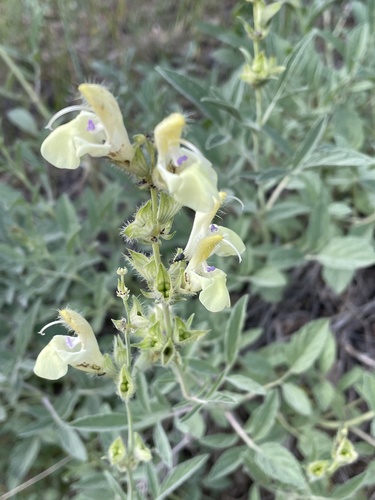
iNaturalist· cc-by-nc
(c) isidoromiranda, some rights reserved (CC BY-NC), uploaded by isidoromiranda
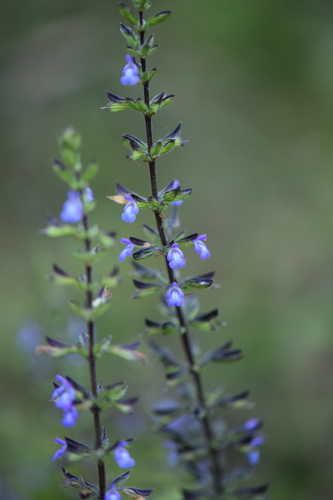
iNaturalist· cc-by-nc
(c) Bodo Nuñez Oberg, some rights reserved (CC BY-NC)
Summary
Source: WikipediaSalvia microphylla, synonyms including Salvia grahamii, Salvia lemmonii and Salvia neurepia, the baby sage, Graham's sage, or blackcurrant sage, is an evergreen shrub found in the wild in southeastern Arizona and the mountains of eastern, western, and southern Mexico. It is a very complex species which easily hybridizes, resulting in numerous hybrids and cultivars brought into horticulture since the 1990s. The specific epithet microphylla, from the Greek, means "small leaved". In Mexico it is called mirto de montes, or "myrtle of the mountains".
Description
A herb. It keeps growing from year to year. It grows 1.2 m high and spreads 1 m wide.
This description is brief — help expand it
Edible Uses
The leaves carry a pleasant blackcurrant scent and can be used fresh or dried as a flavouring. They are also brewed into a herbal tea known as 'mirot de montes'.
Traditional Uses
The flowers are sucked. The leaves are used as a flavouring. The leaves are used for a tea drink with a blackcurrant flavour.
This uses section is brief — help expand it
Medicinal Uses
An infusion of the flowers and leaves has been used in the treatment of fevers.
Distribution
It is a tropical plant. It is damaged by frost. In Argentina it grows below 500 m above sea level.
Where It Grows
Argentina, Brazil, Central America, Europe, Guatemala, Mexico*, North America, South America, Spain,
Cultivation
Requires a very well-drained light sandy soil in a warm sunny position. Prefers a rich soil. Plants can be killed by excessive winter wet. This species is rather variable with a number of sub-species and cultivars of differing hardiness. The hardiest forms tolerate temperatures down to about -10°c and can be grown outdoors in the mildest areas of the country, though they are probably best grown in a cold greenhouse. When grown outdoors, the top growth will be cut back to the ground in cold winters but, if the roots are given a good mulch in the autumn, plants will often survive the winter outdoors and resprout freely from the base in the spring. The flowers are very attractive to bees, providing a good source of nectar. Members of this genus are rarely if ever troubled by browsing deer.
Propagation
Sow seed in March or April in a greenhouse; germination usually takes place within 2 weeks. Prick out seedlings into individual pots when large enough to handle and plant out in early summer. In areas at the limits of the plant's hardiness, grow on under glass through the first winter and plant out in late spring the following year. Cuttings of half-ripe wood can be taken at almost any time during the growing season.
Other Uses
None known
Also Known As
Menta, Menta trapassera
References (3)
- Bonet, M. A. & Valles, J., 2002, Use of non-crop food vascular plants in Montseny biosphere reserve (Catalonia, Iberian Peninsula). International Journal of Food Sciences and Nutrition (2002) 53, 225–248
- http://keys2liberty.wordpress.com/tag/salvia-microphylla/
- World Checklist of Useful Plant Species 2020. Royal Botanic Gardens, Kew