Castilla elastica
Sesse ex Cerv.
Panama rubber tree, Mastate blanco
iNaturalist· cc-by-nc
(c) tavita_togia2016, some rights reserved (CC BY-NC), uploaded by tavita_togia2016
iNaturalist· cc-by
(c) Skjold Søndergaard, some rights reserved (CC BY)
Summary
Source: WikipediaCastilla elastica, the Panama rubber tree, is a tree native to the tropical areas of Mexico, Central America, and northern South America. It was the principal source of latex among the Mesoamerican peoples in pre-Columbian times. The latex gathered from Castilla elastica was converted into usable rubber by mixing the latex with the juice of the morning glory species Ipomoea alba which, conveniently, is typically found in the wild as a vine climbing Castilla elastica. The rubber produced by this method found several uses, including most notably, the manufacture of balls for the Mesoamerican ballgame ōllamaliztli. The Nahuatl word for rubber was ulli / olli, from which their word for the ballgame derived), and also their name for the ancient people they associated with the origin of the ballgame, the Olmecs (olmeca: "rubber people"). The Nahuatl word for the tree of Castilla elastica is olicuáhuitl; in Spanish it is known as palo de hule.
Description
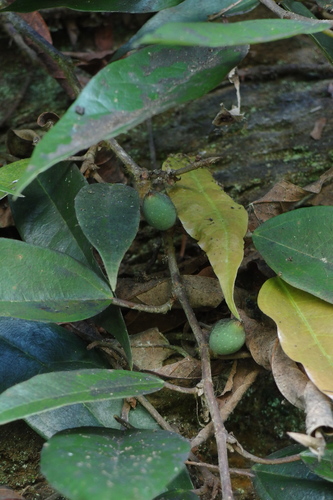
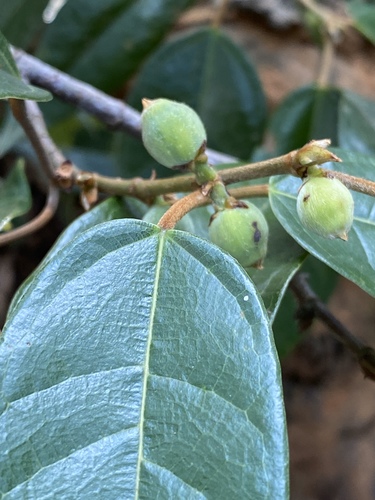
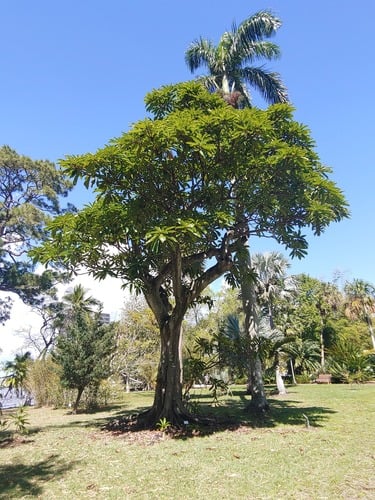
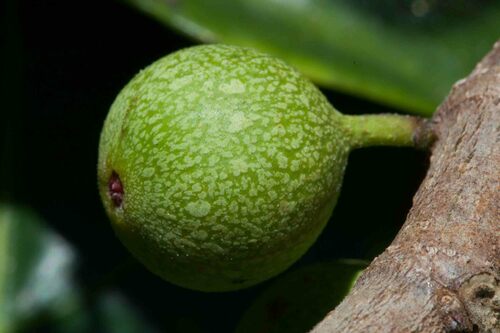
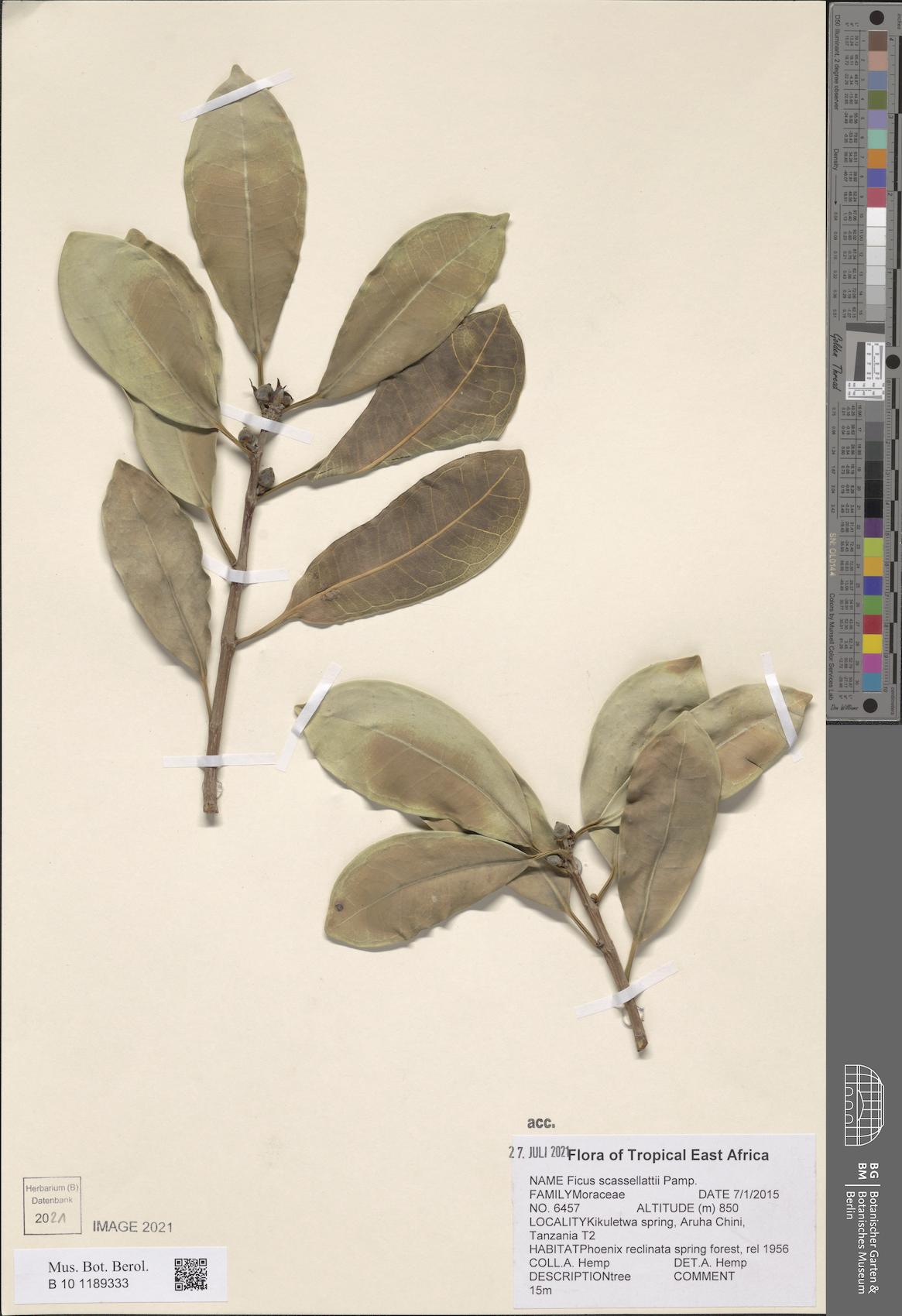
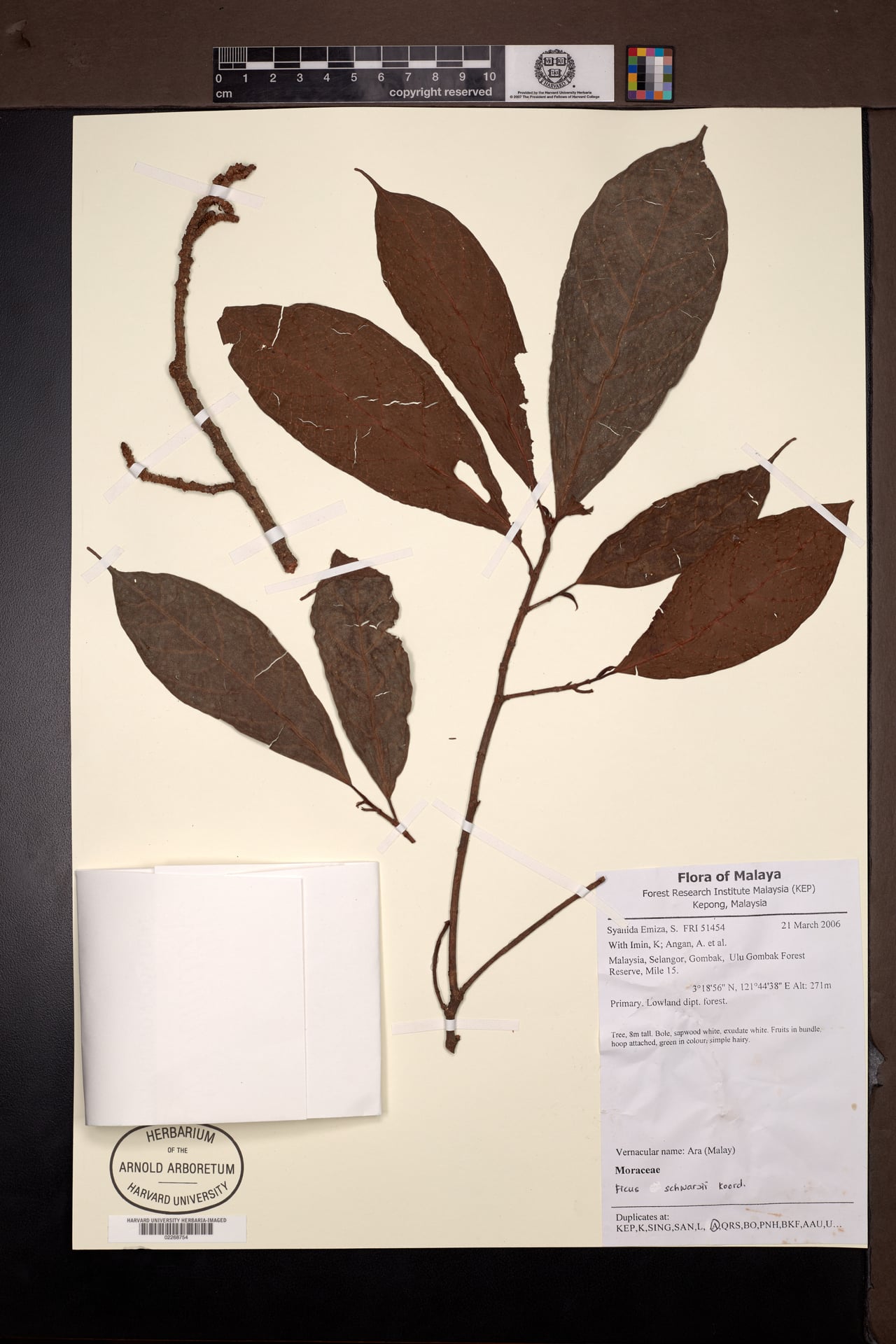
A tree. It grows 30 m tall. It loses its leaves during the year. The leaves are 45 cm long by 17 cm wide. The leaves have tufts of hair along the edge. The leaves are hairy underneath. The flowers are green or yellow. They are in flattened head like clusters. The fruit is a flat disk of green bracts. These have about 20-30 orange-red fleshy 1 seeded fruit. The seeds are 8-10 mm long by 6-8 mm wide.
Edible Uses
The fruit is succulent with a sweetish flavour. It is ellipsoid, reddish, and about 4cm in diameter.
Medicinal Uses
None known
Distribution
It is a tropical plant.
Where It Grows
American Samoa, Asia, Australia, Central America*, Colombia, Cuba, Dominican Republic, Ecuador, Haiti, Jamaica, Lesser Antilles, Marquesas, Mexico*, Nicaragua, North America, Pacific, Panama, Puerto Rico, Samoa, Sao Tome and Principe, SE Asia, Singapore, South America, Sri Lanka, Venezuela, West Indies,
Cultivation
It grows best in areas where annual daytime temperatures are within the range 23 - 30c, but can tolerate 15 - 34c. It can be killed by temperatures of 10c or lower. It prefers a mean annual rainfall in the range 2,300 - 2,700mm, but tolerates 2,000 - 3,000mm. Grows best in a rich, well-drained soil in a sunny position. Prefers a pH in the range 5 - 6, tolerating 4.5 - 7. Tapping of the trees for their latex can commence 7 years after planting. Plants have become invasive in some areas. A fast growing tree. Individual plants can either produce only male flowers (dioecious) or they can produce both male and female flowers (monoecious). Trees at 8-10 years old can yield 25kg (55lb) of latex (poor quality).
Propagation
Seed is best sown as soon as it is ripe, as it has short viability.
Other Uses
Good-quality latex can be tapped from the trunk and is produced copiously — trees 8–10 years old can yield up to 25kg of latex per year. Once harvested, the rubbery latex dries to become tough and resilient. It has commercial applications and is widely used by local people to make items such as bouncing balls, waterproofed fabrics, and artefacts. The latex is often tinted with natural dyes for use in local handicrafts. The pale grey bark is fibrous, strips easily from the trunk, and is used to make cord, as well as beaten into mats, blankets, and clothing. The root system consists of a short taproot and several lateral roots that spread horizontally very close to the surface, often traceable for 20–30 metres, making it difficult to grow other crops beneath the tree. The wood is yellow-brown, moderately soft, light in weight, and not durable; it is used chiefly for fuel.
Notes
There are about 2 Castilla species. It was used for latex rubber.
Synonyms
Also Known As
Arbol del hule, Caucho, Pulu mamoe, Pulu vao, Taspul, Ule
References (5)
- Coe, F. G. and Anderson, G. J., 1999, Ethnobotany of the Sumu (Ulwa) of Southeastern Nicaragua and Comparisons with Miskitu Plant Lore. Economic Botany Vol. 53. No. 4. pp. 363-386
- Condit, R., et al, 2011, Trees of Panama and Costa Rica. Princeton Field Guides. p 322
- Parham, B. E. V., 1972, Plants of Samoa. New Zealand Department of Scientific and Industrial Research. Information Series. No. 85 p 106
- Plants of Haiti Smithsonian Institute http://botany.si.edu/antilles/West Indies
- Roa, J. A. G. & Boada, D. S. G., 2018, Fundación para el Fortalecimiento de la Fruticultura y Plantas Alimenticias no Convencionales en Colombia.