Artocarpus altissimus
(Miq.) J. J. Sm.
gbif· cc-by-sa
GBIF
gbif· cc-by-sa
GBIF
gbif· cc0
President and Fellows of Harvard College
Description
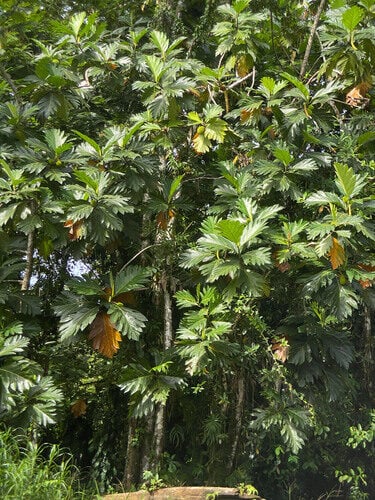
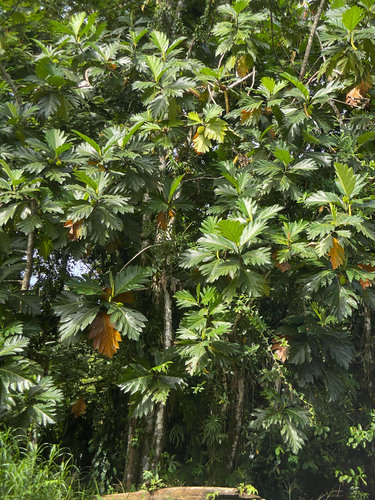
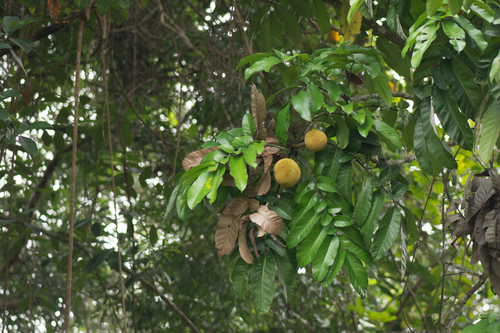
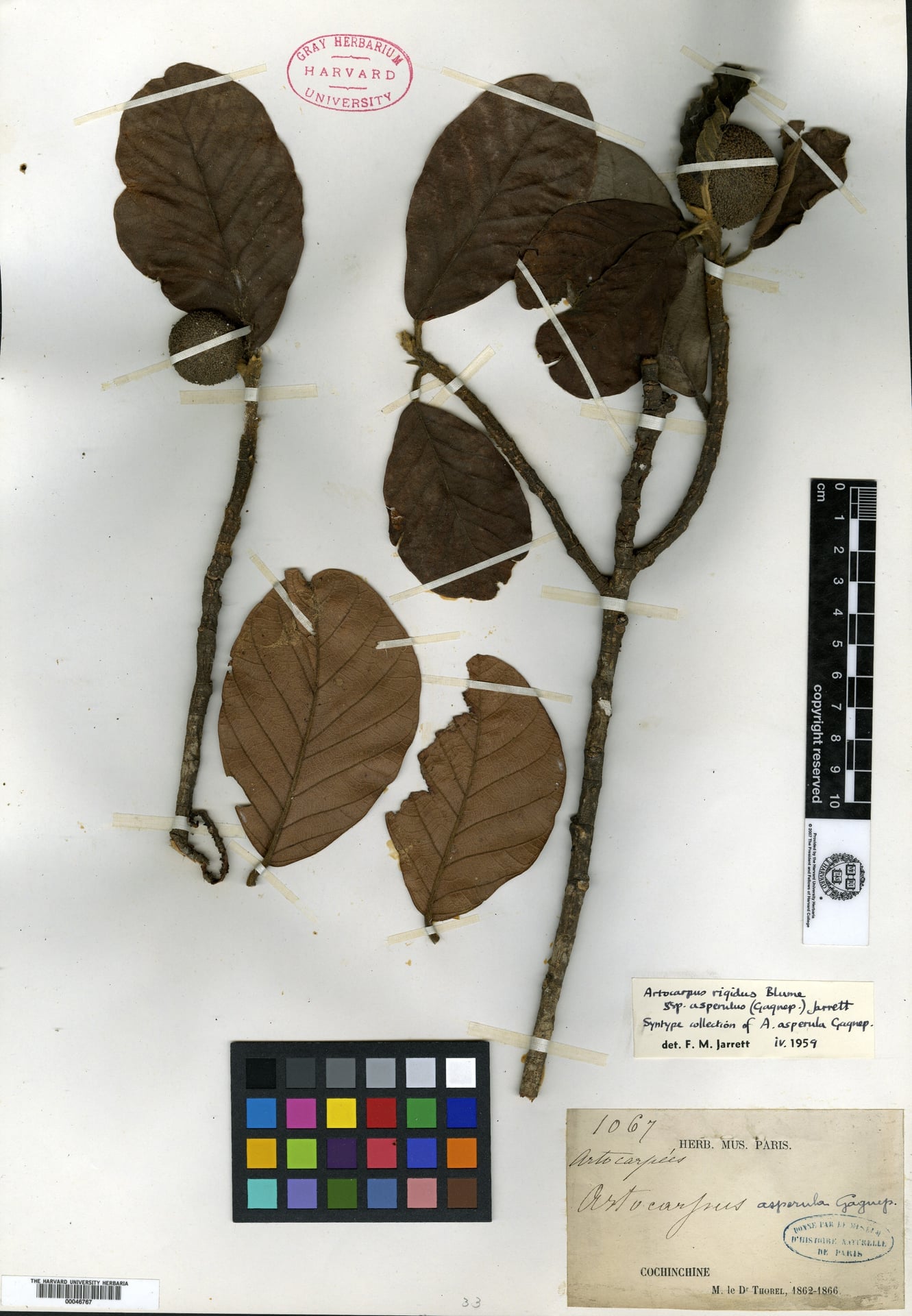
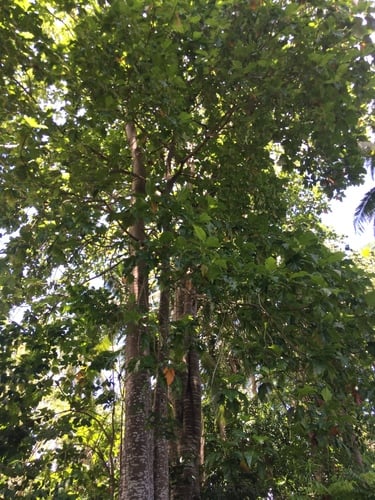
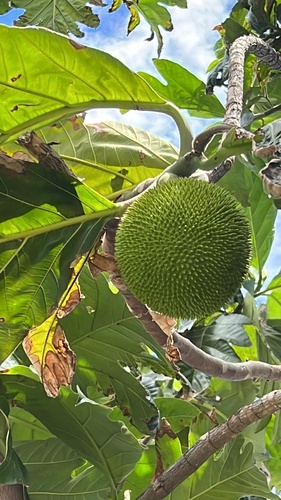
A tree. It grows 30-40 m tall. It loses its leaves during the year. It can sometimes have buttresses. The leaves are oval. Male and female flowers are separate. The fruit are small - 2 cm across.
Edible Uses
Several species in the genus bear edible fruit and are commonly cultivated: Breadfruit (Artocarpus altilis), Cempedak (Artocarpus integer), Jackfruit (Artocarpus heterophyllus), Kwai Muk (Artocarpus parvus), Lakoocha (Artocarpus lakoocha), Pudau (Artocarpus kemando), Anjily (a.k.a. Jungle Jack) (Artocarpus hirsutus), Chaplaish (Artocarpus chama), and Marang (Artocarpus odoratissimus). Breadfruit and jackfruit are cultivated widely in the tropical Southeast Asia. Other species are cultivated locally for their timber, fruit or edible seeds. Anjily, A. hirsutus, is grown for fruit and timber in the Western Ghats.
Distribution
A tropical plant. It grows in evergreen forests at low altitudes.
Where It Grows
Asia, Indonesia, Pacific, Philippines, SE Asia, Thailand,
Cultivation
Plants can be grown by seed.
Propagation
Seed - best extracted from ripe fruits and sown immediately as they cannot withstand desiccation and lose viability within a few week. There is no period of dormancy, the seed usually germinating immediately.
Other Uses
The brownish, streaked wood is close-grained and easily worked. It is a valuable timber for ship building.
Notes
It is rare.
Synonyms
Also Known As
Pohon nangka keluntum
References (2)
- Coronel, R.E., 1982, Fruit Collections in the Philippines. IBPGR Newsletter p 9 (As Artocarpus altissima)
- Sukarya, D. G., (Ed.) 2013, 3,500 Plant Species of the Botanic Gardens of Indonesia. LIPI p 135