Commiphora schimperi
(Berg.) Engl.
Glossy-leaved corkwood
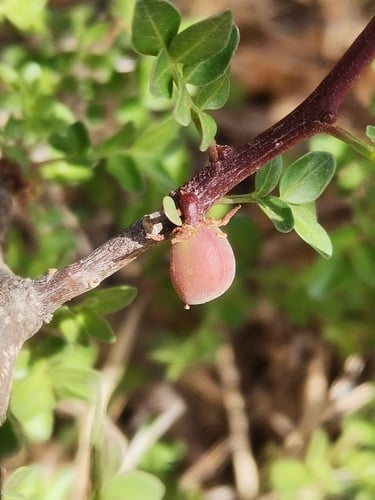
iNaturalist· cc0
no rights reserved, uploaded by Andrew Deacon
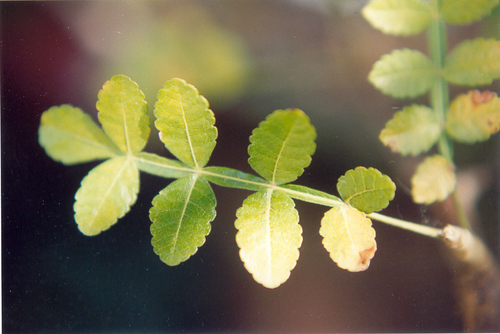
iNaturalist· cc-by-nc
(c) Moira FitzPatrick, some rights reserved (CC BY-NC), uploaded by Moira FitzPatrick
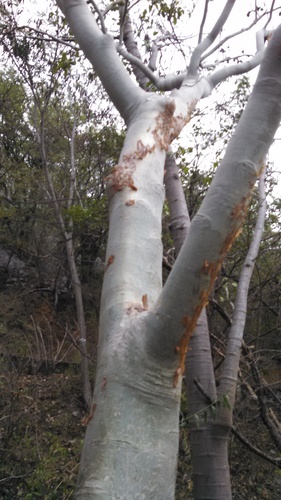
iNaturalist· cc-by-nc
(c) Tinus Oberholzer, some rights reserved (CC BY-NC), uploaded by Tinus Oberholzer
Summary
Source: WikipediaCommiphora schimperi, also known as glossy-leaved corkwood, is a tree species in the genus Commiphora. It is native eastern and southern Africa and the southern Arabian Peninsula, from Sudan and Yemen in the north to Botswana and northern South Africa (KwaZulu-Natal and Northern Provinces) in the south.
Description
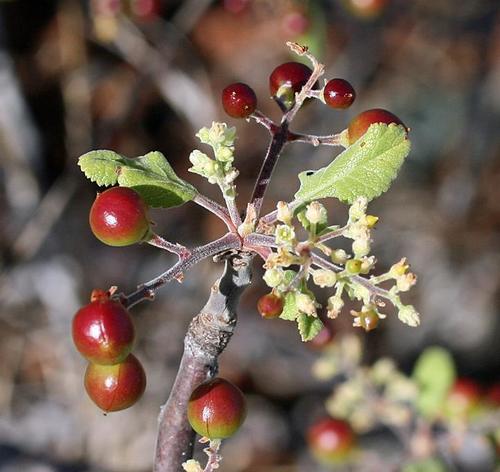
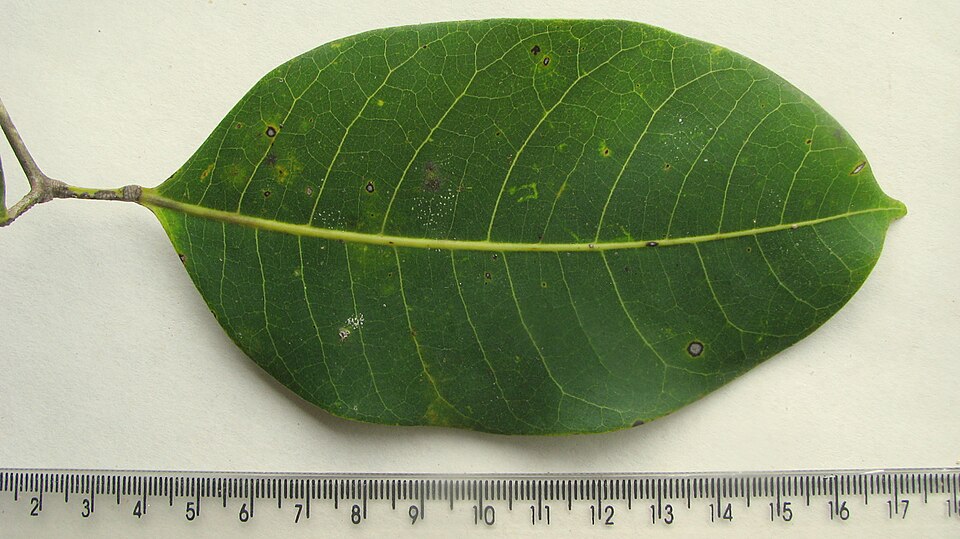
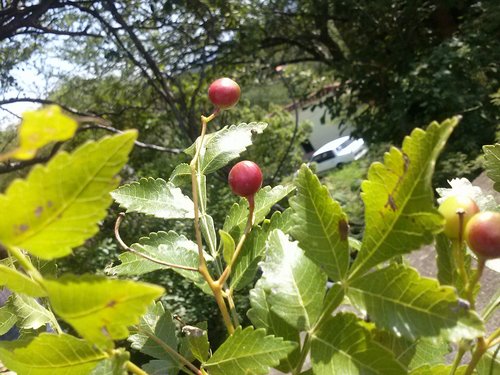
A spiny shrub. It loses is leaves. It grows 5 m high. The bark is reddish brown and peels off in rolling strips. The branches have spines at the tips. The leaves have 3 leaflets. The central leaflet is 3.5 cm long. The side leaflets are smaller. The flowers are in small clusters in the axils of leaves. They are red and cup shaped. The fruit are oval and 1.3 cm long. They split to reveal black seeds. These are surrounded by a bright red covering.
Edible Uses
The roots are chewed for their sweet taste. The resin exuded by the bark is chewed. The inner red bark is used in tea.
Traditional Uses
The roots are chewed for their sweet taste. The resin exuded by the bark is chewed. The inner red dark is used in tea.
This uses section is brief — help expand it
Distribution
It is a tropical plant. In Kenya it grows between 400-1,900 m altitude. It grows on well-drained dry soils that can be sandy or have clay. It can grow in arid places.
Where It Grows
Africa, Botswana, Central Africa, Congo, East Africa, Ethiopia, Kenya, Middle East, Mozambique, Somalia, South Africa, Southern Africa, Tanzania, Uganda, Yemen, Zimbabwe,
Cultivation
Plants can be grown from stem cuttings. It is grown as a hedge plant.
Other Uses
A gum resin is obtained from the stems. It is used like myrrh.
Synonyms
Also Known As
Chalinaka, Ekwangorom, Lekola, Mokgonkgoro, Mukwendekwende, Munyera, Mrunye, Osilalei, Qeyi, Seroka
References (16)
- Feyssa, D. H., et al, 2011, Seasonal availability an consumption of wild edible plants in semiarid Ethiopia; Implications to food security and climate change adaptation. Journal of Horticulture and Forestry 3(5): 138-149
- Fox, F. W. & Young, M. E. N., 1982, Food from the Veld. Delta Books. p 140
- Glover, et al, 1966b, (As Commiphora trothae)
- Grivetti, L. E., 1980, Agricultural development: present and potential role of edible wild plants. Part 2: Sub-Saharan Africa, Report to the Department of State Agency for International Development. p 44 (As Commiphora trothae)
- Ichikawa, M., 1980, The Utilization of Wild Food Plants by the Suiei Dorobo in Northern Kenya. J. Anthrop. Soc. Nippon. 88(1): 25-48
Show all 16 references Hide references
- Johns, T., Mhoro, E. B. and Sanaya, P., 1996, Food Plants and Masticants of the Batemi of Ngorongoro District, Tanzania. Economic Botany, Vol. 50, No. 1, pp. 115-121
- Lulekal, E., et al, 2011, Wild edible plants in Ethiopia: a review on their potential to combat food insecurity. Afrika Focus - Vol. 24, No 2. pp 71-121
- Maundu, P. et al, 1999, Traditional Food Plants of Kenya. National Museum of Kenya. 288p
- Mutie, F. G., 2020, Conservation of Wild Food Plants and Their Potential for Combatting Food Insecurity in Kenya as Exemplified by the Drylands of Kitui County. Plants 2020, 9, 1017
- Mutie, F. M., et al, 2023, Important Medicinal and Food Taxa (Orders and Families) in Kenya, Based on Three Quantitative Approaches. Plants 2023, 12, 1145
- Peters, C. R., O'Brien, E. M., and Drummond, R.B., 1992, Edible Wild plants of Sub-saharan Africa. Kew. p 73 (As Commiphora trothae)
- Royal Botanic Gardens, Kew (1999). Survey of Economic Plants for Arid and Semi-Arid Lands (SEPASAL) database. Published on the Internet; http://www.rbgkew.org.uk/ceb/sepasal/internet [Accessed 5th April 2011]
- Ruiters-Welcome, A. K., 2019, Food plants of southern Africa. Ph.D. thesis. Univ. of Johannesburg p 41
- Welcome, A. K. & Van Wyk, B.-E., 2019, An inventory and analysis of the food plants of southern Africa. South African Journal of Botany 122 (2019) 136–179
- World Checklist of Useful Plant Species 2020. Royal Botanic Gardens, Kew
- www.zimbabweflora.co.zw 2011