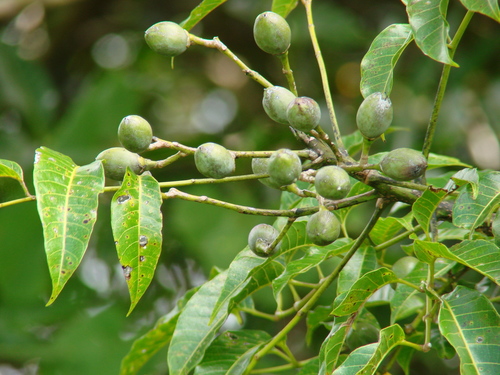
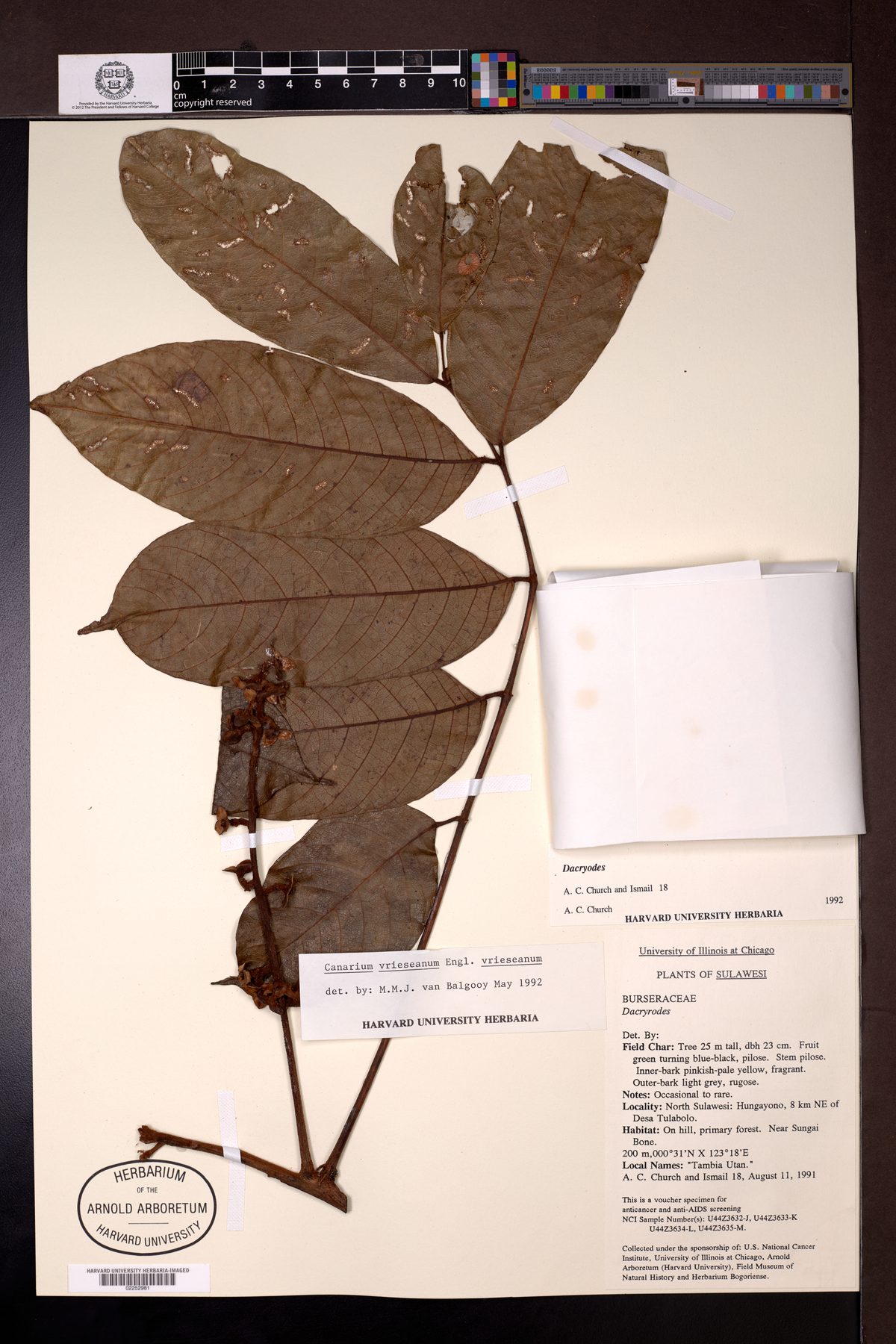
Commiphora madagascariensis
Jacq.
Muluba
iNaturalist· cc-by
(c) amantedarmanin, some rights reserved (CC BY)
Summary
Source: WikipediaCommiphora madagascariensis, with the common name Madagascar corkwood, is a flowering plant in the family Burseraceae. The species is native to Tanzania, introduced into India.
Description
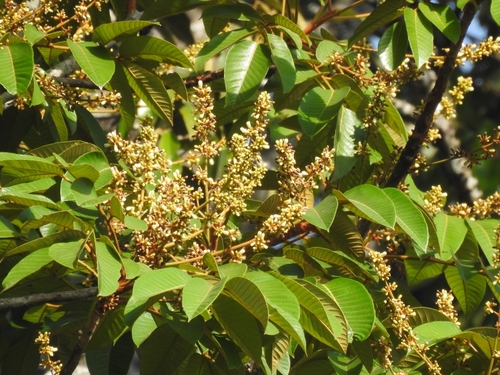
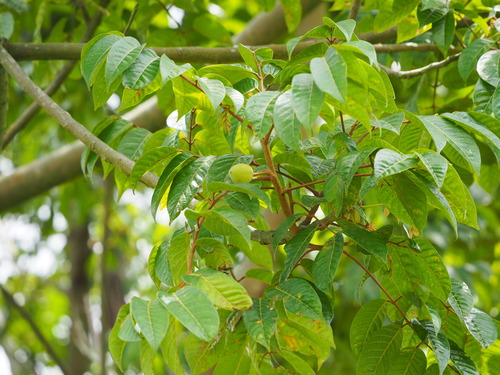
A shrub or small tree. It grows 5 -15 m tall. The bark is smooth and the branches are often spiny. The leaves can have one or 3 leaflets, 2 of these being smaller. The leaflet is 4 cm long by 1.5 cm wide. It is narrowly oval or spoon shaped. There are fine teeth along the edge. The base is wedge shaped. The flowers appear before the leaves. They can be in clusters on short side shoots.
Edible Uses
The gum and resin are edible portions.
Known Hazards
World Conservation Union (IUCN) has enlisted it in its IUCN Red List of threatened species. The species is known from 11 locations, some of which have threats such as urbanisation (Mjimwema), increasing human population (Mnazi Bay) or planned hydropower schemes (Stiegler's Gorge). We assess this species as Near Threatened, as it is close to meeting the thresholds for listing in a threatened category.
Distribution
It is a tropical plant. It grows near lakes and in forest undergrowth. It grows between 5 and 660 m above sea level in areas with an annual rainfall of 750-950 mm
Where It Grows
Africa, Asia, East Africa, Ethiopia, India, Mozambique, Rwanda, Tanzania,
Synonyms
Also Known As
Umudahweera
References (1)
- Johns, T., Mhoro, E. B. and Sanaya, P., 1996, Food Plants and Masticants of the Batemi of Ngorongoro District, Tanzania. Economic Botany, Vol. 50, No. 1, pp. 115-121