Canarium vrieseanum
Engl.
gbif· cc0
President and Fellows of Harvard College
gbif· cc0
President and Fellows of Harvard College
gbif· cc-by-sa
GBIF
Description
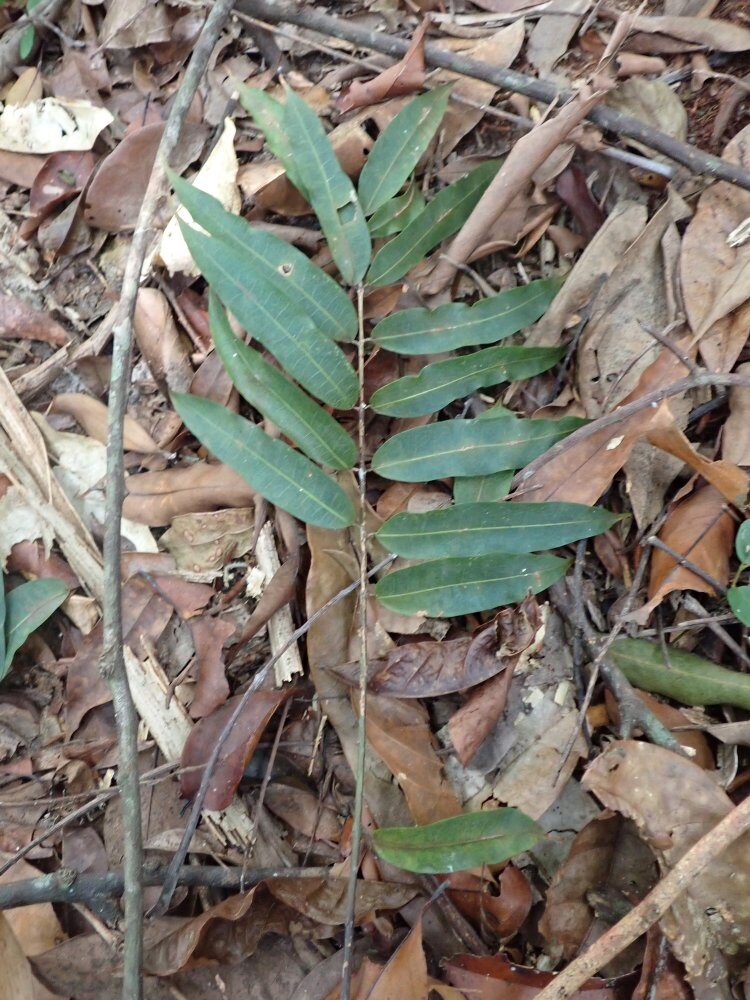
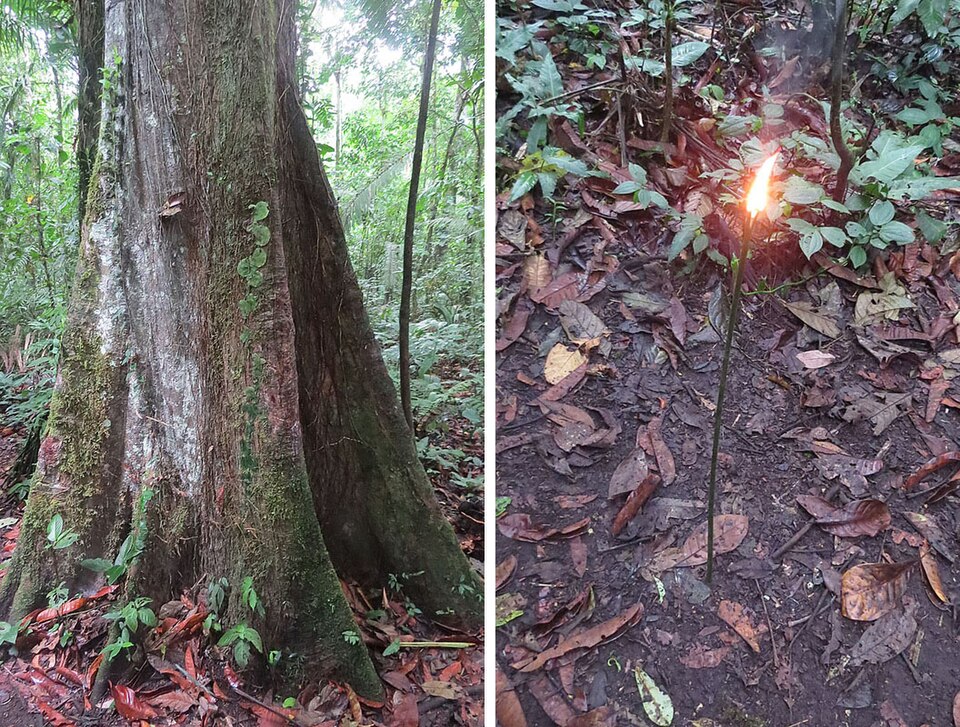
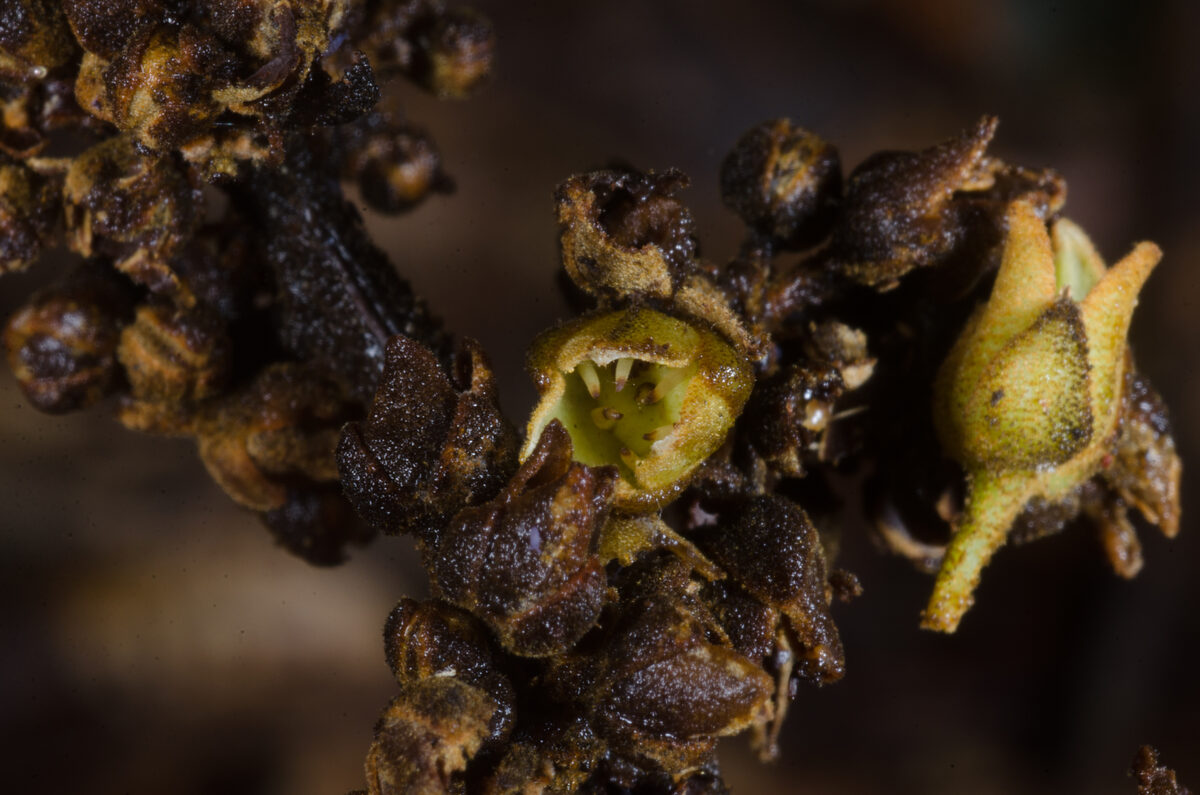
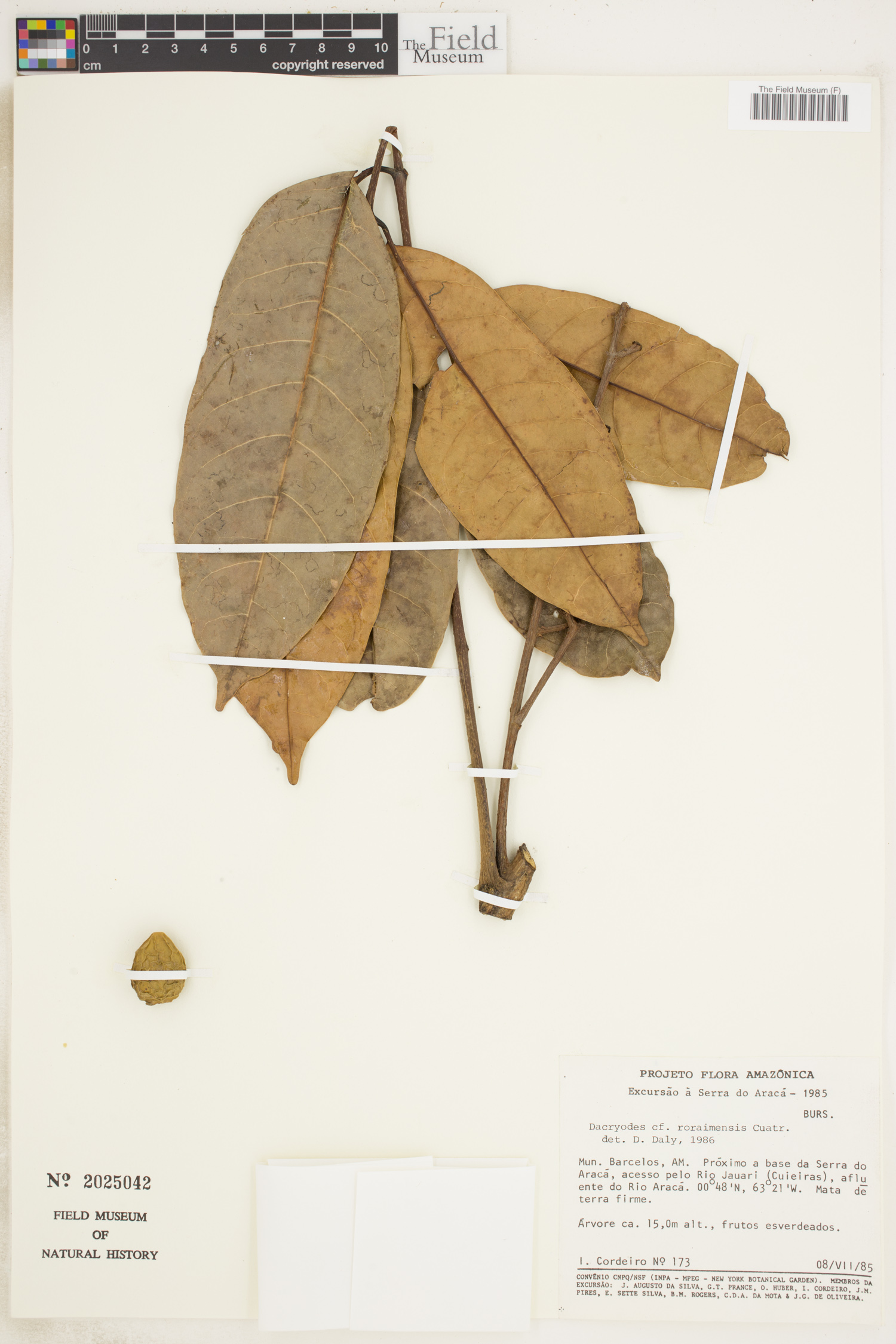
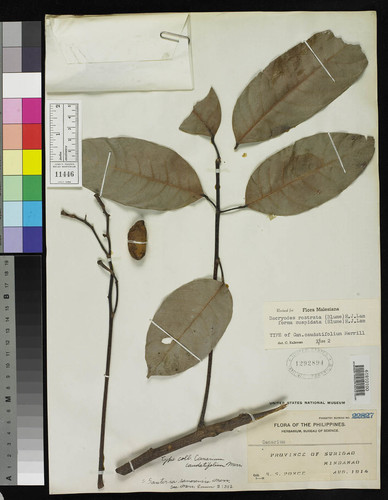
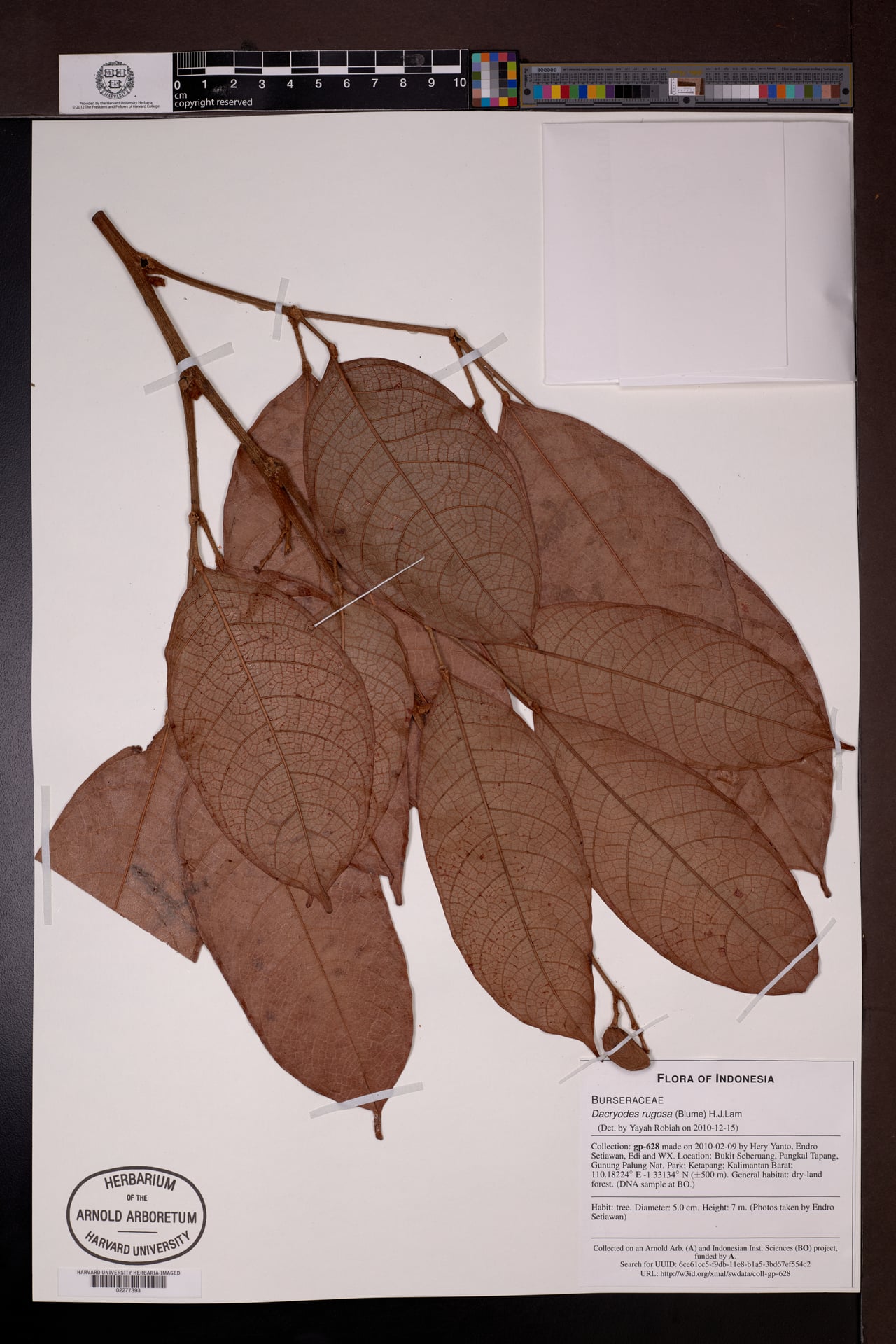
A small tree. It grows 15-25 m high. It can be 30-45 cm across in the trunk. Buttresses, if they occur, are small. The small branches are slender and can be covered with brown hairs. The leaf structure (stipule) on the leaf stalk can be 1.5 cm from the base and shaped like ribbons. They can be 1 cm long. The leaves are divided into 3-5 pairs of leaflets which are produced opposite each other. The leaves are about 80 cm long. The leaflets are oblong and 7-30 cm long by 3-12 cm wide. The base of the leaflets is rounded and slightly unequal. The flower cluster can be 20-30 cm long and 1-3 cm wide. The flowers have 3 white petals about 7 mm long. The fruiting cluster can point upwards and have 5-10 fruit. The fruit are oval and round in cross section. They are 1.7-3.2 cm long by 0.7-2.2 cm across. The fruit maintain a velvety appearance. The shell is nearly smooth and with 6 ribs. There is one seed inside.
Edible Uses
The kernels of the nuts are eaten raw or roasted.
Traditional Uses
The kernels of the nuts are eaten raw or roasted.
This uses section is brief — help expand it
Distribution
A tropical plant. Only occurs from Mindoro and neighbouring islands in the Philippines. It grows from sea level up to 500 m altitude.
Where It Grows
Asia, Indonesia, Pacific, Philippines, SE Asia,
Cultivation
Trees are grown from seeds.
Propagation
Seed - we have no specific information for this species but seeds of this genus generally have a hard seed coat and germinate erratically. Filing away some of the seed coat to allow moisture to enter more readily, without damaging the seed, will encourage a faster and more even germination.
Other Uses
The resin is burnt for lighting. The wood is usually rather tough and hard, though sometimes it is soft. It is used for construction.
Production
Trees flower from July to December and fruit occur from December to February.
Notes
There are 80-95 Canarium species.
Synonyms
Also Known As
Gapog, Gisau, Are, Solo, Sagasa
References (9)
- Bircher, A. G. & Bircher, W. H., 2000, Encyclopedia of Fruit Trees and Edible Flowering Plants in Egypt and the Subtropics. AUC Press. p 79 (As Canarium williamsii)
- Brown, W.H., 1920, Wild Food Plants of the Philippines. Bureau of Forestry Bulletin No. 21 Manila. p 80 (As Canarium williamsii)
- FAO, 1995, Edible Nuts. Non Wood Forest Products 5.
- Leenhouts, P.W., 1955, Burseraceae in Flora Malesiana 5(1) p 291
- Monsalud, M.R., Tongacan, A.L., Lopez, F.R., & Lagrimas, M.Q., 1966, Edible Wild Plants in Philippine Forests. Philippine Journal of Science. p 449
Show all 9 references Hide references
- Verheij, E. W. M. and Coronel, R.E., (Eds.), 1991, Plant Resources of South-East Asia. PROSEA No 2. Edible fruits and nuts. Pudoc Wageningen. p 322
- Walter, A. & Sam C., 2002, Fruits of Oceania. ACIAR Monograph No. 85. Canberra. p 131
- Wickens, G.E., 1995, Edible Nuts. FAO Non-wood forest products. FAO, Rome. p 111
- World Checklist of Useful Plant Species 2020. Royal Botanic Gardens, Kew