Canarium vitiense
A. Gray
Kaunithina
iNaturalist· cc-by-nc
(c) tavita_togia2016, some rights reserved (CC BY-NC), uploaded by tavita_togia2016
iNaturalist· cc-by-nc
(c) tavita_togia2016, some rights reserved (CC BY-NC)
Summary
Source: WikipediaCanarium vitiense is a rainforest tree species, of the plant family Burseraceae, growing naturally in Fiji, the Solomon Islands, Samoa, Tonga, New Guinea, Bismarck Archipelago, Admiralty Islands, Louisiade Archipelago, Torres Strait Islands and in lowland north-eastern Queensland, Australia. In New Guinea, they are recorded as growing widely in rainforests up about 250 m (820 ft) altitude. In the Torres Strait Islands (Australia), likewise they are recorded as growing up about 250 m (820 ft) altitude. In the Australian mainland north-eastern Queensland regions of the Wet Tropics, Cape York Peninsula and just to their east the continent's offshore islands, they are recorded as growing naturally widespread, from about Ingham–Hinchinbrook Island northwards, in remaining well developed lowland tropical rainforests, below ca. 100 m (330 ft) altitude. Full grown trees may reach up to 30–40 m (100–130 ft) tall. Formal description of some trees found in Fiji, using this species name, was published in 1854 by botanist Asa Gray, effectively describing this species of all of these trees across the western Pacific region.
Description
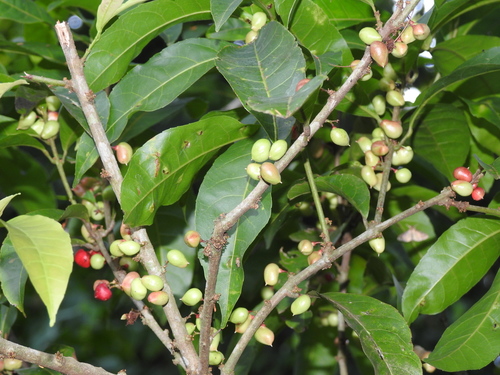
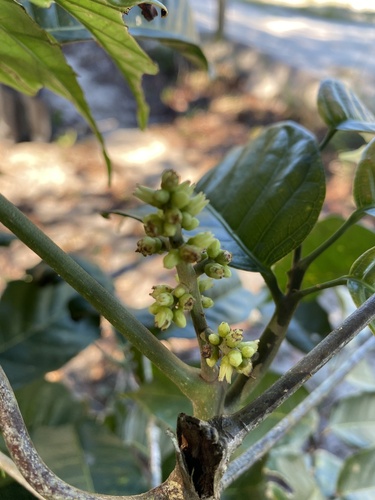
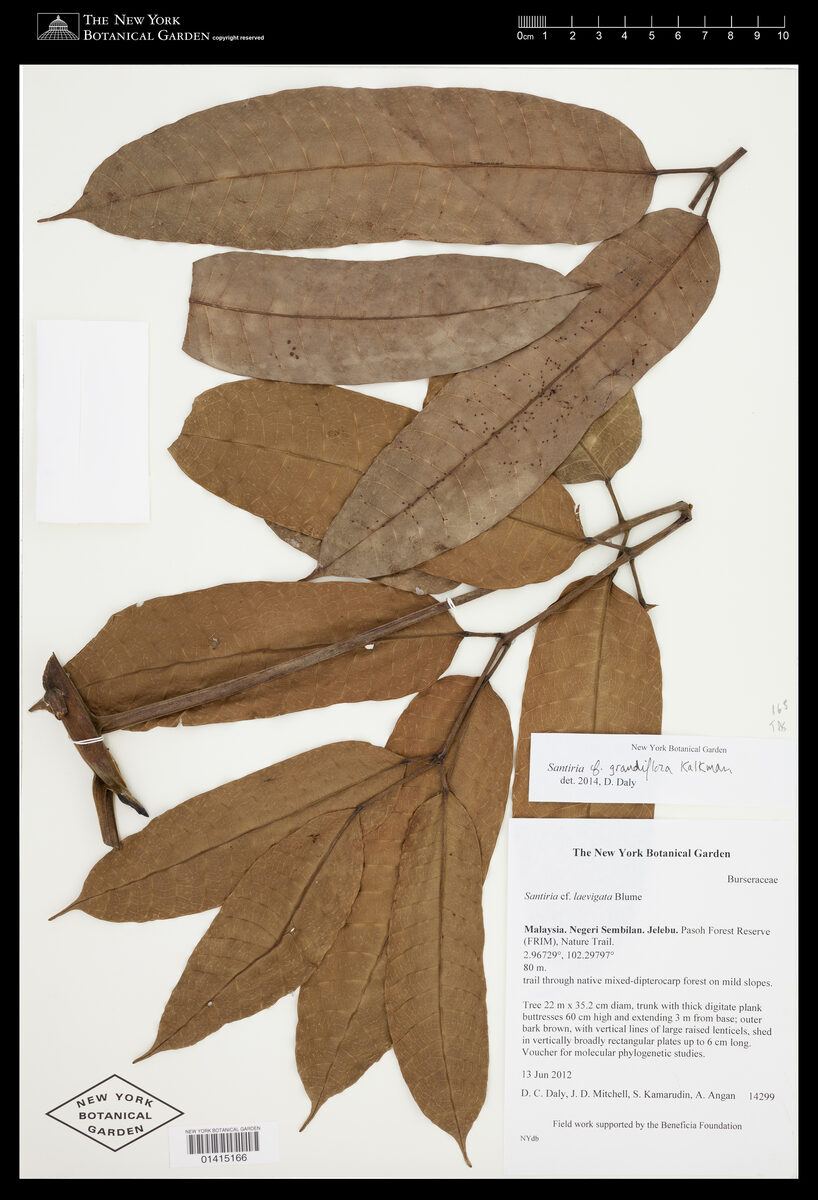
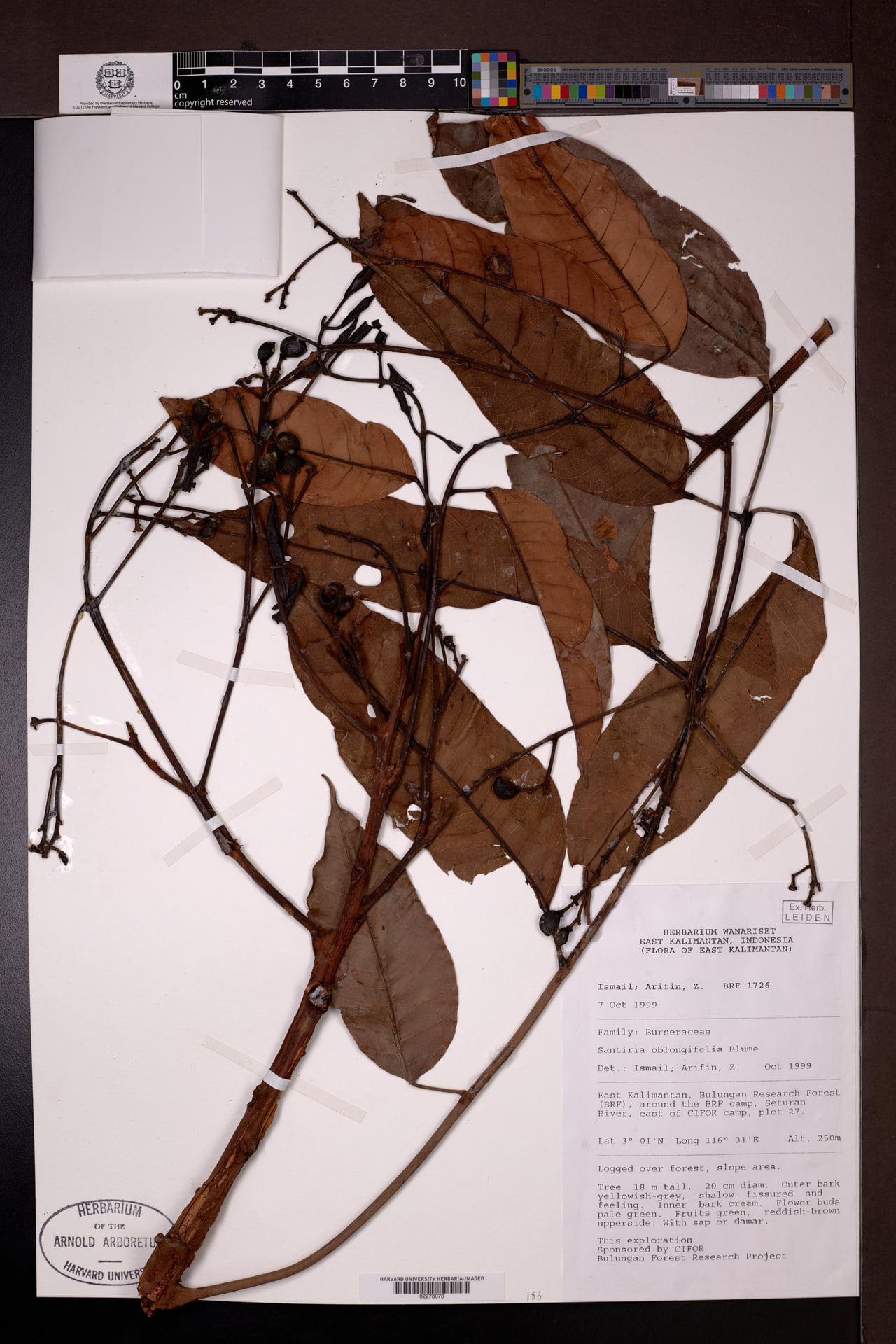
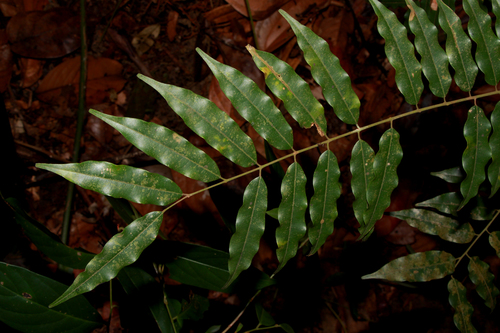
A tree up to 25 m high. It sometimes has small buttresses. The trunk can be 30-40 cm across. The small branches are slender. On the leaf stalk there is a leafy structure called a stipule which is 3 cm from the base of the stalk. It is thread like. The leaves have 3-6 pairs of leaflets and can be softly hairy. The leaflets are oval and 12-20 cm long by 5-7 cm wide. There are 11-20 pairs of veins in the leaflets and continuing fairly straight towards the edges of the leaves. The flower clusters occur in the axils of leaves. They are 12-22 cm long. There can be up to 9 flowers. The flower buds are greenish white and the petals are white or cream. The fruiting clusters are up to 10 cm long with 1-3 fruit in a cluster. There is a saucer like structure (calyx) around the base of the fruit. The young fruit are green or bluish. They become dark purple black at maturity. The fruit are long and slightly triangular in cross section. They are 4 cm long by 2 cm across. The stone of the fruit has 6 ribs. There are 1-2 seeds inside. The seeds are edible.
Edible Uses
The seeds are edible and have been recorded as a traditional food source, though the plant remains only a minor food.
Traditional Uses
The seeds have been recorded as edible.
This uses section is brief — help expand it
Known Hazards
The plant's potential as a food source is not fully known.
Distribution
A tropical plant. It occurs in dense or dry forest. It grows from sea level to 1,000 m altitude. In Samoa it grows from sea level to 700 m altitude. A small understory tree in lowland and foothill rainforests. It is recorded from Morobe Province and New Britain as well as Malaysia. It grows up to 250 m altitude.
Where It Grows
American Samoa, Asia, Australia, Fiji, Malaysia, Pacific, Papua New Guinea, PNG, Samoa, SE Asia, Solomon Islands, Tonga, Vanuatu,
Cultivation
The tree grows wild from seeds.
Propagation
Seed - we have no specific information for this species but seeds of this genus generally have a hard seed coat and germinate erratically. Filing away some of the seed coat to allow moisture to enter more readily, without damaging the seed, will encourage a faster and more even germination.
Other Uses
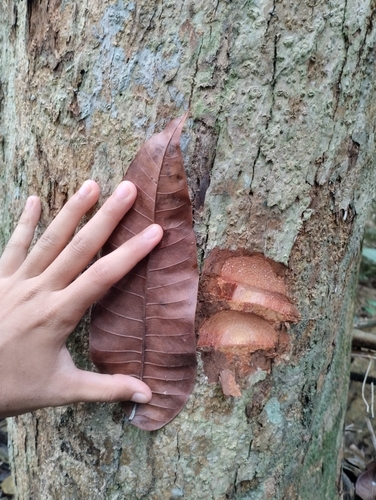
A fragrant gum obtained from the tree is used to perfume coconut oil. The tree produces a damar-like resin. Dammar is a hard resin, obtained from various trees of Southeast Asia. Traditionally, it is used for purposes such as caulking boats and baskets, as an adhesive, a medicine, as a fuel for torches and sometimes in foods. Dammar has many commercial applications, though many of these uses are less important nowadays due to the advent of synthetic materials. Commercially, it is an ingredient of inks, lacquers, oil paints, varnishes etc, and is used as a glazing agent in foods. Harvesting of the resin commences when the bole is around 25cm in diameter (approx 20 years old). Triangular cuts (becoming circular with age) are arranged in vertical rows around the trunk. The cuts are several centimetres wide at first, but become enlarged at every tapping and eventually become holes of 15 - 20cm in depth and width. The average number of holes for a tree about 30 metres tall and 60 - 80cm in diameter is 9 - 11 in each of 4 - 5 vertical rows. For the higher holes, the tapper climbs the tree supported by a rattan belt and using the lower holes as footholds. The exuded resin is allowed to dry on the tree before it is collected. The frequency with which the tree is visited to refreshen the cut varies from once a week to once a month, depending on how far the tree is from the village. Tapping can continue for 30 years. An important hardwood timber, it is used locally in house construction. The trunks are used to make canoes.
Production
Trees flower and fruit throughout the year. The flowers are recorded in June, August and November. The fruit are recorded in March and May to September.
Other Information
This species has been recorded as having edible seeds. Its potential is not known, but it is only a minor food.
Notes
There are 80-95 Canarium species.
Synonyms
Also Known As
Angari, Aropir, Banaga, Bitung, Didi, Kauloa, Kauningai, Ma'ali, Mbulundavui, Ndawandawa, Ndindi, Nggaunggau
References (13)
- Altschul, S.V.R., 1973, Drugs and Foods from Little-known Plants. Notes in Harvard University Herbaria. Harvard Univ. Press. Massachusetts. no. 1988
- Bourke, M., 1995, Edible Indigenous Nuts in Papua New Guinea. In South Pacific Indigenous Nuts. ACIAR Proceedings No 69, Canberra. p 46
- Cooper, W. and Cooper, W., 2004, Fruits of the Australian Tropical Rainforest. Nokomis Editions, Victoria, Australia. p 96
- Jackes, B.R., 2001, Plants of the Tropics. Rainforest to Heath. An Identification Guide. James Cook University. p 45
- Lebot, V. & Sam, C., Green desert or ‘all you can eat’? How diverse and edible was the flora of Vanuatu before human introductions?. Terra australis 52 p 410
Show all 13 references Hide references
- Nombo, P. & Leach, J. 2010, Reite Plants: An Ethnobotanical Study in Tok Pisin and English. ANU press. p 110
- Parham, H. B. R., 1940, Fiji Plants Their Names and Uses. Supplement to the Journal of the Polynesian Society. Memoir No. 16
- Smith, A.C., 1985, Flora Vitiensis Nova: A New flora of Fiji, Hawai Botanical Gardens, USA Vol 3 p 474
- Walter, A & Sam, C., 1995, Indigenous Nut Trees in Vanuatu: Ethnobotany and Variability. In South Pacific Indigenous Nuts. ACIAR Proceedings No 69. Canberra. p 57
- Walter, A. & Sam C., 2002, Fruits of Oceania. ACIAR Monograph No. 85. Canberra. p 131
- Whistler, W.A., 2004, Rainforest Trees of Samoa. Isle Botanica Honolulu, Hawaii. p 35
- World Checklist of Useful Plant Species 2020. Royal Botanic Gardens, Kew
- www.pngplants.org