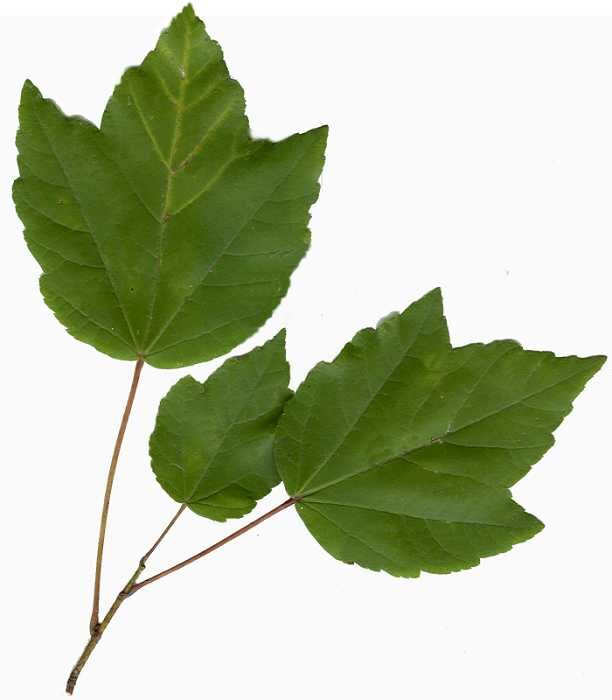
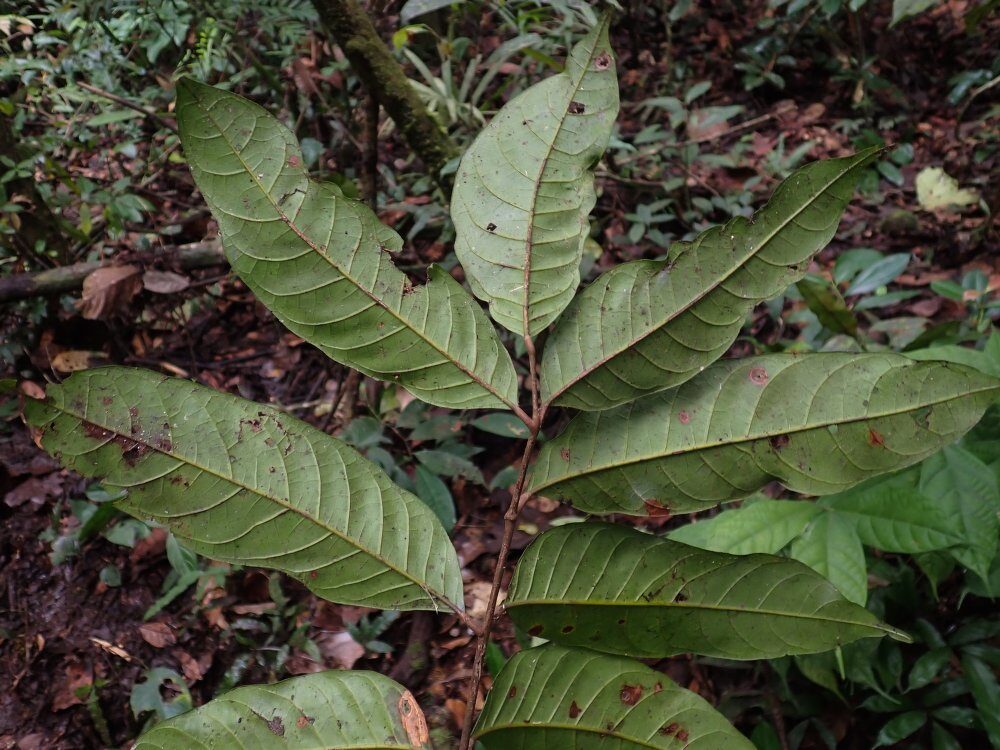
Canarium subulatum
Guillaumin
Ca na
iNaturalist· cc0
no rights reserved, uploaded by 葉子
iNaturalist· cc-by-nc
(c) mylittleploynies, some rights reserved (CC BY-NC)
iNaturalist· cc-by-nc
(c) 歐陽秀華, some rights reserved (CC BY-NC)
Summary
Source: WikipediaCanarium subulatum is a tropical forest tree species in the family Burseraceae. It occurs in southern China and Indo-China; in Vietnam it may be called trám múi nhọn. No subspecies are listed in the Catalogue of Life.
Description
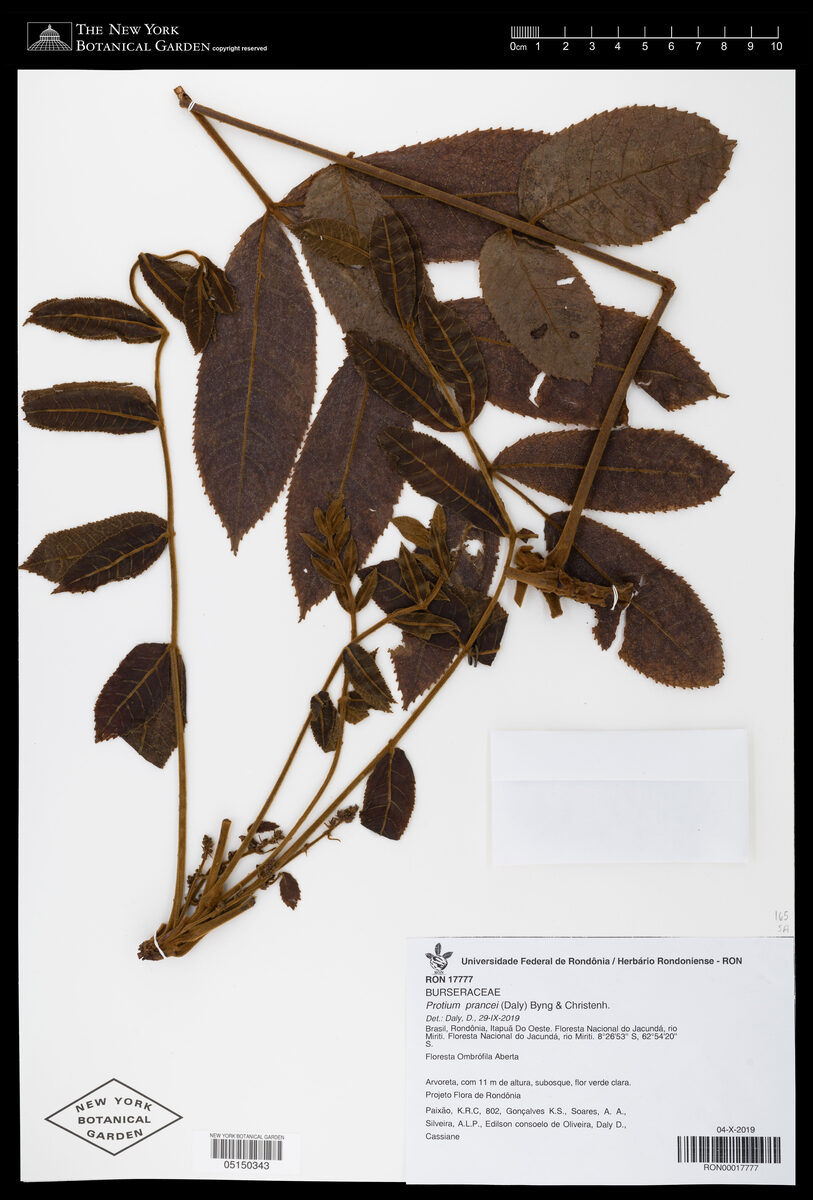
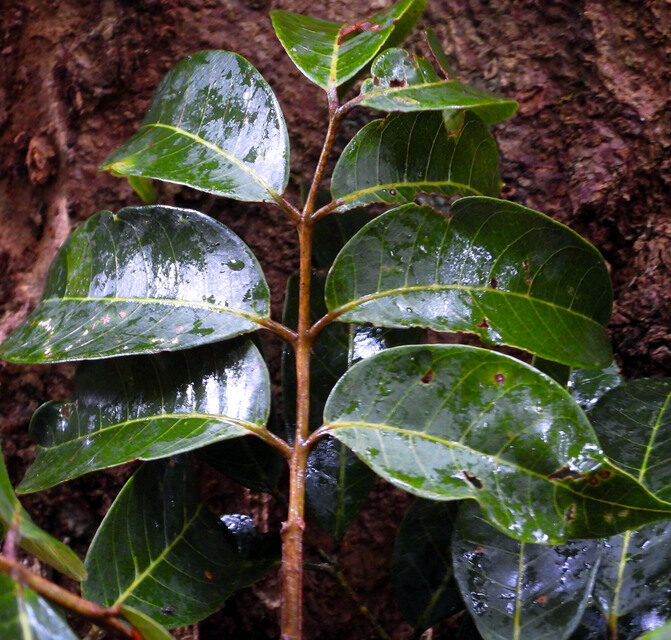
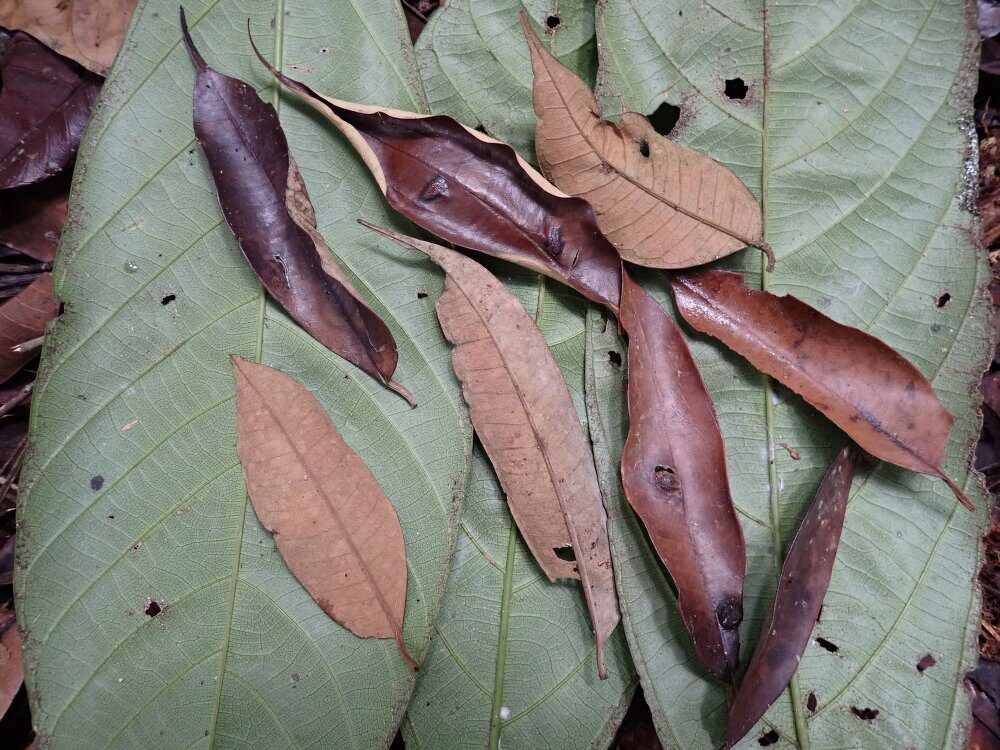
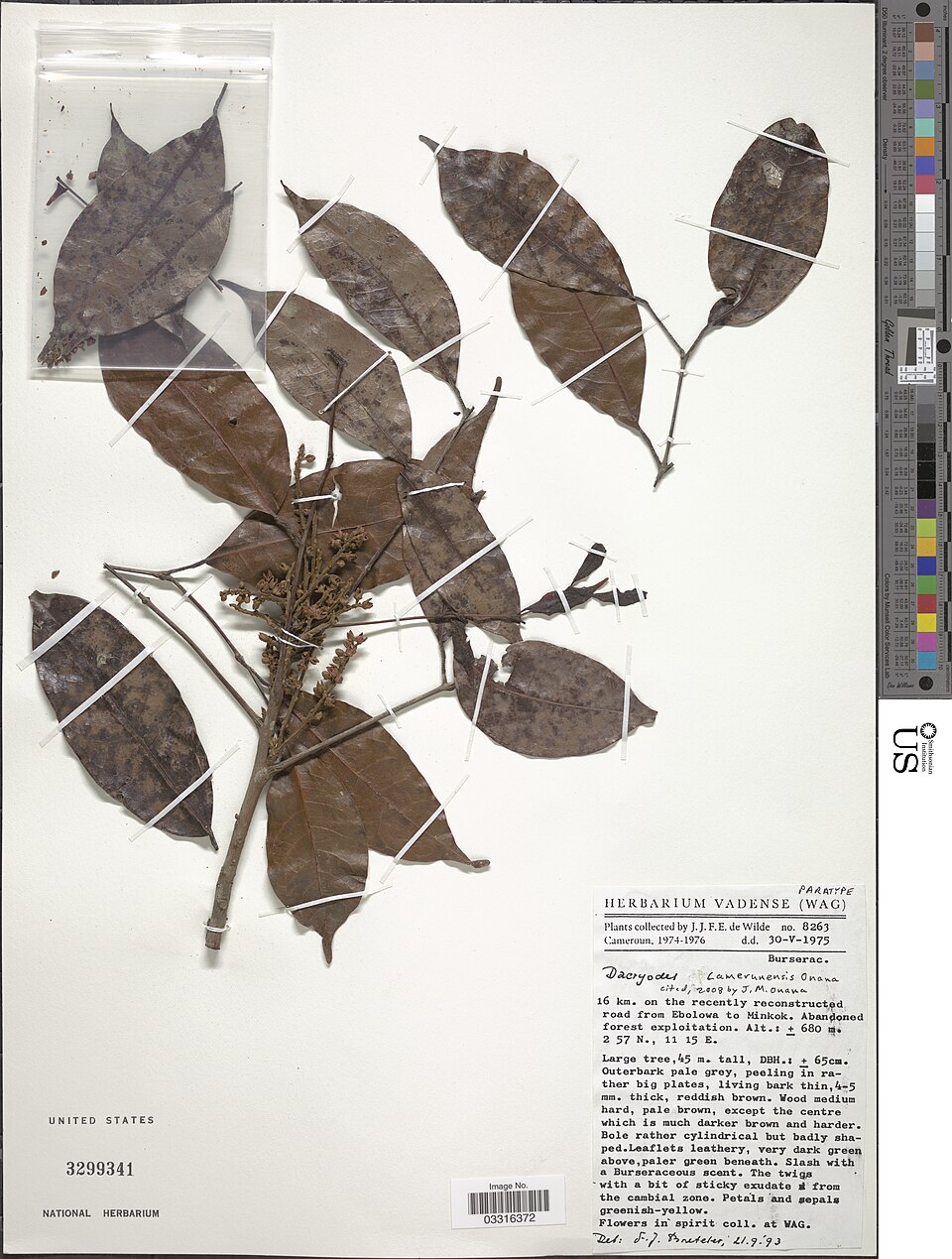
A large tree. It grows up to 30 m high and is 60-80 cm across in the trunk. The trunk is straight. The bark is split into small pieces along its length. The bark is dark grey. The small branches are rough with yellow brown hairs. The leaves are unequal and 20-30 cm long. There are 3-6 pairs of leaflets. They are oval and thin. They are 7.5-9.5 cm long by 3-4.5 cm wide. They end with a sharp point. They are rounded or wedge shaped at the base. The edges of the leaves can be wavy. There are 11-12 pairs of side veins. The leaflet stalk is 1 cm long. The leafy structure (stipule) at the base of the leaf stalk is 1 cm long and covered with fine hairs. The leaves turn red when old. The flower clusters can be in the axils of leaves or near the ends of branches. There are few flowers without flower stalks and they are 6 mm long. The fruit is large and oval. It is 3.5 cm long and 2 cm wide. It is green when young.
Edible Uses
The kernels are eaten fresh or salted, and the fruit is pickled.
Traditional Uses
The kernels are eaten fresh and also salted. The fruit are pickled.
This uses section is brief — help expand it
Distribution
A tropical plant. It occurs in Vietnam in evergreen forests. It needs light when young so seedlings are only found in open places. In southern China it grows in valley forests between 200-1,500 m above sea level. In Yunnan.
Where It Grows
Asia, Cambodia, China, Indochina, Laos, Myanmar, SE Asia, Thailand, Vietnam,
Cultivation
Plants are grown from seeds.
Propagation
Seed - we have no specific information for this species but seeds of this genus generally have a hard seed coat and germinate erratically. Filing away some of the seed coat to allow moisture to enter more readily, without damaging the seed, will encourage a faster and more even germination.
Other Uses
A black dye obtained from the fruits is used for making ink. The wood is soft and light in weight. It is used for making low quality furniture and for plywood.
Production
Trees flower in April-May and fruit is September to October.
Notes
The timber is used for furniture. There are 80-95 Canarium species.
Also Known As
Bak luwam, Makok kluen, Tram do, Tram la do
References (9)
- Anderson, E. F., 1993, Plants and people of the Golden Triangle. Dioscorides Press. p 205
- Cruz-Garcia, G. S., & Price, L. L., 2011, Ethnobotanical investigation of 'wild' food plants used by rice farmers in Kalasin, Northeast Thailand. Journal of Ethnobiology and Ethnomedicine 7:33
- Eiadthong, W., et al, 2010, Management of the Emerald Triangle Protected Forests Complex. Botanical Consultant Technical Report. p 23
- Forest Inventory and Planning Institute, 1996, Vietnam Forest Trees. Agriculture Publishing House p 83
- Gardner, S., et al, 2000, A Field Guide to Forest Trees of Northern Thailand, Kobfai Publishing Project. p 113
Show all 9 references Hide references
- Kachenchart, B., et al, 2008, Phenology of Edible Plants at Sakaerat Forest. In Proceedings of the FORTROP II: Tropical Forestry Change in a Changing World. Bangkok, Thailand.
- Kaewjampa, N., et al, 2014, Investigation Species of Edible Tree and Medicinal Plants in Faculty of Agriculture, Khon Kaen University. International Journal of Environmental and Rural Development (2014) 5-1
- New York Botanical Gardens Herbarium.
- Sang, D. T., & Mizoue, K. O. N., 2012, Use of Edible Forest Plants among Indigenous Ethnic Minorities in Cat Tien Biosphere Reserve, Vietnam. Asian Journal of Biodiversity Vol. 3 (1), p 23-49