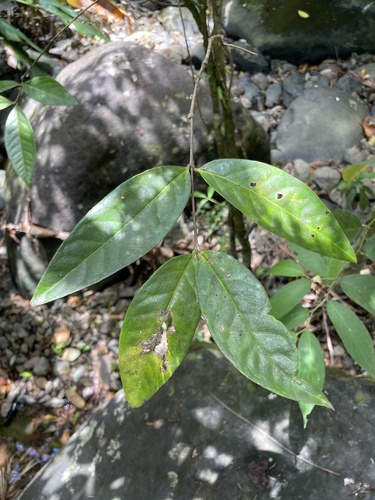
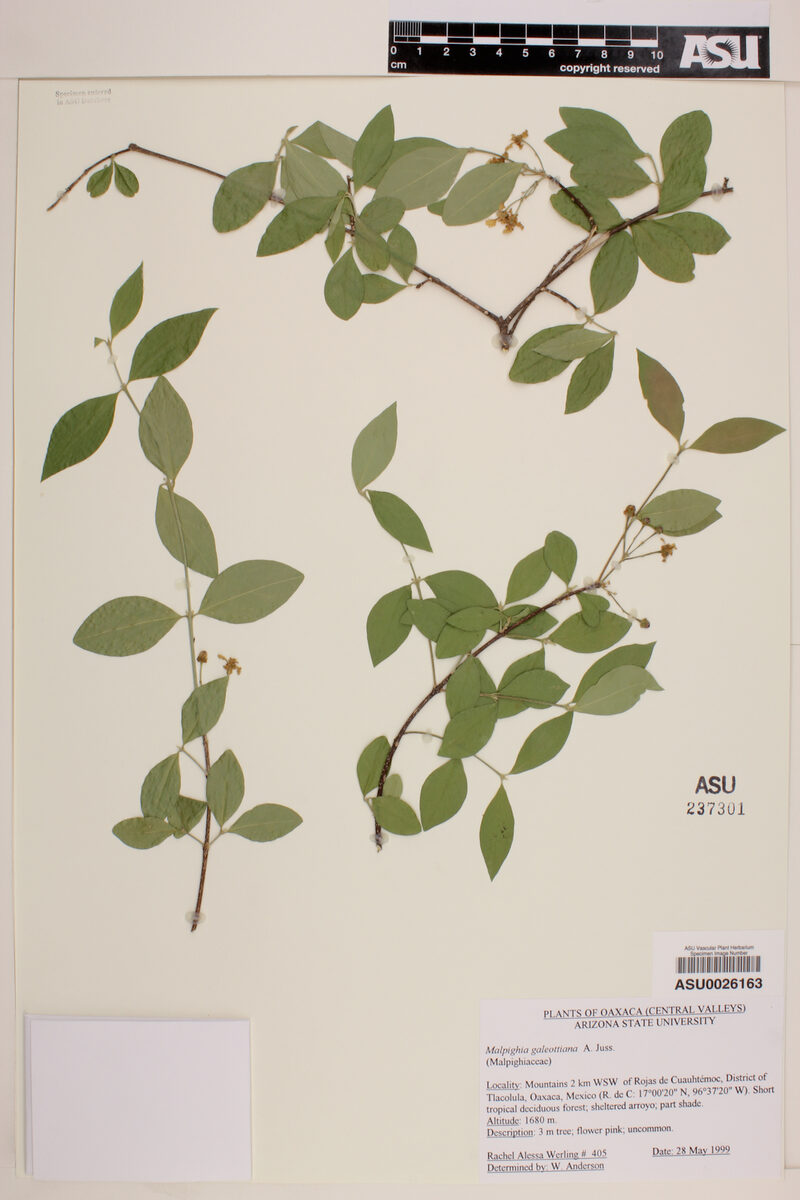
Bunchosia argentea
(Jacq.) DC.
Peanut butter fruit, Silvery bunchosia
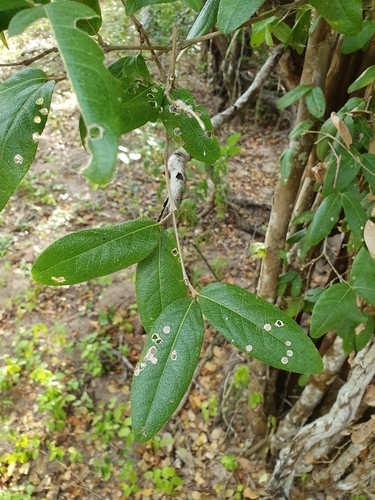
iNaturalist· cc0
no rights reserved, uploaded by 葉子
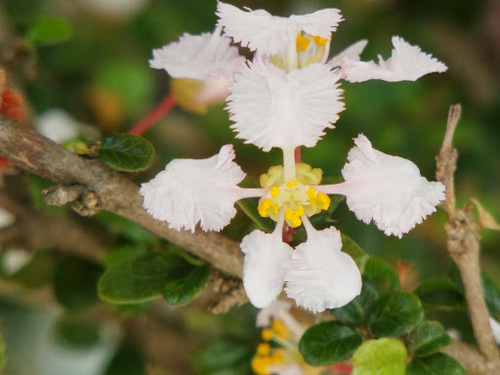
iNaturalist· cc-by
(c) renjus box, some rights reserved (CC BY), uploaded by renjus box
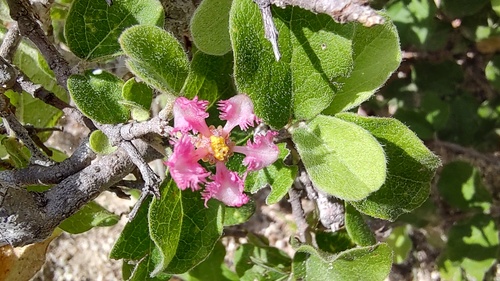
iNaturalist· cc-by-nc-sa
(c) 106611639464075912591, some rights reserved (CC BY-NC-SA), uploaded by 106611639464075912591
Summary
Source: WikipediaBunchosia argentea, known as silver peanut butter fruit, is a species of flowering plant in the acerola family, Malpighiaceae, that is native to Venezuela, Colombia, Peru, Brazil, Guyana and Suriname. It produces small orange-red fruits that are sericeous (finely haired) of pleasant taste similar to peanut butter. Leaves have pointed ends and are densely silvery or golden sericeous on the abaxial side.
Description
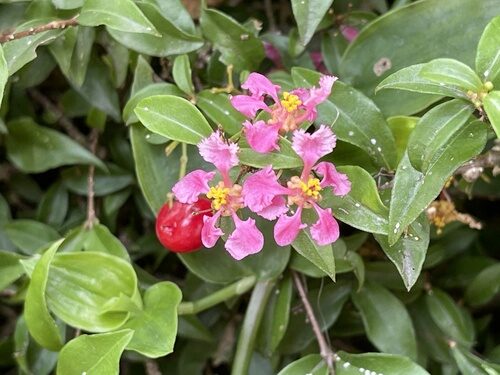
A small tree or shrub. It grows to 10 m tall. It forms a dense cone shaped crown. The leaves are in pairs and have wavy edges. They are simple and rich green. They are 10 cm long. They taper to the base. The flowers are yellow and showy. They are in long racemes. The petals have wavy edges. The fruit is oval and fleshy. The fruit are small and orange with a sticky pulp. They are 2.5 cm across. They are edible. They are cream coloured and have the consistency and texture of peanut butter.
Edible Uses
The fruit is eaten fresh or used in drinks and has a flavor resembling dried fig. The pulp has a peanut butter-like consistency and texture.
Traditional Uses
The fruit are eaten fresh or used in drinks. The flavour of the fruit resembles a dried fig.
This uses section is brief — help expand it
Medicinal Uses
The fruit is noted to be high in carotenoids.
Distribution
A tropical plant. It is native to C. and S. America. It needs a tropical climate. In Cairns Botanical Gardens. In Townsville Anderson BG.
Where It Grows
Amazon, Andes, Australia, Brazil, Central America, Colombia, Costa Rica, Ecuador*, French Guiana, Guianas, Guyana, North America, Panama, Peru*, South America, Suriname, USA, Venezuela,
Cultivation
Plants are grown from seed. They can also be grown by grafting.
Propagation
Seed - Cuttings of semi-ripe wood. Greenwood cuttings.
Production
It flowers are fruits most of the year. Fruit spoil quickly so must be picked regularly and stored in a refrigerator. It can produce fruit 2-3 years after planting.
Other Information
They are an attractive fruit.
Notes
There are 68 Bunchosia species. High in Caretonoids and available.
Synonyms
Also Known As
Abio, Ananbajeccocho, Bunchosia, Ciruela, Ciruela-branca, Ciruela de monte, Ciruelo, Confite, Cumal muyo, Huacu ruya, Sacha ambi yura
References (12)
- Barwick, M., 2004, Tropical and Subtropical Trees. A Worldwide Encyclopedic Guide. Thames and Hudson p 71
- Facciola, S., 1998, Cornucopia 2: a Source Book of Edible Plants. Kampong Publications, p 146
- Grandtner, M. M. & Chevrette, J., 2013, Dictionary of Trees, Volume 2: South America: Nomenclature, Taxonomy and Ecology. Academic Press p 80
- Hibbert, M., 2002, The Aussie Plant Finder 2002, Florilegium. p 48
- Kermath, B. M., et al, 2014, Food Plants in the Americas: A survey of the domesticated, cultivated and wild plants used for Human food in North, Central and South America and the Caribbean. On line draft. p 150
Show all 12 references Hide references
- Kiple, K.F. & Ornelas, K.C., (eds), 2000, The Cambridge World History of Food. CUP p 1740
- Lopez-Diago, D. & Garcia, N., 2021, Wild edible fruits of Colombia. Biota ColomBiana 22 (2) p 40
- Lorenzi, H., Bacher, L., Lacerda, M. & Sartori, S., 2006, Brazilian Fruits & Cultivated Exotics. Sao Paulo, Instituto Plantarum de Estuados da Flora Ltda. p 427
- Prodr. 1:582. 1824
- Recher, P, 2001, Fruit Spirit Botanical Gardens Plant Index. www.nrg.com.au/~recher/ seedlist.html p 1
- Roa, J. A. G. & Boada, D. S. G., 2018, Fundación para el Fortalecimiento de la Fruticultura y Plantas Alimenticias no Convencionales en Colombia.
- Torre, de la, L., et al, 2008, Enciclopedia de las Plantas Útiles del Ecuador. Herbario QCA. Pontificia Universidad Católica del Ecuador. p 409