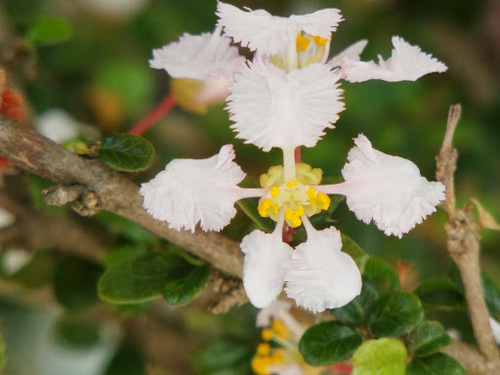
Byrsonima spicata
(Cav.) Rich ex Kunth
Locust berry
iNaturalist· cc-by-nc
(c) Angie Arevalo Camacho, some rights reserved (CC BY-NC), uploaded by Angie Arevalo Camacho
iNaturalist· cc-by
(c) Eric Knight, some rights reserved (CC BY)
iNaturalist· cc-by-nc
(c) Juan Pablo Chica Vargas, some rights reserved (CC BY-NC), uploaded by Juan Pablo Chica Vargas
Description
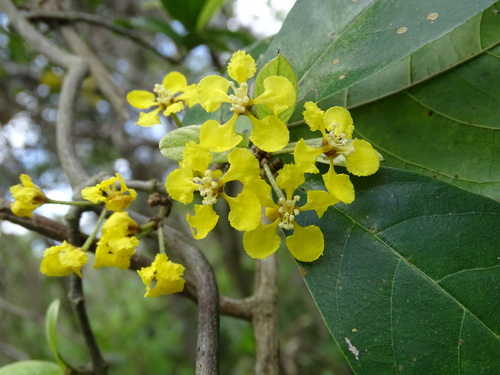
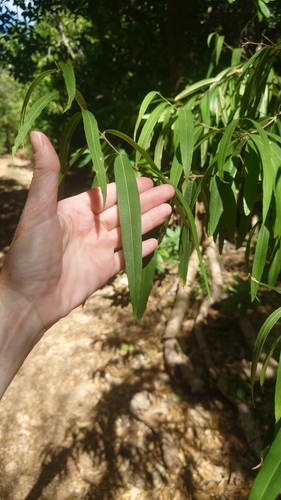
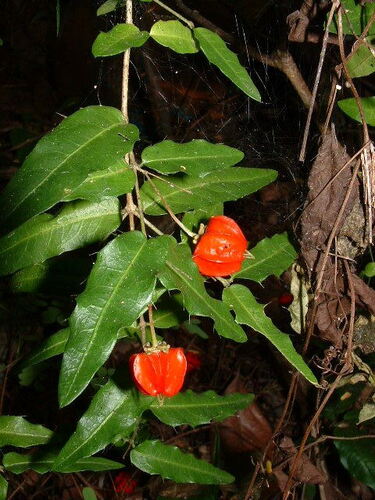
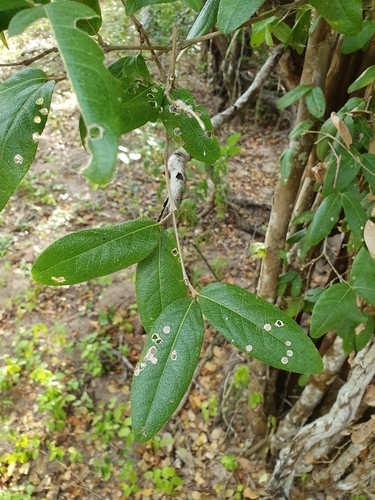
A shrub or tree. It usually grows 12-15 m tall. It can grow to 40 m high. The trunk is 30 cm across. The trunk is usually straight. The bark is dark grey. The leaves are simple and opposite. The leaves are narrow and glossy with a pointed tip. They are slightly wavy at the edge. They are a rusty brown colour underneath. The flowers are grouped along stalks 1 cm long There are 15-40 flowers. The flowers are greenish-yellow. The fruit are round. The fruit are yellow, acid berries. They are 1-2 cm across.
Edible Uses
The fruit pulp is eaten raw and can be preserved as jams and jellies. The acidic berries are used to flavour porridge and are crushed in water with sugar to make drinks.
Traditional Uses
The fruit pulp is eaten raw. The fruit are also preserved. They are acid so are used for jams and jelly. The fruit are used to flavour porridge. The fruit are crushed in water and sugar added to make a drink.
Medicinal Uses
The leaves are astringent. The bark is astringent, febrifuge and purgative. A decoction is used to treat rattlesnake bites, diarrhoea and dysentery. The fruit is acid and astringent, containing much tannin. It is used as a remedy for dysentery.
Distribution
A tropical plant. It grows in tropical America. It grows in savanna forest. It needs a humus rich soils and sunny location.
Where It Grows
Amazon, Antilles, Asia, Australia, Barbados, Bolivia, Brazil, Central America, Colombia, Cuba, Dominica, Dominican Republic, French Guiana, Grenada, Guadeloupe, Guianas, Guyana, Haiti, Indonesia, Jamaica, Leeward islands, Martinique, Mexico, Panama, Peru, Puerto Rico, SE Asia, South America, St Lucia, Suriname, Trinidad-Tobago, Venezuela, West Indies,
Cultivation
Plants are grown by seed.
Propagation
Seed - best sown as soon as it is ripe in a sunny position in a nursery seedbed. Germination rates are normally low, with the seed sprouting within 30 - 40 days. Transplant the seedlings to individual containers when 5 - 6cm tall.
Other Uses
The heartwood is pale to dark reddish-brown with a purplish cast, sometimes with a grayish tint; the sapwood is a light to reddishbrown. The texture is medium; the grain straight to interlocked; lustre is medium; there is no distinctive taste or aroma. The wood is soft, moderately heavy, with poor mechanical properties; it is not very durable, being very susceptible to dry-wood termites and other wood-destroying insects, only slightly resistant to decay fungi. It is little used, even locally, in Brazil, but is sometimes employed for small rural works, fence posts etc. In Bolivia it is used for construction and flooring. The wood is used for fuel and to make charcoal. A fairly fast-growing plant, it is a natural pioneer within its native range and could be suitable to use as a pioneer when re-establishing woodland.
Notes
There are 127 Byrsonima species. They grow in tropical America.
Synonyms
Also Known As
Bois chardon, Crabo, Doncella, Hicha, Hilly hock, Hogberry, Indano, Locust-tree, Lontoekasi, Mariacao, Maricao, Mauriat, Murici pinima, Peralejo, Rain Nance, Sabanakwari, Shoemaker's tree, Tapal
References (17)
- Bircher, A. G. & Bircher, W. H., 2000, Encyclopedia of Fruit Trees and Edible Flowering Plants in Egypt and the Subtropics. AUC Press. p 71 (Also as Byrsonima chrysophylla)
- Condit, R., et al, 2011, Trees of Panama and Costa Rica. Princeton Field Guides. p 272
- Facciola, S., 1998, Cornucopia 2: a Source Book of Edible Plants. Kampong Publications, p 146
- Fouqué, A. 1972. Espèces fruitières d'Amérique tropicale. Institut français de recherches fruitierès outre-mer
- Grandtner, M. M. & Chevrette, J., 2013, Dictionary of Trees, Volume 2: South America: Nomenclature, Taxonomy and Ecology. Academic Press p 85
Show all 17 references Hide references
- Hedrick, U.P., 1919, (Ed.), Sturtevant's edible plants of the world. p 140
- Kermath, B. M., et al, 2014, Food Plants in the Americas: A survey of the domesticated, cultivated and wild plants used for Human food in North, Central and South America and the Caribbean. On line draft. p 153 (As Byrsonima chrysophylla)
- Kew Plants of the World Online
- Martin, F.W., C.W. Campbell and R.M. Ruberté. 1987. Perennial edible fruits of the tropics - An inventory. United States Department of Agriculture, Agricultural Research Service, Agriculture Handbook No. 642. Washington, D.C., USA.
- PROSEA
- Recher, P, 2001, Fruit Spirit Botanical Gardens Plant Index. www.nrg.com.au/~recher/ seedlist.html p 1
- Reis, S. V. and Lipp, F. L., 1982, New Plant Sources for Drugs and Foods from the New York Botanical Garden herbarium. Harvard. p 150
- Roa, J. A. G. & Boada, D. S. G., 2018, Fundación para el Fortalecimiento de la Fruticultura y Plantas Alimenticias no Convencionales en Colombia.
- Segura, S., et al, 2018, The edible fruit species in Mexico. Genet Resour Crop Evol (2018) 65:1767–1793
- van Andel, T., 2000, Useful plants of Guyana. Non-timber forest products of the North-West District of Guyana. Part 2. A Field Guide. Tropenbos-Guyana Programme. p 285
- van Roosmalen, M.G.M., 1985, Fruits of the Guianan Flora. Utrecht Univ. & Wageningen Univ. p 263
- Verheij, E. W. M. and Coronel, R.E., (Eds.), 1991, Plant Resources of South-East Asia. PROSEA No 2. Edible fruits and nuts. Pudoc Wageningen. p 320