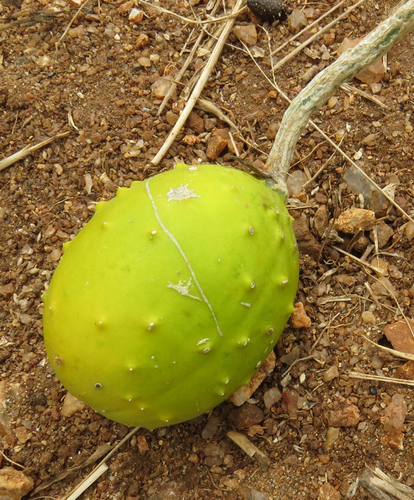
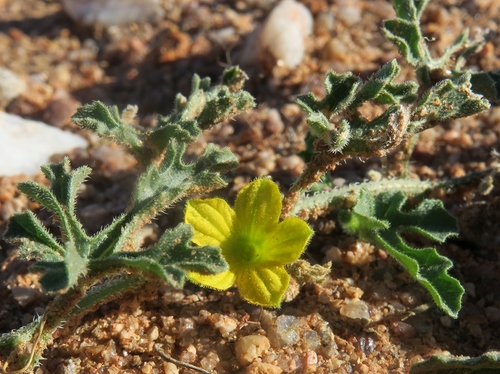
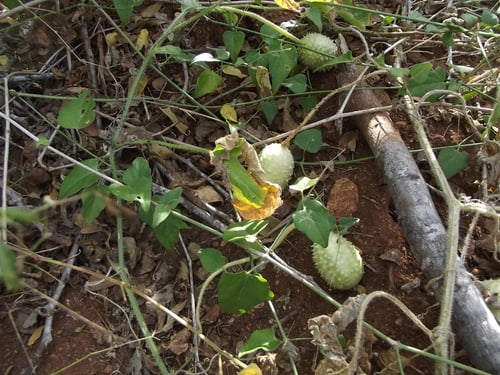
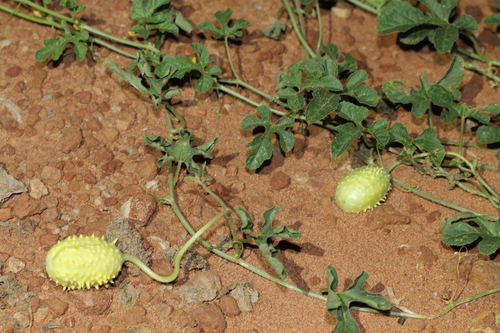
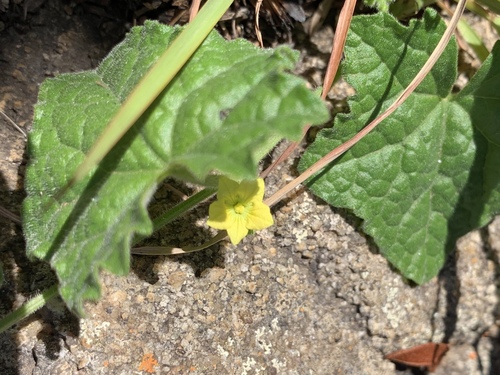
Cucurbita fraterna
L. H. Bailey
wikimedia· cc0
Wikimedia Commons - George Chernilevsky
Description
A temperate vine in the pumpkin family producing round fruit. Young fruit and seeds are edible, though some fruit may be bitter and require washing or processing.
Edible Uses
Young fruit and seeds are eaten. Some fruit may be bitter and require washing or processing before consumption.
Traditional Uses
Some fruit can be bitter and would need washing or processing. Young fruit are edible. Also the seeds.
This uses section is brief — help expand it
Medicinal Uses
Fresh squash is cut into spiral strips, folded into hanks and hung up to dry for winter use. The blossoms are fried in grease and used as a delicacy in combination with other foods. Fresh squash, either whole or in pieces, is roasted in ashes and used for food. In the Zuni culture, the gourds are made into cups, ladles, dippers, and storage receptacles. A poultice of seeds and blossoms was used to treat cactus scratches.
Distribution
It is a temperate plant.
Where It Grows
Mexico, North America,
Synonyms
Also Known As
Calabacilla
References (3)
- Kermath, B. M., et al, 2014, Food Plants in the Americas: A survey of the domesticated, cultivated and wild plants used for Human food in North, Central and South America and the Caribbean. On line draft. p 285 (As Cucurbita pepo subsp. fraterna)
- Lira, R. & Caballero, J., 2002, Ethnobotany of the Wild Mexican Cucurbitaceae. Economic Botany 56(4) pp. 380-398
- Nee, M., 1990, The Domestication of Cucurbita (Cucurbitaceae). Economic Botany, Vol. 44, No. 3, Supplement: New Perspectives on the Origin and Evolution of New World Domesticated Plants. pp. 56-68