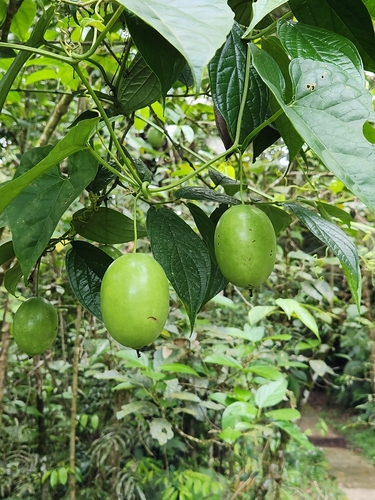
Cucumis anguria var. longipes
L. A. Meeuse
West Indian gherkin
No photos yet for Cucumis anguria var. longipes
Sign in to contribute a photoSummary
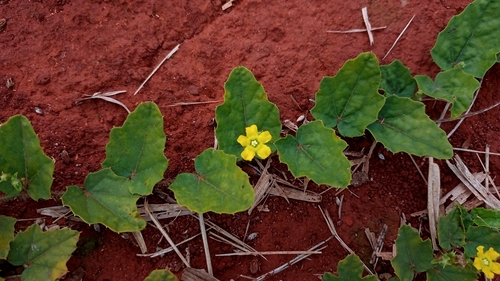
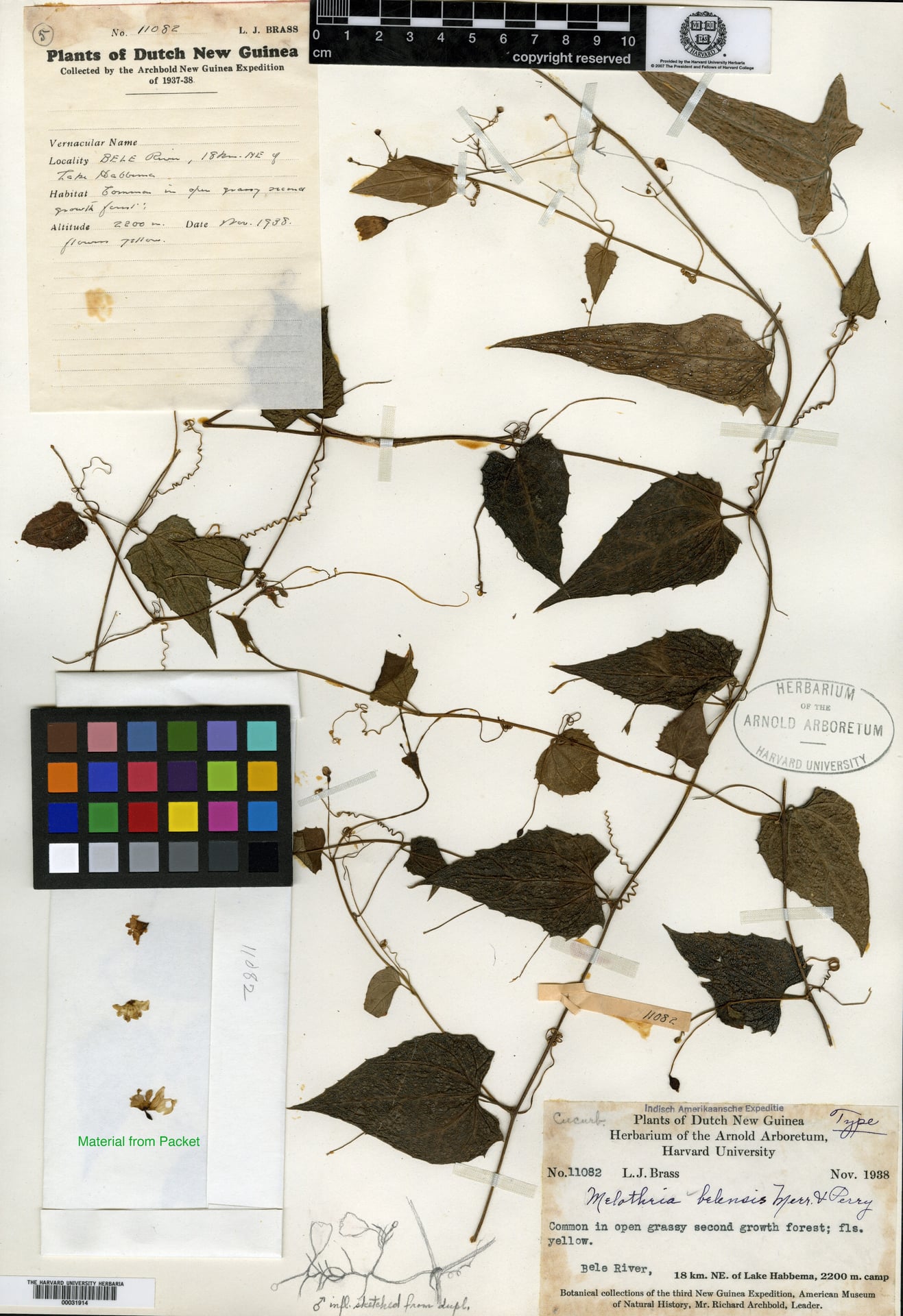
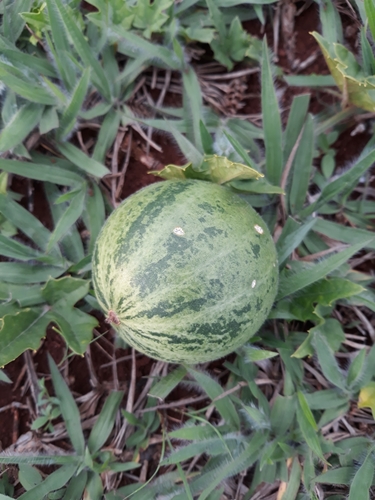
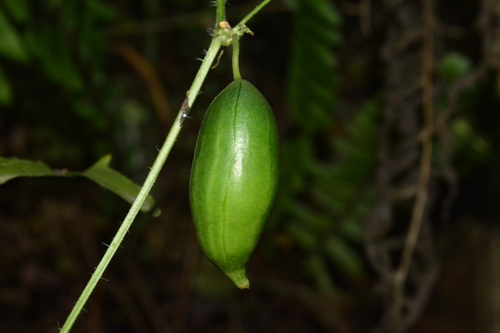
Source: WikipediaCucumis anguria, commonly known as maroon cucumber, West Indian gherkin, maxixe, burr gherkin, cackrey, and West Indian gourd, is a vine that is indigenous to Africa, but has become naturalized in the New World, and is cultivated in many places. It is similar and related to the common cucumber (C. sativus) and its cultivars are known as gherkins.
Description
A herb. It can lie along the ground or be a climber. Male and female flowers are separate on the same plant. The fruit are longer than the variety anguria.
Edible Uses
Young leaves are boiled as a potherb. Fruit can be eaten, though less bitter varieties are preferred.
Traditional Uses
The young leaves are boiled as a potherb. Fruit can be bitter. Less bitter ones are eaten.
This uses section is brief — help expand it
Medicinal Uses
Cucumis anguria is primarily grown (as a crop plant) for its edible fruit, which is used in pickling, as cooked vegetables, or eaten raw. The flavor is similar to that of the common cucumber. C. anguria fruits are popular in the northeast and north of Brazil, where they are an ingredient in the local version of cozido (meat-and-vegetable stew). Cucumis anguria has been used in folk medicine to treat ailments of the stomach.
Distribution
It is a tropical plant. It grows on sandy soils. It grows between 200-1,500 m above sea level. It can grow in arid places.
Where It Grows
Africa, Angola, Botswana, Cape Verde, Central Africa, Colombia, Congo, Cuba, East Africa, Eswatini, Europe, Kenya, Malawi, Mozambique, Namibia, Netherlands Antilles, Sierra Leone, Spain, South Africa, Southern Africa, South America, Swaziland, Tanzania, West Africa, West Indies, Zambia, Zimbabwe,
Synonyms
References (3)
- Hedrick, U.P., 1919, (Ed.), Sturtevant's edible plants of the world. p 230 (As Cucumis longipes)
- D. Oliver, Fl. trop. Afr. 2:547. 1871 (As Cucumis longipes)
- Royal Botanic Gardens, Kew (1999). Survey of Economic Plants for Arid and Semi-Arid Lands (SEPASAL) database. Published on the Internet; http://www.rbgkew.org.uk/ceb/sepasal/internet [Accessed 16th April 2011]