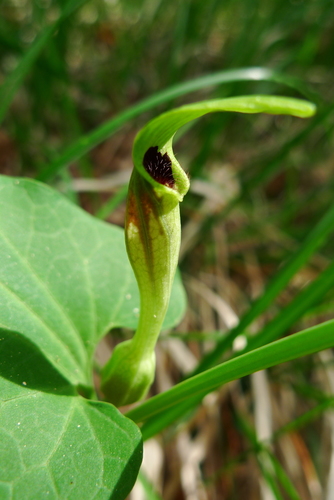
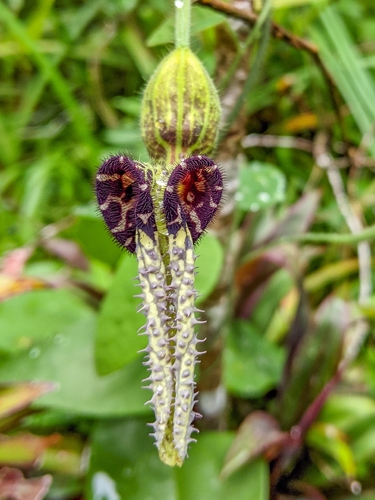
Aristolochia serpentaria
L.
Virginia snakeroot, Serpentary
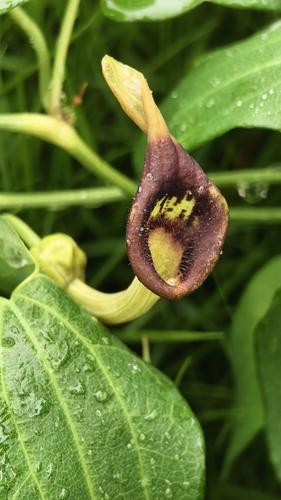
iNaturalist· cc-by-nc-sa
(c) Patrick Coin, some rights reserved (CC BY-NC-SA)
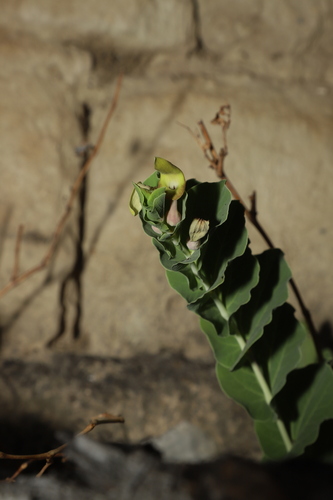
iNaturalist· cc-by-nc-sa
(c) Rob Curtis, some rights reserved (CC BY-NC-SA), uploaded by Rob Curtis
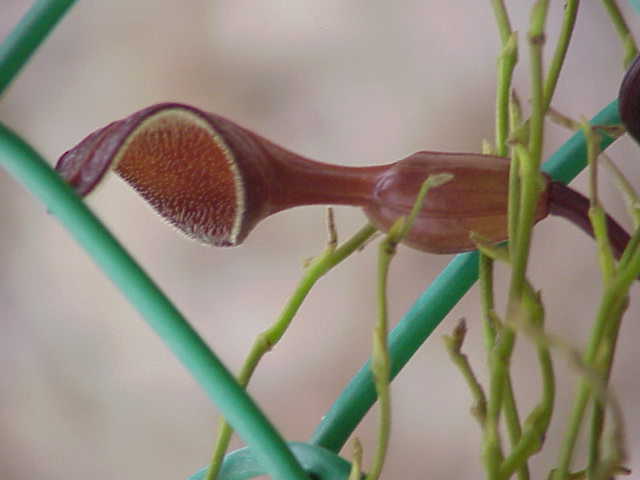
iNaturalist· cc-by-nc
(c) Vanessa Voelker, some rights reserved (CC BY-NC), uploaded by Vanessa Voelker
Summary
Source: WikipediaAristolochia serpentaria is a species of perennial flowering plant in the Aristolochiaceae (birthwort) family. The species is commonly known as Virginia snakeroot and is native to eastern North America, from Connecticut to southern Michigan and south to Texas and Florida.
Description
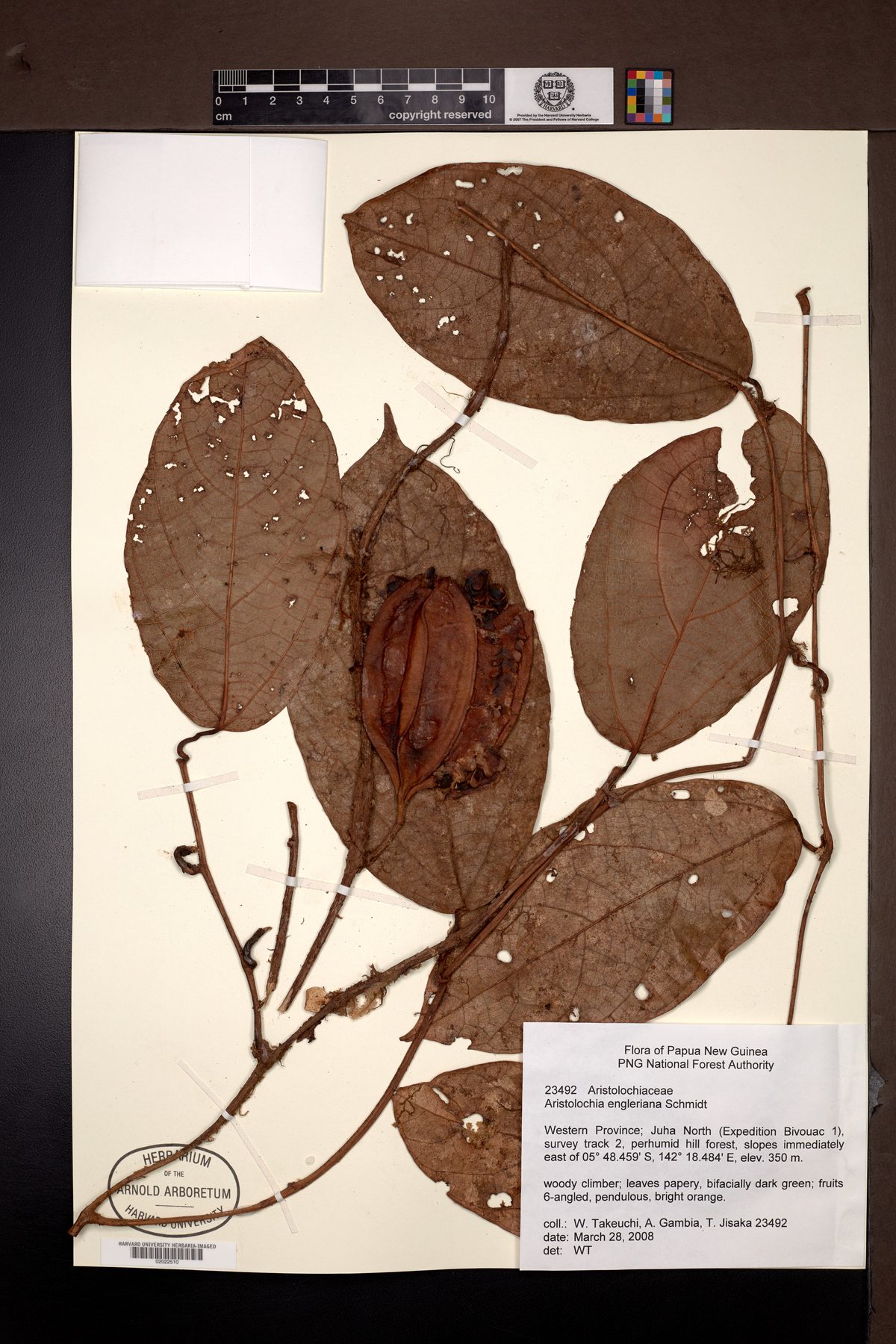
A small herb. It keeps growing from year to year. It grows 10-45 cm high and wide. The stems are upright and thin and zigzag. The leaves are heart-shaped and 4-15 cm long. The flowers occur singly and are brown-purple and S shaped. They are 1 cm long. The fruit is a hard capsule.
Edible Uses
None known
Traditional Uses
The roots are dried and used to produce and essential oil used to flavour alcoholic drinks. Caution: Alcohol is a cause of cancer.
This uses section is brief — help expand it
Medicinal Uses
Antidote Antiinflammatory Bitter Diaphoretic Diuretic Expectorant Febrifuge Odontalgic Stimulant Tonic The Virginia snakeroot is attracting increasing interest for its medicinal virtues and as a result is becoming uncommon in the wild. It merits consideration for cultivation in forest areas. It is used in a number of proprietary medicines for treating skin, circulatory and kidney disorders. The plant contains aristolochic acid which, whilst stimulating white blood cell activity and speeding the healing of wounds, is also carcinogenic and damaging to the kidneys. The root is harvested in the autumn and dried for later use. The root is antidote, anti-inflammatory, bitter tonic, diaphoretic, diuretic and stimulant. Traditionally it was chewed in minute doses or used as a weak tea to promote sweating, stimulate the appetite and promote expectoration. The native North Americans considered it to have analgesic properties and used an infusion internally to treat rheumatism, pain - but especially sharp pains in the breast, and as a wash for headaches. This plant should be used with caution, it is irritating in large doses and can cause nausea, griping pains in the bowels etc. It should only be used internally under the supervision of a qualified practitioner. The bruised root is placed in hollow teeth for treating toothache. An extract of the root can be drunk to relieve stomach pains. The boiled root, or a decoction of the whole plant, can be used to treat fevers. The chewed root or crushed leaves was applied to snakebites. This species was the most popular snakebite remedy in N. America. It has also been applied externally to slow-healing wounds and in the treatment of pleurisy.
Known Hazards
We have no specific details for this species but most members of this genus have poisonous roots and stems. The plant contains aristolochic acid, this has received rather mixed reports on its toxicity. According to one report aristolochic acid stimulates white blood cell activity and speeds the healing of wounds, but is also carcinogenic and damaging to the kidneys. Another report says that it is an active antitumour agent but is too toxic for clinical use. Another report says that aristolochic acid has anti-cancer properties and can be used in conjunction with chemotherapy and radiotherapy and that it also increases the cellular immunity and phagocytosis function of the phagocytic cells.
Distribution
A temperate plant. It can tolerate frost.
Where It Grows
America, Australia, India, North America, USA,
Cultivation
Prefers a well-drained loamy soil, rich in organic matter, in sun or semi-shade, but succeeds in ordinary garden soil. This species is not hardy in the colder areas of the country, it tolerates temperatures down to between -5 and -10°c. Most species in this genus have malodorous flowers that are pollinated by flies. The flowers of this plant are sometimes cleistogomous.
Propagation
Seed - best sown in a greenhouse as soon as it is ripe in the autumn. Pre-soak stored seed for 48 hours in hand-hot water and surface sow in a greenhouse. Germination usually takes place within 1 - 3 months at 20°c. Stored seed germinates better if it is given 3 months cold stratification at 5°c. When large enough to handle, prick the seedlings out into individual pots and grow them on in the greenhouse for their first winter. Plant out in late spring or early summer after the last expected frosts. Division in autumn. Root cuttings in winter.
Other Uses
None known Special Uses
Synonyms
References (5)
- Bodkin, F., 1991, Encyclopedia Botanica. Cornstalk publishing, p 101
- Brown, D., 2002, The Royal Horticultural Society encyclopedia of Herbs and their uses. DK Books. p 127
- Facciola, S., 1998, Cornucopia 2: a Source Book of Edible Plants. Kampong Publications, p 31
- Seidemann J., 2005, World Spice Plants. Economic Usage, Botany, Taxonomy. Springer. p 49
- Sp. pl. 2:961. 1753