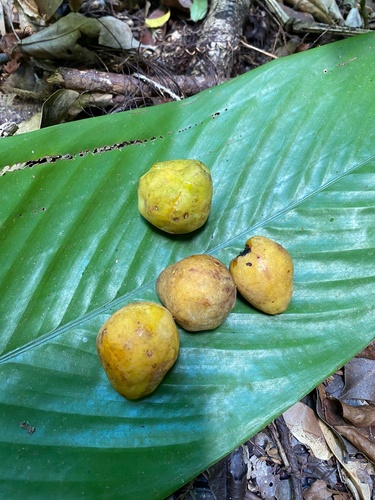
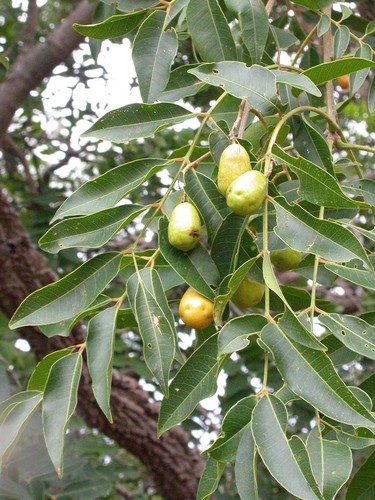
Buchanania cochinchinensis
(Lour.) M. R. Almeida
Almondette Tree
iNaturalist· cc-by-nc
(c) Abhishek Timothy Gopal, some rights reserved (CC BY-NC)
iNaturalist· cc-by-nc
(c) Abhishek Timothy Gopal, some rights reserved (CC BY-NC)
iNaturalist· cc-by-nc
(c) Abhishek Timothy Gopal, some rights reserved (CC BY-NC)
Description
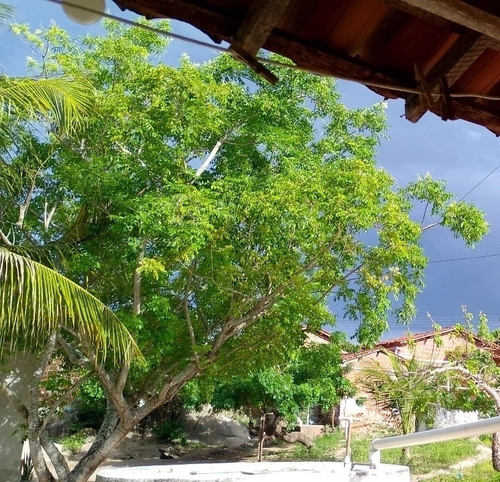
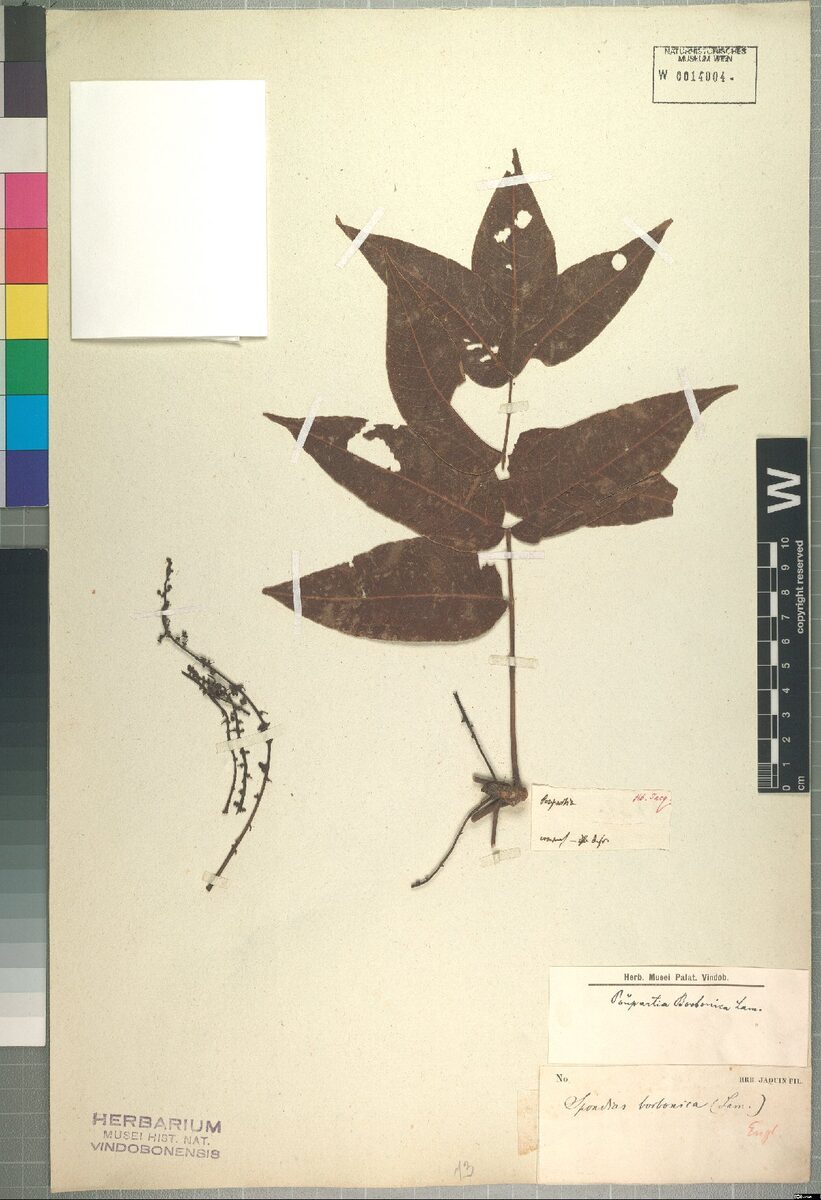
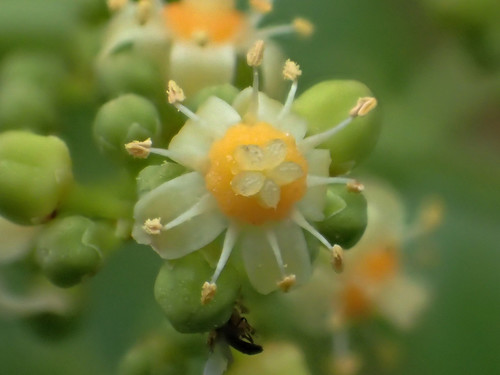
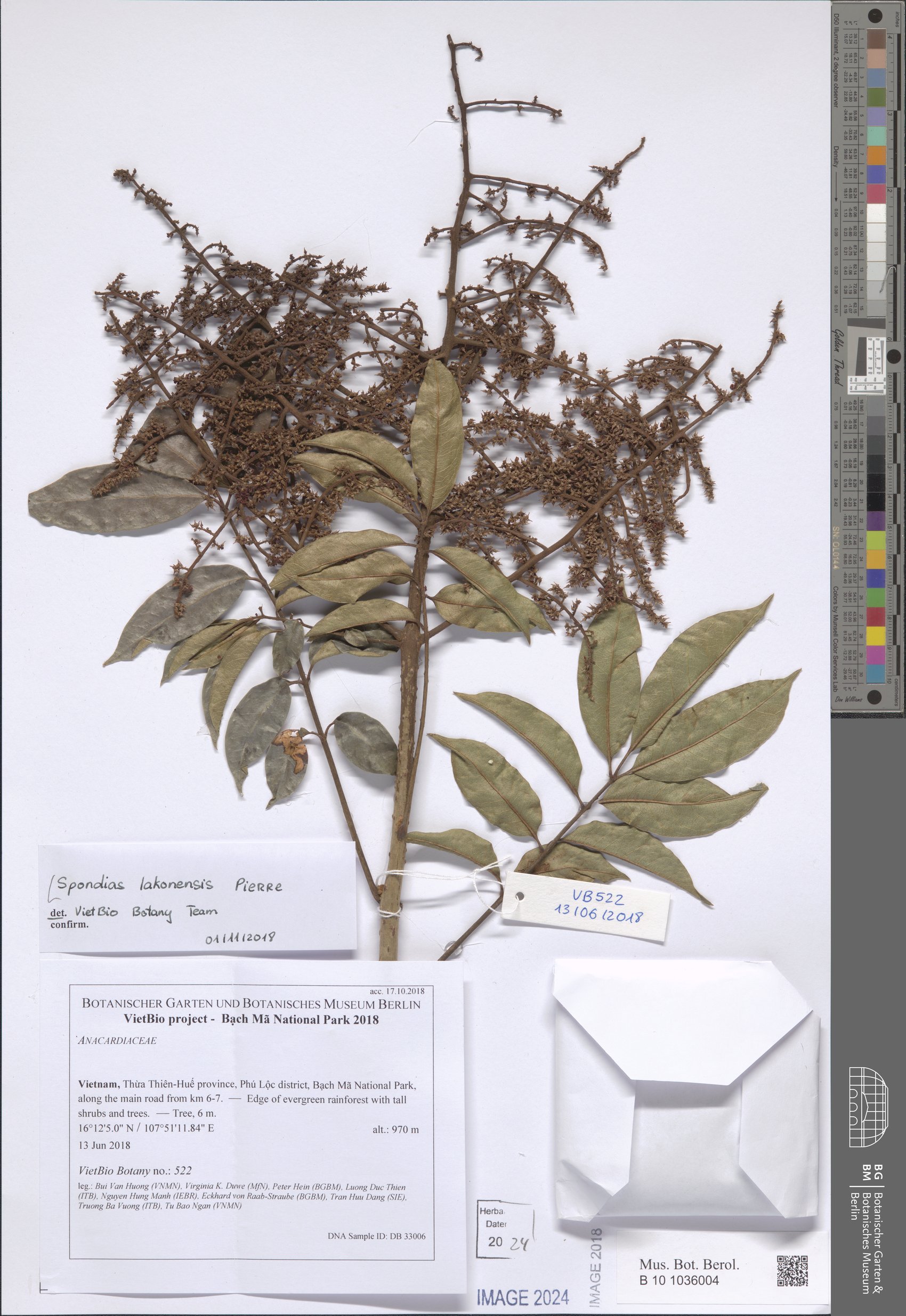
A small evergreen tree. It grows 12 m high. The bark is dark grey with deep narrow cracks. It has simple leathery leaves. They are 15-25 cm long by 6-10 cm wide. They are usually clustered at the ends of the twigs. Young leaves are reddish brown and hairy. The flowers are 4-5 mm across and white. They contain both sexes. They are in branched clusters at the ends of twigs. These are 15-30 cm long. The fruit are 9-12 mm long and purple. They are oval or mango shaped. The pear shaped kernels are edible.
Edible Uses
The ripe fruit is eaten raw and is sweet, used in sweets and yoghurt. The pear-shaped seed kernels are eaten raw, roasted with milk, or ground to make beancurd, and serve as a pistachio substitute. The seeds yield an edible oil.
Traditional Uses
The ripe fruit is eaten raw and is sweet. It is used in sweets and yoghurt. The kernel of the seeds is eaten. They are roasted with milk. They are also ground used used to make beancurd. They are used as a substitute for pistachio. The seeds yield an edible oil.
Medicinal Uses
No medicinal uses mentioned in available data.
Distribution
A tropical plant. It grows in forest. It grows in fairly open areas. It suits a hot tropical monsoonal climate. They grow in seasonally dry forests. They need light. They can stand drought and high temperatures. They grow on the Deccan in India. In Nepal they grow to 1500 m altitude. In Yunnan it grows between 750-900 m altitude.
Where It Grows
Asia, Australia, Bangladesh, Cambodia, China, Himalayas, India, Indochina, Indonesia, Laos, Malaysia, Myanmar, Nepal, Northeastern India, Pacific, Philippines, Puerto Rico, SE Asia, Thailand, Vietnam, West Indies,
Cultivation
Plants can be grown from seeds. The seeds will still grow after drying or chilling for short periods. Root cuttings can be used.
Other Uses
The bark is used in tanning. The tree yields a gum copiously in large, irregular pieces. It is only partially soluble in water (about 10% insoluble), but it gives a good mucilage and can be useful in cheap manufacturing processes. The gum has adhesive properties. An oil is obtained from the seed. The greyish-brown wood has a small, dark-coloured heartwood. It is moderately hard. Of poor quality according to some reports that say it is only used as firewood and for making charcoal. Other reports say that it can be used for making boxes, bedsteads, bullock yokes, doors, window-frames, tables and the like. The wood will stain clothes unless it is polished. A good species for afforesting bare hill slopes.
Production
In India the fruit are available March to June.
Other Information
The fruit are sold in markets. They are especially eaten by children.
Notes
There are about 25 Buchanania species.
Synonyms
Also Known As
Achar, Almondette, Calumpang nut tree, Char, Chara, Chare, Charee, Charkoli, Charoli, Cheronjee, Chiraunji, Chirauli-nut, Chirauli, Chirongi, Chironji, Chivoli, Cuddapah almond, Erpe, Hak phuu, Jarike, Kalompang, Laingchey, Lambo, Lone-hpo, Ma ca, Mamuang maeng wan, Men van, Moongapezhu, Morala, Morri pandu, Munga pera, Nurkal, Pial, Pival, Piyal, Piyar, Piyari, Pyar, Pyaruwa, Rak muu, Rekka, Romchey, Sadeka, Tapasya-priya
References (70)
- Acharya K. P. and Acharya, R., 2010, Eating from the Wild: Indigenous knowledge on wild edible plants in Parroha VDC of Rupandehi District, Central Nepal. International Journal of Social Forestry. 3(1):28-48 (As Buchanania latifolia)
- Ambasta S.P. (Ed.), 2000, The Useful Plants of India. CSIR India. p 90 (As Buchanania lanzan)
- Arora, R. K., 2014, Diversity in Underutilized Plant Species - An Asia-Pacific Perspective. Bioversity International. p 93 (As Buchanania lanzan)
- Avinash, B. K., Kumar, R., et al, 2013, Ethnoboptany of Tharus of Dudhwa National Park, India. Mintage journal of Pharmaceutical & Medical Science 6-11
- Bajpai, O., et al, 2015, Tree species of the Himalayan Terai region of Uttar Pradesh, India: a checklist. Check List 11(4): 1718
Show all 70 references Hide references
- BARC, 2016, State of Biodiversity for Food and Agriculture in Bangladesh. Bangladesh Agricultural Research Council. (As Buchanania lanzan)
- Basha, S. K. M., Ethnobotanical Trees of Sri Lanka Malleswara Wildlife Sanctuary; Eastern Ghats, Andhra Pradesh. (As Buchanania lanzan)
- Behera K. K., et al, 2008, Wild Edible Plants of Mayurbhanj District, Orissa, India. J. Econ. Taxon. Bot. Vol. 32 (Suppl.) pp 305-314
- Bircher, A. G. & Bircher, W. H., 2000, Encyclopedia of Fruit Trees and Edible Flowering Plants in Egypt and the Subtropics. AUC Press. p 68 (As Buchanania lanzan) (Also as Buchanania latifolia)
- Bohra, N., et al, 2017, Ethnobotany of wild edible plants traditionally used by the local people in the Ramnagar regions from Nainital District, Uttarakhand, India. Biolife 5(1): 12-19 (As Buchanania lanzan)
- Burkill, I.H., 1966, A Dictionary of the Economic Products of the Malay Peninsula. Ministry of Agriculture and Cooperatives, Kuala Lumpur, Malaysia. Vol 1 (A-H) p 381 (As Buchanania lanzan)
- Chandrakumar, P., et al, 2015, Ethnobotanical studies of wild edible plants of Gond, Halba and Kawar tribes of Salekasa Taluka, Gondia District, Maharashtra State, India. International Research Journal of Pharmacy 6(8)
- Chandrashekara, U. M., 2009, Tree species yielding edible fruit in the coffee-based homegardens of Kerala, India: their diversity, uses and management. Food Sec. 1:361-370 (As Buchanania lanzan)
- Chauhan, S. H., et al, 2018, Consumption patterns of wild edibles by the Vasavas: a case study from Gujarat, India. Journal of Ethnobiology and Ethnomedicine (2018) 14:57
- Dangol, D. R. et al, 2017, Wild Edible Plants in Nepal. Proceedings of 2nd National Workshop on CUAOGR, 2017.
- Datar, M. N. & Upadhye, A. S., 2015, Forest foods of Northern Western Ghats: Mode of Consumption, Nutrition, and Availability. Asian Agri-History Vol. 19, No. 4, 2015 (293–316)
- Dobriyal, M. J. R. & Dobriyal, R., 2014, Non Wood Forest Produce an Option for Ethnic Food and Nutritional Security in India. Int. J. of Usuf. Mngt. 15(1):17-37 (As Buchanania lanzan)
- Facciola, S., 1998, Cornucopia 2: a Source Book of Edible Plants. Kampong Publications, p 9 (As Buchanania lanzan)
- Fl. ind. 2:385. 1824 (As Buchanania latifolia)
- Forest Inventory and Planning Institute, 1996, Vietnam Forest Trees. Agriculture Publishing House p 34 (As Buchanania latifolia)
- Gardner, S., et al, 2000, A Field Guide to Forest Trees of Northern Thailand, Kobfai Publishing Project. p 145 (As Buchanania lanzan)
- Gautam, R. S., et al, 2020, Wild Edible Fruits of Nepal. Int. J. Appl. Sci. Biotechnol. Vol 8(3): 289-304
- Gautam, R. S., et al, 2022, Ethnobotanical Review of Wild Edible Plants of Nepal. Journal of Natural History Museum Volume 32, 2021-22 p 101
- INFOODSUpdatedFGU-list.xls (As Buchanania lanzan)
- Hedrick, U.P., 1919, (Ed.), Sturtevant's edible plants of the world. p 138 (As Buchanania latifolia)
- Hu, Shiu-ying, 2005, Food Plants of China. The Chinese University Press. p 515 (As Buchanania latifolia)
- J. Bot. (Schrader) 1800(2):234. 1801 (As Buchanania lanzan)
- Jadhav, R., et al, 2015, Forest Foods of Northern Western Ghats: Mode of Consumption, Nutrition and Availability. Asian Agri-History Vol. 19, No. 4: 293-317
- Jadhav, V. D. et al, 2011, Documentation and ethnobotanical survey of wild edible plants from Kolhapur district. Recent Research in Science and Technology. 3(12): 58-63
- Janick, J. & Paul, R. E. (Eds.), 2008, The Encyclopedia of Fruit & Nuts. CABI p 14 (As Buchanania lanzan)
- Kachenchart, B., et al, 2008, Phenology of Edible Plants at Sakaerat Forest. In Proceedings of the FORTROP II: Tropical Forestry Change in a Changing World. Bangkok, Thailand. (As Buchanania lanzan)
- Kaewjampa, N., et al, 2014, Investigation Species of Edible Tree and Medicinal Plants in Faculty of Agriculture, Khon Kaen University. International Journal of Environmental and Rural Development (2014) 5-1 (As Buchanania latifolia)
- Khumgratok, S., Edible Plants in Cultural Forests of Northeastern Thailand. Mahasarakham University Thailand. (As Buchanania lanzan)
- Kiple, K.F. & Ornelas, K.C., (eds), 2000, The Cambridge World History of Food. CUP p 1765 (As Buchanania latifolia)
- Kiran, K. C., et al, 2019, Diversity and Seasonal Availability of Potential Wild Edible Plants from Vidarbha Region of Maharashtra State, India. Int.J.Curr.Microbiol.App.Sci (2019) 8(2): 1434-1446 (As Buchanania lanzan)
- Kuhnlein, H. V., et al, 2009, Indigenous Peoples' food systems. FAO Rome p 195 (As Buchanania latifolia)
- Macmillan, H.F. (Revised Barlow, H.S., et al) 1991, Tropical Planting and Gardening. Sixth edition. Malayan Nature Society. Kuala Lumpur. p 312 (As Buchanania lanzan)
- Maheshwari, J.K., & Singh, J.P., 1984, Contribution to the Ethnobotany of Bhoxa Tribe of Bijnor and Pauri Garhwal Districts, U.P. J. Econ. Tax. Bot. Vol.5. No.2 pp 253- (As Buchanania lanzan)
- Majumdar, K and Datta, N., 2009, Traditional wild edible fruits for the forest dwellers of Tripura, India. Pleione 3(2) 167-178 (As Buchanania lanzan)
- Manandhar, N.P., 2002, Plants and People of Nepal. Timber Press. Portland, Oregon. p 122 (As Buchanania latifolia)
- Martin, F. W., et al, 1987, Perennial Edible Fruits of the Tropics. USDA Handbook 642 p 13 (As Buchanania lanzan)
- Menninger, E.A., 1977, Edible Nuts of the World. Horticultural Books. Florida p 50 (As Buchanania lanzan)
- Mishra, S. & Chaudhury, S. S., 2012, Ethnobotanical flora used by four major tribes of Koraput, Idosha, India. Genetic Resources Crop Evolution 59:793-804 (As Buchanania lanzan)
- Misra S. & Misra M., 2016, Ethnobotanical and Nutritional Evaluation of Some Edible Fruit Plants of Southern Odisha, India. International Journal of Advances in Agricultural Science and Technology, Vol.3 Issue.1, March- 2016, pg. 1-30
- Pandy, R. K. & Saini, S. K., 2007, Edible plants of tropical forests among tribal communities of Madhya Pradesh. Indian Journal of Traditional Knowledge. 6(1), pp 185-190 (As Buchanania lanzan)
- Pasha, M. K. & Uddin, S. B., 2019, Minor Edible Fruits of Bangladesh. Bangladesh J. Plant Taxon. 26(2): 299–313 (As Buchanania lanzan)
- Pradhan, R., et al, 2020, Potential Wild Edible Plants and its Significance in Livelihood of Indigenous People of Male Mahadeshwara Hills, Karnataka. Economic Affairs Vol. 64, No. 4 pp. 01-14 (As Buchanania latifolia)
- Purseglove, J.W., 1968, Tropical Crops Dicotyledons, Longmans. p 18 (As Buchanania lanzan)
- Ramakrishna, N. & Singh, DSR, R., 2020, Ethno-Botanical Studies of Edible Plants Used by Tribal Women in Nirmal District. IJSRSET p 308 (As Buchanania lanzan)
- Rao, M. L. S., et al, 2014, Indigenous Plant Foods which are commonly consumed by the tribal communities in Dumbriguda Area of Visakhapatnam District, Andhra Pradesh, India. Biolife. Vol 2, Issue 3 (As Buchanania lanzan)
- Reddy, B. M., 2012, Wild edible plants of Chandrapur district, Maharashtra, India. Indian Journal of Natural Products and Resources. 3(1) pp 110-117 (As Buchanania lanzan)
- Reddy, K. N. et al, 2007, Traditional knowledge on wild food plants in Andhra Pradesh. Indian Journal of Traditional Knowledge. Vol. 6(1): 223-229 (As Buchanania lanzan)
- Setiya, A. V., et al, 2016, Exploration and documentation of some wild edible plants used by the aboriginals from Gadchiroli District (M.S.) India. International Advanced Research Journal in Science, Engineering and Technology. 3(7)
- Shah, G.L. et al, 1981, An account of the Ethnobotany of Saurashtra in Gujarat State (India). J. Econ. Tax. Bot. Vol 2 pp 173-182 (As Buchanania lanzan)
- Singh, H.B., Arora R.K.,1978, Wild edible Plants of India. Indian Council of Agricultural Research, New Delhi. p 50, 81 (As Buchanania lanzan)
- Singh, V. and Singh, P., 1981, Edible Wild Plants of Eastern Rajasthan. J. Econ. Tax. Bot. Vol 2 pp 197-207 (As Buchanania lanzan)
- Solomon, C., 2001, Encyclopedia of Asian Food. New Holland. p 72 (As Buchanania latifolia)
- Swaminathan, M.S., and Kochnar, S.L., 2007, An Atlas of Major Flowering Trees in India. Macmillan. p 98 (As Buchanania lanzan)
- Toppo, P. et al, 2016, Wild edible plants of Dhamtari district of Chhattisgarh, India. Van Sangyan Vol. 3, No. 4 (As Buchanania lanzan)
- Turreira Garcia, N., et al, 2017, Ethnobotanical knowledgeof the Kuy and Khmer people in Prey Lang, Cambodia. Cambodian Journal of Natural History 2017 (1): 76-101
- Uprety, Y., et al, 2010, Non-timber Forest Products in Bardiya District of Nepal: Indigenous Use, Trade and Conservation. J Hum Ecol, 30(3): 143-158 (As Buchanania latifolia)
- Uprety, Y., et al, 2012, Diversity of use and local knowledge of wild edible plant resources in Nepal. Journal of Ethnobotany and Ethnomedicine 8:16 (As Buchanania latifolia)
- USDA, ARS, National Genetic Resources Program. Germplasm Resources Information Network - (GRIN). [Online Database] National Germplasm Resources Laboratory, Beltsville, Maryland. Available: www.ars-grin.gov/cgi-bin/npgs/html/econ.pl (10 April 2000) (As Buchanania lanzan) (Also as Buchanania latifolia)
- Verheij, E. W. M. and Coronel, R.E., (Eds.), 1991, Plant Resources of South-East Asia. PROSEA No 2. Edible fruits and nuts. Pudoc Wageningen. p 320 (As Buchanania latifolia)
- Ravikrishna, S., 2011, Ethno-medico-botanical survey on Wild Edible fruits of Udupi Taluq, Udupi p 62 (As Buchanania lanzan)
- WATT (As Buchanania latifolia)
- Wickens, G.E., 1995, Edible Nuts. FAO Non-wood forest products. FAO, Rome. p 106 (As Buchanania latifolia)
- Wiersema, J. H. & Leon, B., 2013, World Economic Plants. A Standard Reference CRC Press. 2nd Ed. p 122 (As Buchanania lanzan & Buchanania latifolia)
- Wild edible plants of Himachal Pradesh (As Buchanania lanzan)
- World Checklist of Useful Plant Species 2020. Royal Botanic Gardens, Kew