Artocarpus petelotii
Gagnep.
gbif· cc0
President and Fellows of Harvard College
Description
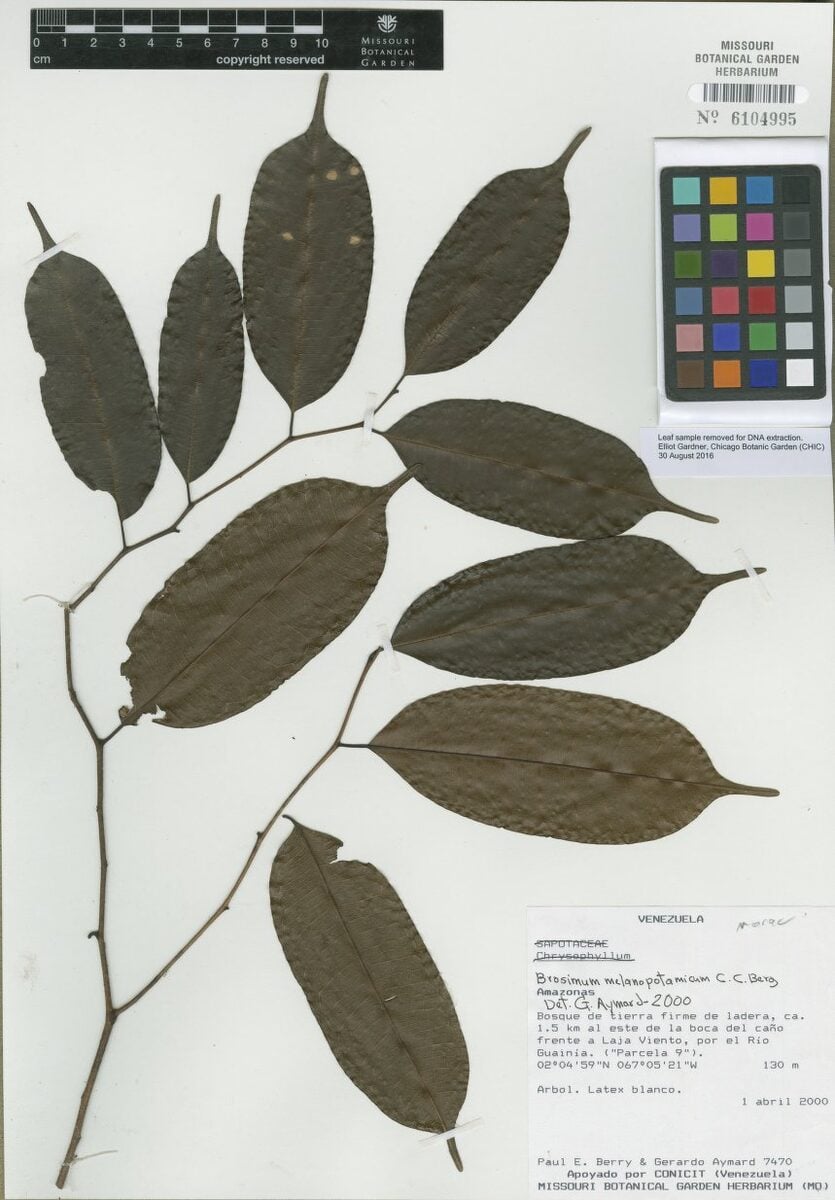
A small or medium sized tree. It grows to 10-15 m tall. The trunk is 10-30 cm across. The small branches are 3-4 mm thick. The leaf stalk is 0.8-1.5 cm long. It has grey hairs. The leaf blade is narrow and oval and 9-23 cm long by 4-9 cm wide. It is papery. The base is rounded and it tapers to the tip. The flowers are of separate sexes on the one tree. The male flowers occur singly in the axils of leaves. They are 1.8-2.3 cm long by 0.5-0.7 cm wide. They have dense greyish white hairs. The fruit is green when young and becomes yellow when ripe. It is 5-6 cm long. Seeds are like Jackfruit seeds. They are 1-1.3 cm across.
Edible Uses
Several species in the genus bear edible fruit and are commonly cultivated: Breadfruit (Artocarpus altilis), Cempedak (Artocarpus integer), Jackfruit (Artocarpus heterophyllus), Kwai Muk (Artocarpus parvus), Lakoocha (Artocarpus lakoocha), Pudau (Artocarpus kemando), Anjily (a.k.a. Jungle Jack) (Artocarpus hirsutus), Chaplaish (Artocarpus chama), and Marang (Artocarpus odoratissimus). Breadfruit and jackfruit are cultivated widely in the tropical Southeast Asia. Other species are cultivated locally for their timber, fruit or edible seeds. Anjily, A. hirsutus, is grown for fruit and timber in the Western Ghats.
Traditional Uses
The fruit are eaten. The root bark is chewed with betel.
This uses section is brief — help expand it
Distribution
A tropical plant. It grows in deep, humid limestone soils. In China it grows in mountain forests at about 1900 m altitude in Yunnan. In XTBG Yunnan.
Where It Grows
Asia, China, Indochina, SE Asia, Vietnam,
Notes
There are about 50 Artocarpus species. They are in the tropics and subtropics of Asia and the Pacific.
Synonyms
Also Known As
Chay cuc phuong, Duan juan mao bo luo mi
References (2)
- Forest Inventory and Planning Institute, 1996, Vietnam Forest Trees. Agriculture Publishing House p 531
- www.eFloras.org Flora of China