Leucaena pulverulenta
(Schldl.) Benth.
Great lead tree
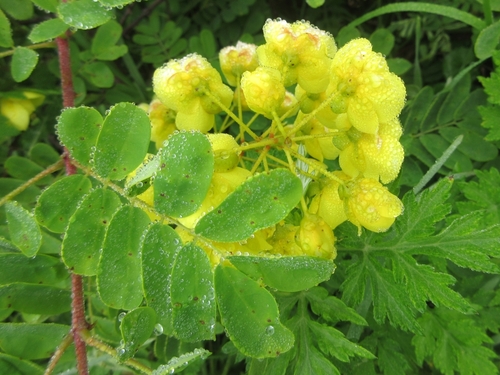
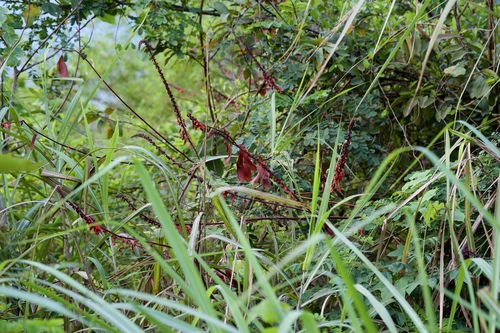
iNaturalist· cc-by-nc
(c) Chuck Sexton, some rights reserved (CC BY-NC), uploaded by Chuck Sexton
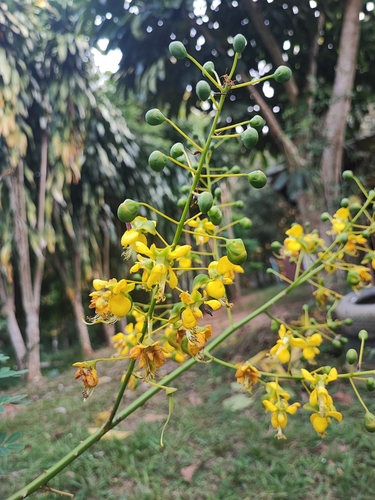
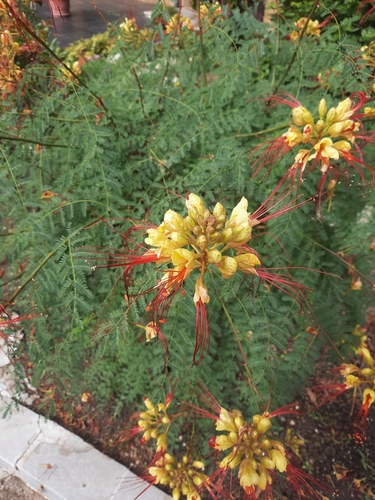
iNaturalist· cc-by-nc
(c) Ashton Tassin, some rights reserved (CC BY-NC), uploaded by Ashton Tassin
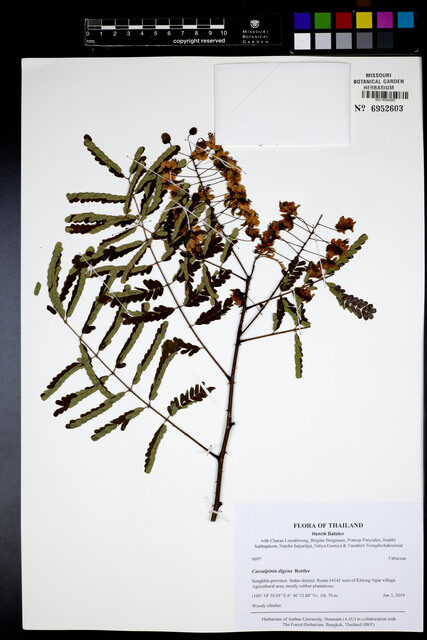
iNaturalist· cc-by-nc-sa
(c) Smithsonian Institution, National Museum of Natural History, Department of Botany, some rights reserved (CC BY-NC-SA)
Description
A legume tree native to warm regions, growing to 18 m tall with a trunk 20-50 cm wide and spreading to 12 m. It has twice-divided leaves 10-25 cm long, scented white flowers, and pod-type fruit containing small, flattened seeds.
Edible Uses
Leucaena species are grown for their variety of uses, including as green manure, a charcoal source, livestock fodder, and for soil conservation. The seeds (jumbie beans) can be used as beads. Leucaena planted for firewood on an area of 120 km2 (46 sq mi) will yield an energy equivalent of 1 million barrels of oil per year. Anthelmintic medicines are made from extracts of Leucaena seeds in Sumatra, Indonesia. Some species (namely Leucaena leucocephala) have edible fruits (as unripe) and seeds. The seeds of Leucaena esculenta (in Mexico called guaje or huaje) are eaten with salt in Mexico. In other species high levels of mimosine may lead to hair loss and infertility in non-ruminants.
Traditional Uses
The fruit pod is cooked with chili. It is also fermented. The young shoots are eaten as a vegetable.
This uses section is brief — help expand it
Distribution
Southern N. America - southern Texas, south to Puebla and Veracruz in southern Mexico
Where It Grows
Seeds, Leaves,
Cultivation
Plants can be grown from seeds.
Propagation
Seed - it has a hard seedcoat and may benefit from scarification before sowing to speed up germination. This can usually be done by pouring a small amount of nearly boiling water on the seeds (being careful not to cook them!) and then soaking them for 12 - 24 hours in warm water. By this time they should have imbibed moisture and swollen - if they have not, then carefully make a nick in the seedcoat (being careful not to damage the embryo) and soak for a further 12 hours before sowing. Cuttings of semi-ripe wood.
Other Uses
The plant hybridizes with Leucaena leucocephala and is used in breeding programmes with that species. The heartwood is a rich, dark brown; it is clearly demarcated from the thin layer of bright, clear yellow sapwood. The wood is heavy, hard, close-grained. The tree is a source of lumber that is used for general purposes, including as railway sleepers. The wood is used for fuel. The plant is grown as a shade tree in coffee plantations and as a green manure. A natural pioneer species, invading disturbed areas, pastures etc in its native range. It can be used for restoring native woodland.
Other Information
Fabaceae
Notes
A tree. It grows 18 m tall and spreads 12 m wide. The trunk can be 20-50 cm wide. The leaves are twice divided and are 10-25 cm long. The flowers are white and scented. The fruit are pods. The seeds are narrow and flattened. They are small.
Synonyms
Also Known As
Barba de chivo, Great leucaena, Guache de Monte, Guaje, Guajillo, Huash, Liliakiwi, Mexican lead tree, Pohon lamtoro, Tepeguaje, Tepehuaje
References (7)
- ILDIS Legumes of the World http:www:ildis.org/Legume/Web
- Kermath, B. M., et al, 2014, Food Plants in the Americas: A survey of the domesticated, cultivated and wild plants used for Human food in North, Central and South America and the Caribbean. On line draft. p 483
- Mapes, C. & Basurto, F., 2016, Biodiversity and Edible Plants of Mexico. Chapter 5 in R. Lira, et al. (eds.), Ethnobotany of Mexico, Ethnobiology, Springer. p 94
- Pena, F. B., et al, 1998, Los quelites de la Sierra Norte de Puebla, Mexico: Inventory Y Formas de Preparacion. Bol. Soc. Bot. Mexico 62:49-62
- Piedra-Malagón, E. M., et al, 2022, Edible native plants of the Gulf of Mexico Province. Biodiversity Data Journal 10: e80565 p 21
Show all 7 references Hide references
- Sukarya, D. G., (Ed.) 2013, 3,500 Plant Species of the Botanic Gardens of Indonesia. LIPI p 356
- World Checklist of Useful Plant Species 2020. Royal Botanic Gardens, Kew