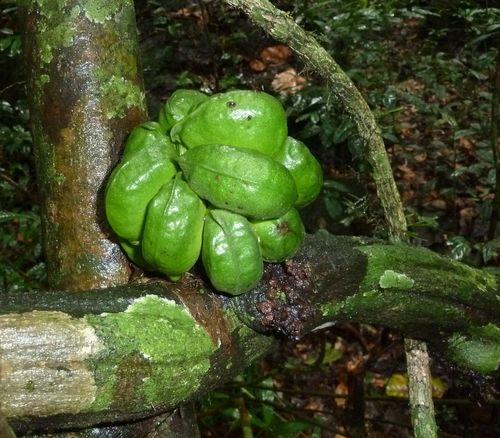
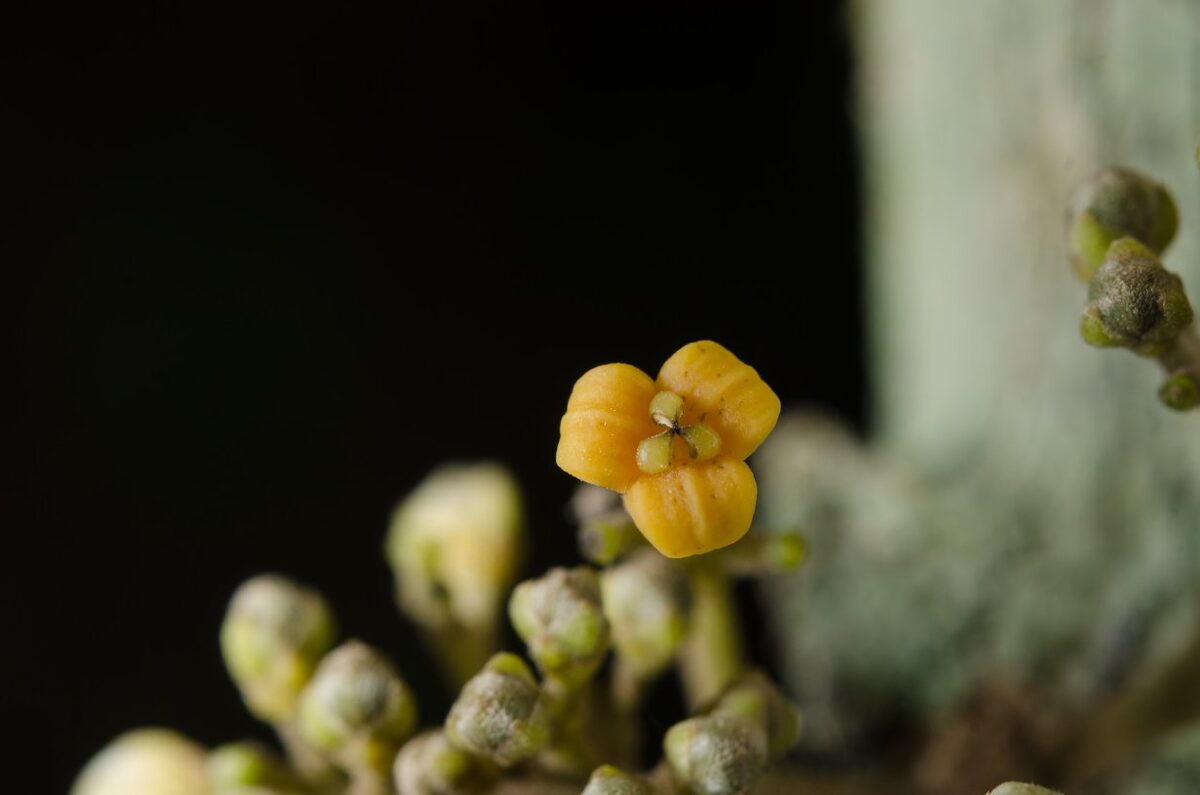
Stephania abyssinica
(Quart.-Dill. & A. Rich.) Walp.
iNaturalist· cc-by-nc
(c) Felix Riegel, some rights reserved (CC BY-NC), uploaded by Felix Riegel
iNaturalist· cc-by-nc
(c) Bart Wursten, some rights reserved (CC BY-NC), uploaded by Bart Wursten
iNaturalist· cc-by-nc
(c) Sandra Falanga, some rights reserved (CC BY-NC), uploaded by Sandra Falanga
Summary
Source: WikipediaStephania abyssinica is a species of vine native to southern Africa. it is the only member of its genus found in the region. Two subspecies are recognised.
Description
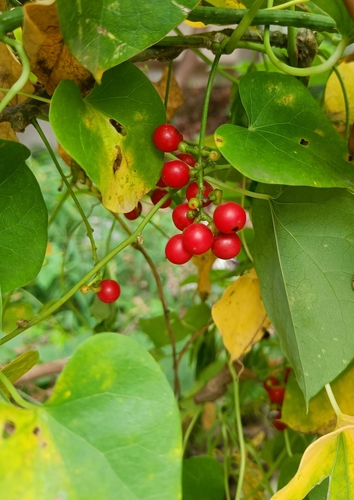
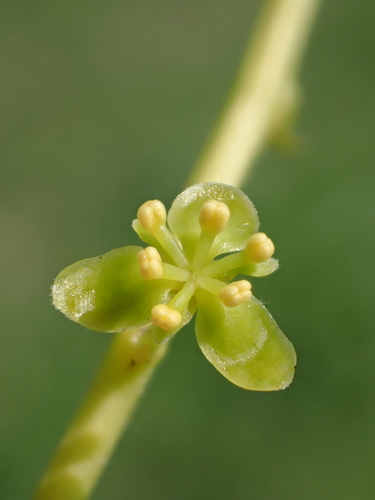
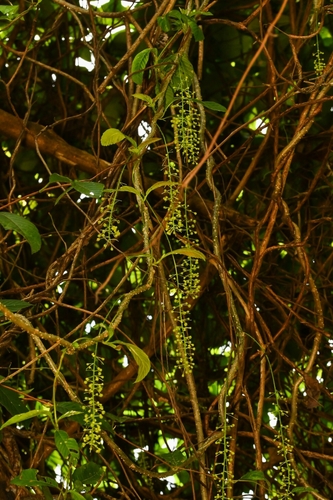
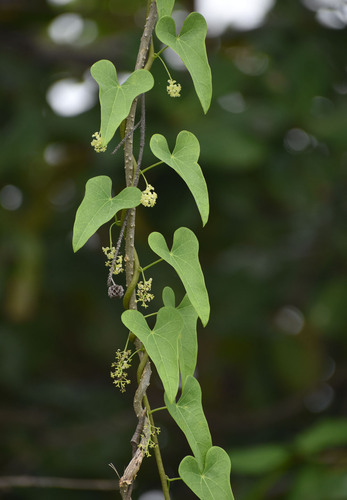
A twining vine. It is woody at the base. It grows 20 m high. The small branches are hairy. The leaf blade is 5-20 cm long by 4-13 cm wide. They are broadly oval. There can be 2-4 flowers in the axils of leaves. The fruit is fleshy and 5-8 mm across. It is flattened. The stone has small prickles in 3 rows along it. The seeds are 8 mm long.
Medicinal Uses
It is used in medicine against malaria.
Distribution
It is a tropical plant. It grows in grassland and wooded grassland. It is best in moist, shady places especially along the edges of rivers and swamps. It can grow up to 3,500 m altitude.
Where It Grows
Africa, Angola, Cameroon, Central Africa, East Africa, Ethiopia, Guinea, Guinée, Malawi, Mozambique, Nigeria, Rwanda, West Africa, Zambia, Zimbabwe,
Cultivation
A dioecious species, both male and female forms need to be grown if fruit and seed are required.
Other Uses
The stems are used as binding material, e.g. in fence constructions and also in basketry.
Notes
There are 30 Stephania species. Probably edible. It is used in medicine against malaria.
Synonyms
Also Known As
Kanjoka
References (5)
- Flora Zambesiaca. http://apps.kew.org/efloras
- Fowler, D. G., 2007, Zambian Plants: Their Vernacular Names and Uses. Kew. p 48
- Molla, A., Ethiopian Plant Names. http://www.ethiopic.com/aplants.htm
- White, F., Dowsett-Lemaire, F. and Chapman, J. D., 2001, Evergreen Forest Flora of Malawi. Kew. p 376
- World Checklist of Useful Plant Species 2020. Royal Botanic Gardens, Kew