Dioscoreophyllum cumminsii
(Stapf) Diels
Serendipity berry, Guinea potato
iNaturalist· cc-by-nc
(c) bureaubenjamin, some rights reserved (CC BY-NC)
iNaturalist· cc-by-nc
(c) bureaubenjamin, some rights reserved (CC BY-NC)
Summary
Source: WikipediaDioscoreophyllum cumminsii is an evergreen climber growing to 1.8 m tall and 0.2 m wide at a medium rate, hardy to UK zone 10. It grows in light sandy, medium loamy, and heavy clay soils with good drainage, tolerating mildly acidic and neutral pH. The plant thrives in full shade or semi-shade and prefers moist soil.
Description
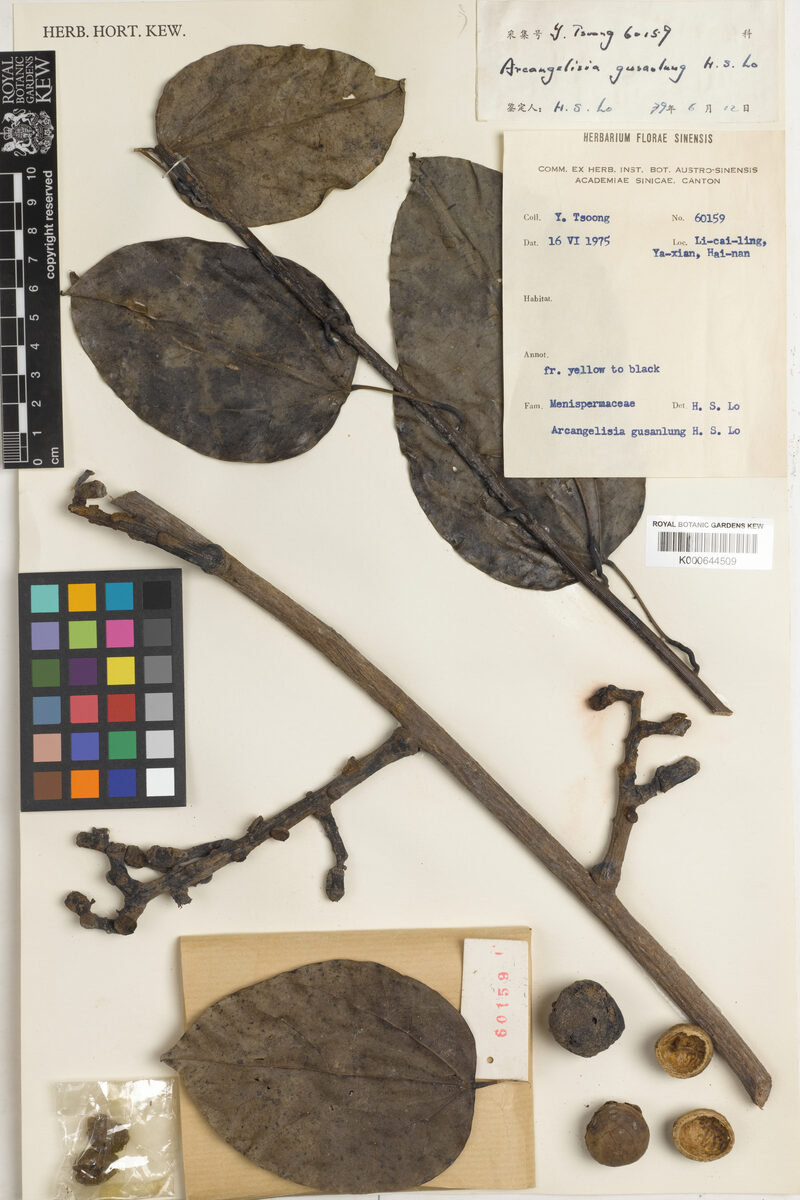
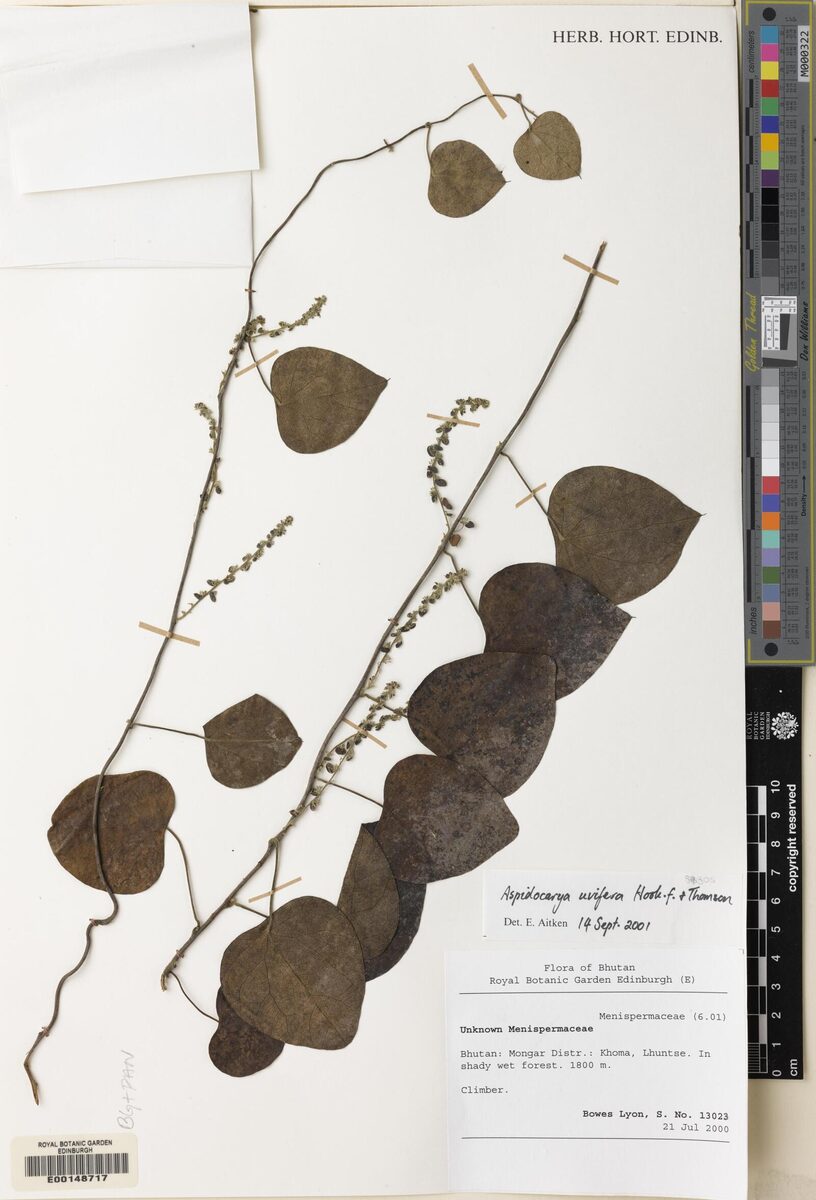
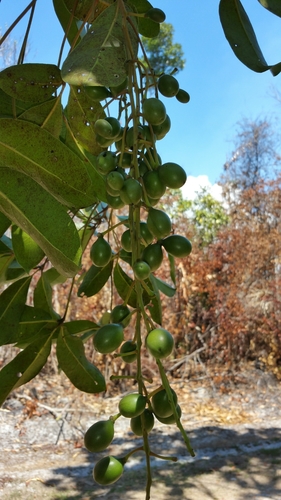
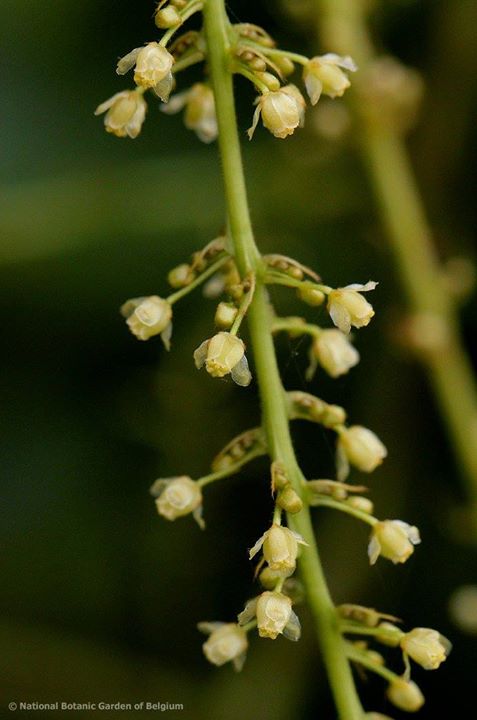
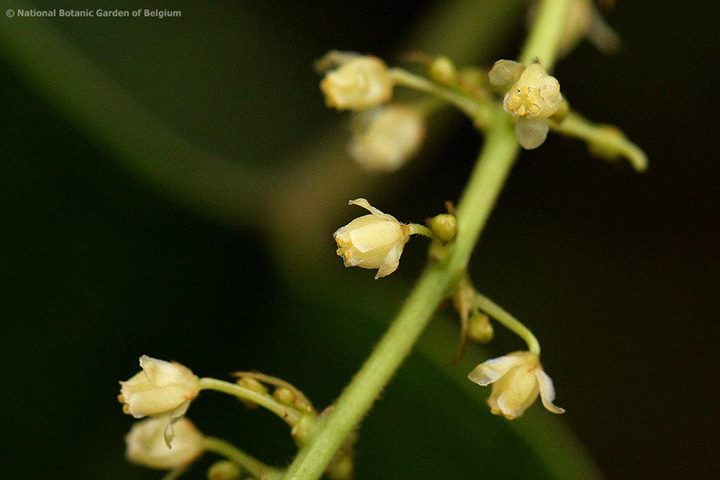
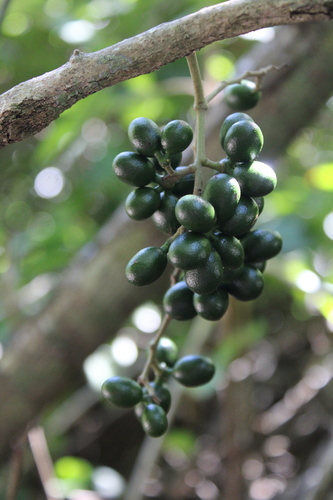
A creeper or climber. It can be soft or woody. It has tuberous underground stems. These tubers are 2 cm across and white. The stems are hairy. The leaves are alternate. The leaf stalk is 6-15 cm long. The fruit is a red berry. The leaf blade can be entire or have lobes. It is an oval to triangle shape. It is 9-20 cm long and wide. It is spear head or heart shaped at the base. It tapers are the tip. The veins spread like fingers on a hand. The flowering stalks are in the axils and male flower group are 20 cm long while the female flowers are 10 cm long. The flowers are yellow-green and do not have petals. The fruit is fleshy with a stone inside. It is 3.5 cm long. The stalk is 1 cm long. It is yellow-red. The seeds are 1.5-3 cm long.
Edible Uses
The fruit is eaten raw and has an intensely sweet, mucilaginous pulp considered to be the sweetest known naturally occurring substance — up to 3,000 times sweeter than sucrose. It has been recommended as a non-carbohydrate sugar substitute and can keep for several weeks at room temperature. The roots are small and yam-like.
Traditional Uses
The fruit is edible and used to sweeten food. (It contains monellin which is 3,000 times sweeter than sugar). The tubers can be eaten like potato. They are used to thicken soups.
Medicinal Uses
The fruit contains monellin, an intensely sweet protein with potential use as a sugar replacement for diabetics. For humans, monellin is 100,000 times sweeter than sucrose on a molar basis and around 3,000 times sweeter on a weight basis.
Distribution
A tropical plant. It grows in densely closed forest vegetation. In West Africa it grows between 200-400 m above sea level. In Zimbabwe a variety grows between 1,000-1,200 m above sea level.
Where It Grows
Africa, Angola, Asia, Cameroon, Central Africa, Central African Republic, CAR, Congo DR, Congo R, East Africa, Gabon, Ghana, Guinea-Bissau, Malawi, Mozambique, Nigeria, Sierra Leone, Southern Africa, Sudan, Togo, West Africa, Zimbabwe,
Cultivation
Plants can be grown from seed or tubers. Seeds need to germinate in the dark. They take about 68 days to germinate. Plants can be grown from stem cuttings.
Propagation
Plants can be grown from seed or tubers. Seeds require darkness to germinate. Plants can also be grown from stem cuttings.
Other Uses
None known. Grown in food forest systems.
Production
The fruit can be stored. It will keep for several weeks at room temperature.
Other Information
The tubers are occasionally eaten.
Notes
There are 2 Dioscoreophyllum species. It is a good sweetener for diabetics and has low calories.
Synonyms
Also Known As
Inaolo-aesiale, Bii, Ito-igbin, Kisombi, Kisombi-ngolongolo, Minbagem Ngbi, Shonga-oliki, Utobili
References (24)
- Atato, A., et al, 2012 Especes lianescentes a fruits comestibles du Togo. Fruits. 67(5): 353-368
- Billong Fils, P. E., et al, 2020, Ethnobotanical survey of wild edible plants used by Baka people in southeastern Cameroon. Journal or Ethnobiology and Ethnomedicine. 16:64 p 8
- Boateng, S. K., et al, 2007, Wet Season of Edible Wild Fruits in Three Regions of Ghana. Journal of Plant Sciences 2(3): 353-357
- Burkill, H. M., 1985, The useful plants of west tropical Africa, Vol. 1. Kew.
- Busson, 1965,
Show all 24 references Hide references
- H. G. A. Engler, Pflanzenr. IV. 94(Heft 46):181. 1910
- Facciola, S., 1998, Cornucopia 2: a Source Book of Edible Plants. Kampong Publications, p 150
- Jardin, C., 1970, List of Foods Used In Africa, FAO Nutrition Information Document Series No 2.p 15, 132 (Also as Dioscoreophyllum strigosum)
- Kiple, K.F. & Ornelas, K.C., (eds), 2000, The Cambridge World History of Food. CUP p 1850
- Lim, T. K., 2015, Edible Medicinal and Non Medicinal Plants. Volume 9, Modified Stems, Roots, Bulbs. Springer p 38
- Mosango M., Szafranski F., 1985, Plantes sauvages à fruits comestibles dans les environs de Kisangani (Zaïre). In: Journal d'agriculture traditionnelle et de botanique appliquée, 32e année, pp. 177-190 (As var. lobatum)
- Nkeoua, G. & Boundzanga, G. C., 1999, Donnees sur les produits forestieres non ligneux en Republique du Congo. FAO. p 25
- Peters, C. R., O'Brien, E. M., and Drummond, R.B., 1992, Edible Wild plants of Sub-saharan Africa. Kew. p 147
- PROSEA handbook Volume 13 Spices. p 251
- Sato, H., 2001, The potential of edible wild yams and yam-like plants as a staple food resource in the African Tropical Rain Forest. African Study Monographs Suppl. 26:123-134.
- Terashima, H., & Ichikawa, M., 2003, A comparative ethnobotany of the Mbuti and Efe hunter-gatherers in the Ituri Forest, Democratic Republic of Congo. African Study Monographs, 24 (1, 2): 1-168, March 2003
- The Digital Flora of Central Africa, 2013, (Democratic Republic of Congo, Rwanda & Burundi) Botanical Garden Meise (As var. lobatum)
- Troupin, G., 1951, Flore du Congo Belge et du Ruanda-Urundi: Menispermaceae. vol. 2, p. 240
- Vickery, M.L. and Vickery, B., 1979, Plant Products of Tropical Africa, Macmillan. p 40
- Vivien, J., & Faure, J.J., 1996, Fruitiers Sauvages d'Afrique. Especes du Cameroun. CTA p 201
- Yasuoka, H., 2006, Long-Term Foraging Expeditions (Molongo) among the Baka Hunter-Gatherers in the Northwestern Congo Basin, with Special Reference to the "Wild Yam Question". Human Ecology, Vol. 34, No. 2, April 2006, pp 275 ff
- White, F., Dowsett-Lemaire, F. and Chapman, J. D., 2001, Evergreen Forest Flora of Malawi. Kew. p 372 (As Dioscoreophyllum volkensii)
- Wiersema, J. H. & Leon, B., 2013, World Economic Plants. A Standard Reference CRC Press. 2nd Ed. p 249
- World Checklist of Useful Plant Species 2020. Royal Botanic Gardens, Kew