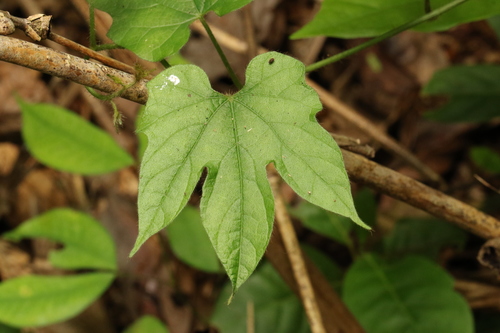
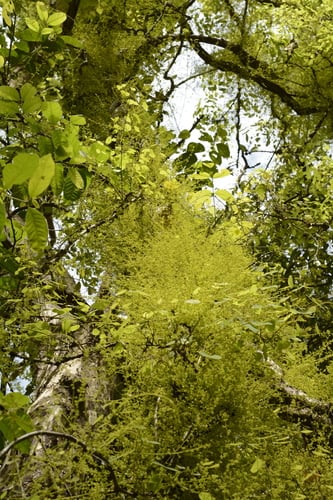
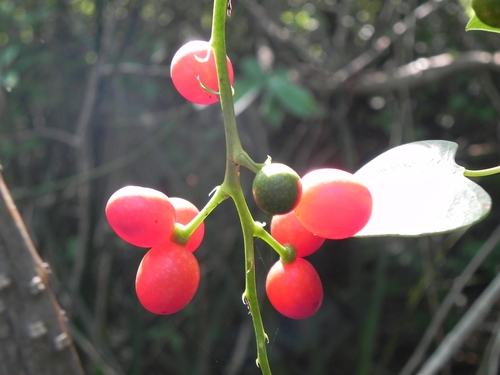
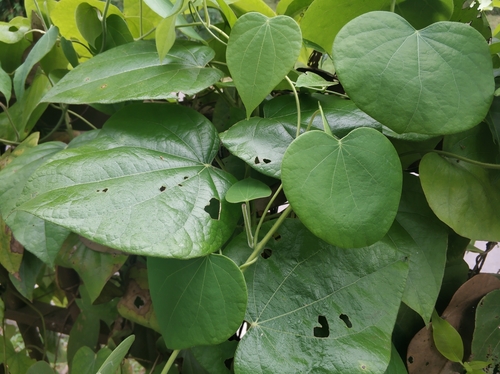
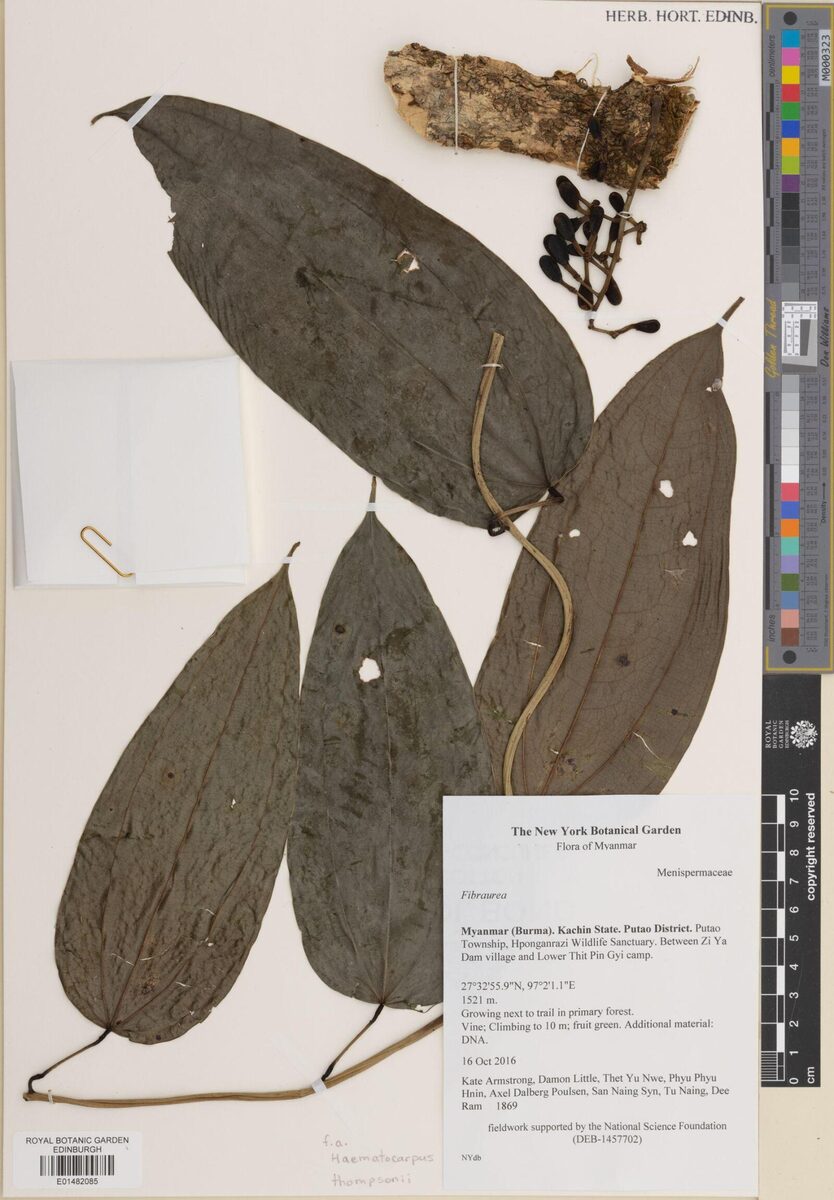
Dioscoreophyllum volkensii
Engl.
Serendipity berry
iNaturalist· cc-by-nc
(c) Carel Jongkind, some rights reserved (CC BY-NC), uploaded by Carel Jongkind
wikimedia· cc0
Jaume Saint-Hilaire, Jean Henri,1772-1845. (via Wikimedia Commons)
Summary
Source: WikipediaDioscoreophyllum volkensii, the serendipity berry, is a tropical dioecious rainforest vine in the family Menispermaceae. It is native throughout most of tropical Africa from Sierra Leone east to Eritrea, and south to Angola and Mozambique. It grows at low altitudes, from sea level up to 400 m. Some authors separate plants from above 200 m as a separate species D. cumminsii (Stapf) Diels. There are two varieties: Dioscoreophyllum volkensii var. volkensii. Endemic to the island of Bioko in Equatorial Guinea. Dioscoreophyllum volkensii var. fernandense (Hutch. & Dalziel) Troupin. Mainland Africa.
Description
A vine. It is a small woody climber. It is slender and branched. It grows 2 m high. There are 2 varieties.
This description is brief — help expand it
Edible Uses
The fruit contains monellin, an intensely sweet protein with potential use as a sugar replacement. For humans, monellin is 100,000 times sweeter than sucrose on a molar basis and around 3,000 times on a weight basis.
Distribution
It is a tropical plant. It grows in the humid rainforest. It suits humid locations. It grows from sea level to 200 m above sea level. It is also in woodland and along river banks.
Where It Grows
Africa, Angola, Central Africa, East Africa, Eritrea, Guinea, Guinée, Guinea-Bissau, Mozambique, Nigeria, Sierra Leone, Sudan, Tanzania, West Africa,
Other Information
The root is a famine food. The leaves are an important food in some local regions.
Notes
It contain a protein monellin that is 100,000 times sweeter than sucrose. Variety fernandense has red brown hairs.
Synonyms
Also Known As
Ambolbol-n'for, Bulbolmbol, Ito igbin, Kolebile, Msangani, N'fora, N'por, Popondepọndè, Unfora
References (8)
- Burkill, H. M., 1985, The useful plants of west tropical Africa, Vol. 4. Kew.
- East African Herbarium records, 1981,
- Harkonen, M. & Vainio-Mattila, K., 1998, Some examples of Natural Products in the Eastern Arc Mountains. Journal of East African Natural History 87:265-278
- Kakeya, 1976,
- Msuya, T. S., et al, 2010, Availability, Preference and Consumption of Indigenous Foods in the Eastern Arc Mountains, Tanzania, Ecology of Food and Nutrition, 49:3, 208-227
Show all 8 references Hide references
- Peters, C. R., O'Brien, E. M., and Drummond, R.B., 1992, Edible Wild plants of Sub-saharan Africa. Kew. p 147
- Vainio-Mattila, K., 2000, Wild vegetables used by the Sambaa in the Usumbara Mountains, NE Tanzania. Ann. Bot. Fennici 37:57-67
- World Checklist of Useful Plant Species 2020. Royal Botanic Gardens, Kew