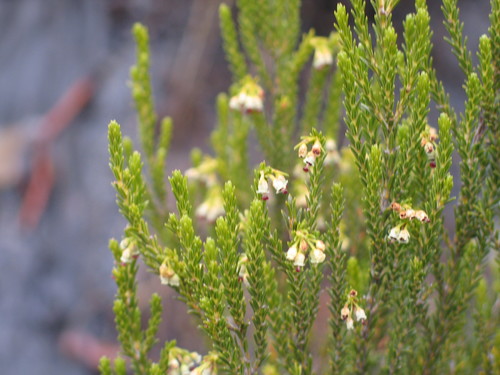
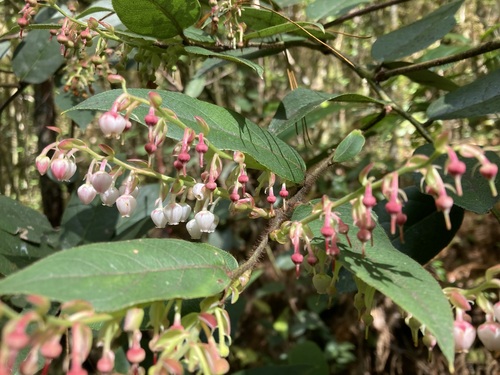
Erica arborea
L.
Briar root wood, Tree heath
iNaturalist· cc-by-nc
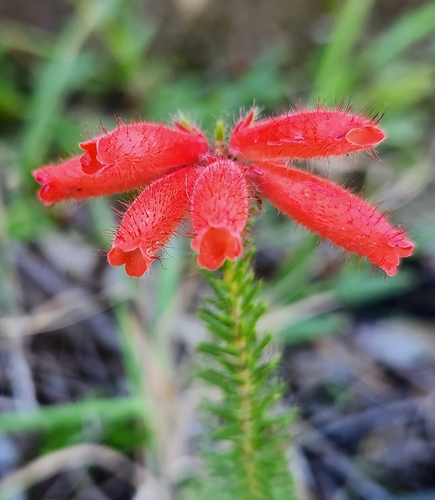
(c) fotis-samaritakis, some rights reserved (CC BY-NC), uploaded by fotis-samaritakis
iNaturalist· cc-by-nc
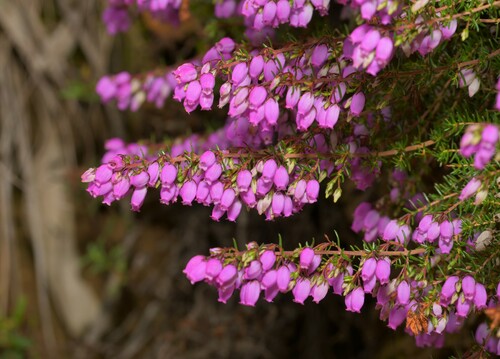
(c) fotis-samaritakis, some rights reserved (CC BY-NC), uploaded by fotis-samaritakis
iNaturalist· cc-by-nc-sa
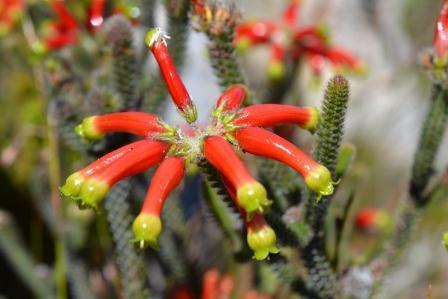
(c) Pádraic Flood, some rights reserved (CC BY-NC-SA), uploaded by Pádraic Flood
Summary
Source: WikipediaErica arborea, the tree heath or tree heather, is a species of flowering plant (angiosperms) in the heather family Ericaceae, native to the Mediterranean Basin and Ethiopia, Kenya and Tanzania in East Africa. It is also cultivated as an ornamental. The wood, known as briar root (French: bruyère, Catalan: bruc, Portuguese: betouro, Spanish: brezo), is extremely hard and heat-resistant, and is used for making smoking pipes. Leaf fossils attributed to this species were described for the Mio-Pleistocene deposit of São Jorge in Madeira Island.
Description
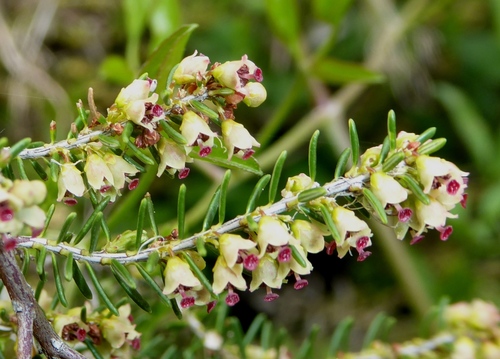
An upright evergreen shrub. It grows 1-4 m tall. The leaves are dark green and needl-like. The flowers are small and bell-shaped. They have a smell like honey.
Edible Uses
The wood, known as briar root, is extremely hard, dense and heat-resistant, and is primarily used for making smoking pipes, as it does not affect the aroma of tobacco. The football-sized tubers are harvested at the age of 30 to 60 years. They are cooked for several hours, then dried for several months before they are further processed. The wood is also used for making jewellery, fountain pens and knife handles.
Distribution
It is a Mediterranean plant. It is best in an acid soil and an open sunny position. It suits hardiness zones 7-9.
Where It Grows
Africa, Australia, Canary Islands, East Africa, Ethiopia, Europe, Georgia, Italy, Mediterranean, North Africa, Portugal, San Marino, Tasmania, USA,
Cultivation
Plants can be grown from seeds.
Notes
There are more than 600 Erica species. Probably edible.
References (3)
- INFOODSUpdatedFGU-list.xls
- Molla, A., Ethiopian Plant Names. http://www.ethiopic.com/aplants.htm
- Tasmanian Herbarium Vascular Plants list p 27