Tapirira guianensis
Aubl.
Guiana tapirira
iNaturalist· cc-by-nc-nd
(c) Víctor de Paiva, some rights reserved (CC BY-NC-ND), uploaded by Víctor de Paiva
iNaturalist· cc-by-nc
(c) Richard Matheus Fernandes, some rights reserved (CC BY-NC)
Summary
Source: WikipediaTapirira guianensis is a species of plant in the family Anacardiaceae. It is native to Cerrado and Atlantic Forest (ecoregions) vegetation in Brazil.
Description
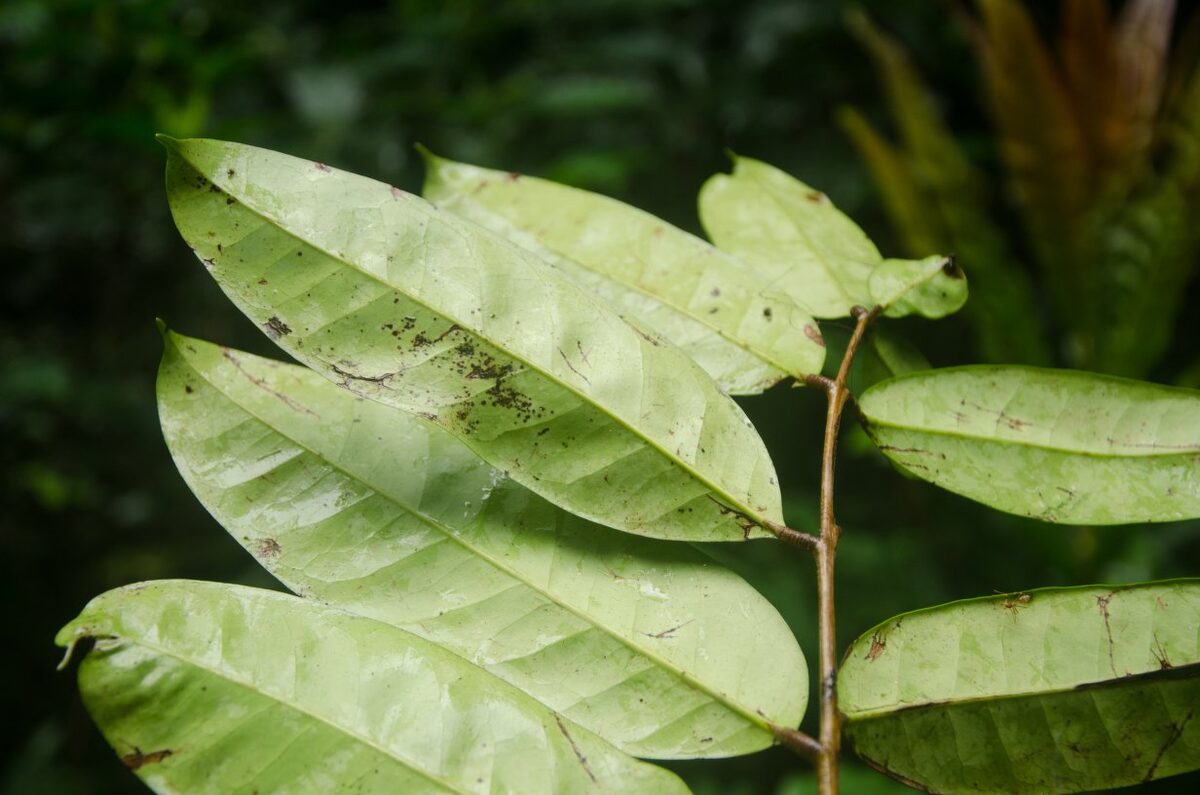
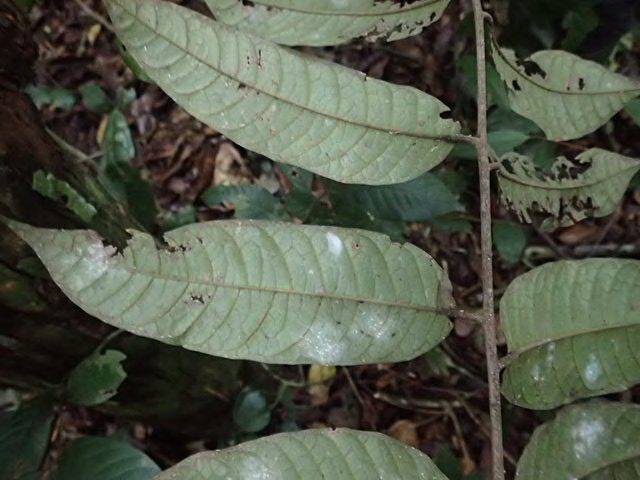
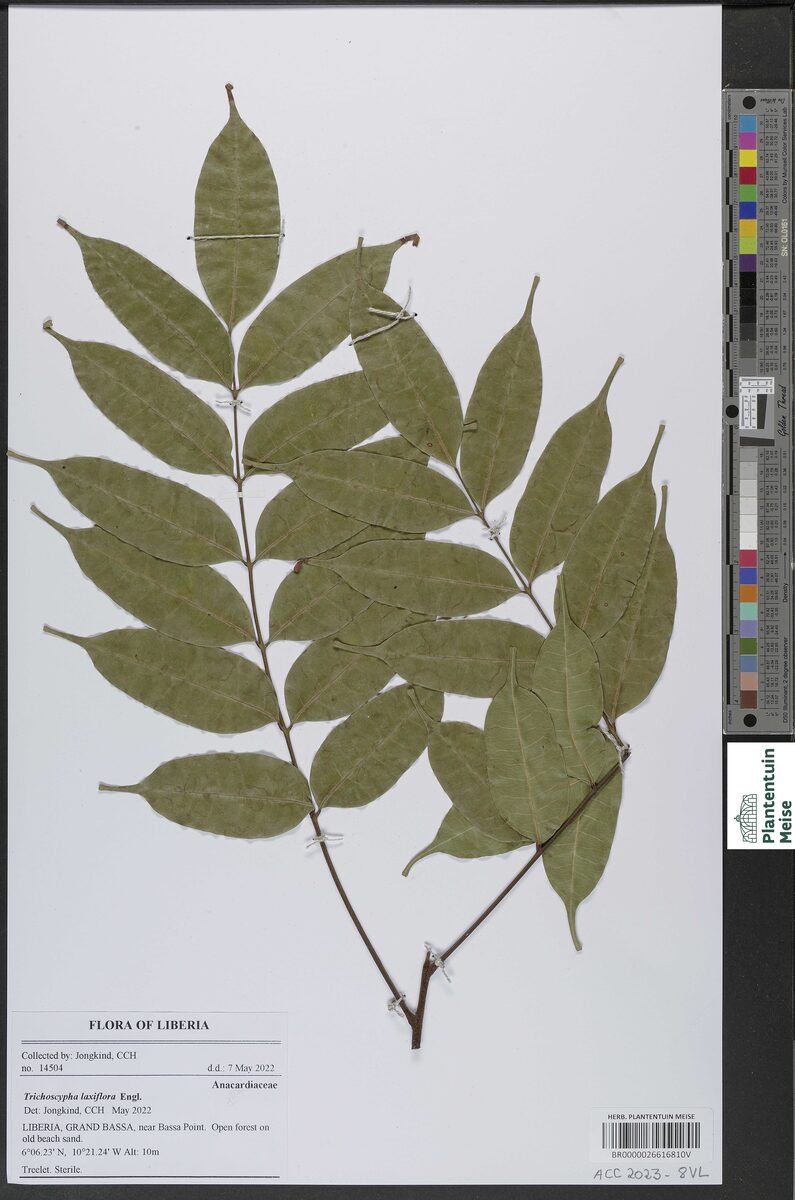
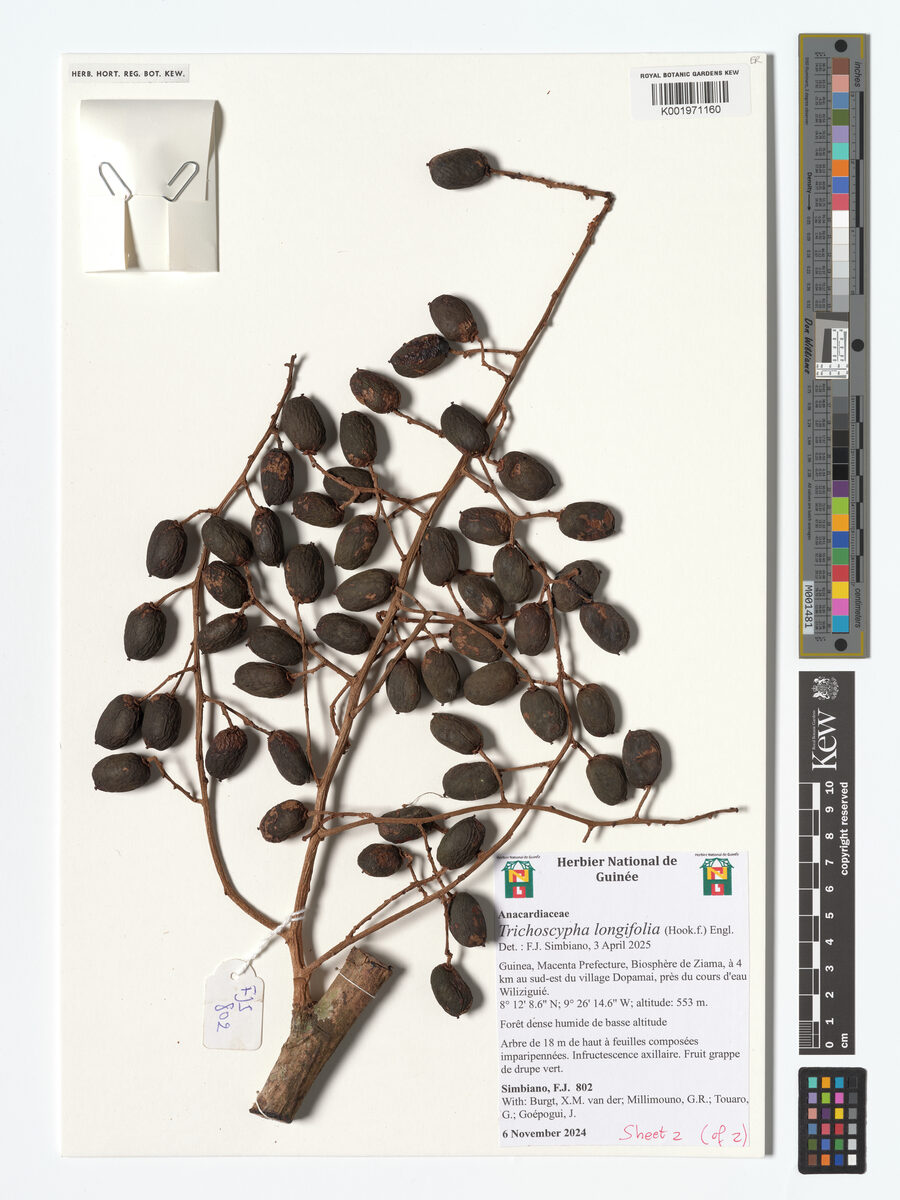
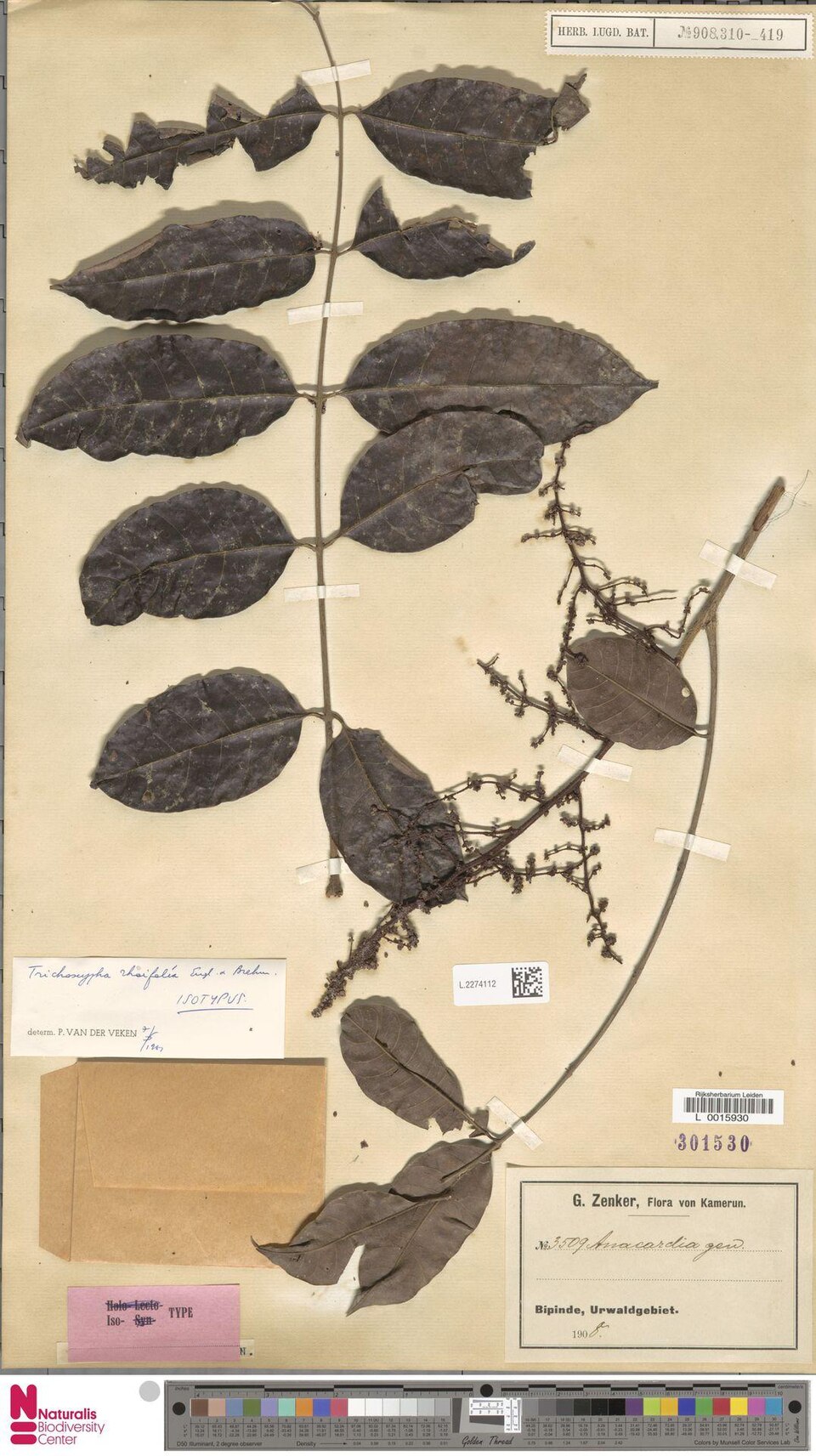
A tree. It grows 3-40 m high. The trunk is straight. It has buttresses. The bark is grey. The leaves are clustered near the tips of the branches. The leaves are compound with 2-5 pairs of leaflets along a stalk 5-35 cm long. They have rusty hairs. The leaflets are narrowly oval and 5-20 cm long by 2-8 cm wide. The flower panicles are in the axils of leaves near the ends of branches. The flowers are densely clustered along stalks 8-37 cm long. They are small and yellowish green. The fleshy fruit are oval and 0.5-1.5 cm long. The seed hangs from the end.
Edible Uses
The ripe fruits are eaten fresh or dried. The seeds and nuts are edible. The fruit is especially popular with children.
Traditional Uses
The fruit are eaten when ripe. They can be dried.
This uses section is brief — help expand it
Medicinal Uses
An oleoresin is obtained in abundance from the stems. It is recommended for the treatment of syphilitic ulcers. The finely ground bark is ingested as a treatment for children's thrush A decoction of the bark is used as a fever bath, an infusion is used for washing ulcers. The inner bark is used to dress cuts, wounds and sores, and to treat snakebite. An unspecified part of the plant is used a purgative. A tea made from the flowers is used by elderly persons experiencing painful urination.
Distribution
It is a tropical plant. It grows in the rainforest and in the savanna.
Where It Grows
Amazon, Belize, Bolivia*, Brazil, Central America, Colombia, Costa Rica, Ecuador*, French Guiana, Guianas, Guyana, Honduras, Mexico, Nicaragua, Panama, Paraguay, Peru, South America, Suriname, Trinidad-Tobago, Vanuatu, Venezuela,
Cultivation
Prefers a sunny position. Young plants grow away quickly and can easily reach a height of 3 metres within 2 years. A dioecious species, both male and female forms need to be grown if fruit and seed are required.
Propagation
Seed - best sown as soon as it is ripe in a partially shaded position in a nursery seedbed. A high germination rate can be expected, with the seed sprouting within 15 - 30 days. When the seedlings are 4 - 6cm tall, pot them up into individual containers and they should be ready to plant out 4 - 5 months later.
Other Uses
The heartwood is a uniform, pale pink to golden-brown colour, often stained by oily exudations; it is clearly demarcated from the thin layer of lighter coloured sapwood. The wood is of fine to medium texture; fairly lustrous, the grain fairly straight. It is light in weight, soft, with moderate mechanical properties and of low durability with a low resistance to wood eating organisms. It works easily with all hand and machine tools, planes easily and finishes smoothly, turns and bores satisfactorily, nails and screws well, with good holding powers, polishes well, slices and peels satisfactorily. The wood is used intensively in the manufacture of toys, plywood, light wooden crates and boxes, inexpensive furniture, wood carvings, wooden soles, broom handles etc. A fast-growing and very adaptable tree that is a natural pioneer in its own range, it also provides an edible fruit that is eagerly sought by the native fauna. It makes a good choice as a pioneer species when re-establishing native woodland, especially in the moister soils.
Other Information
The fruit are especially eaten by children. It is a cultivated plant.
Synonyms
Also Known As
Acorga-yek, Camboata, Caobina, Cedrillo, Cupuba, Duka, Fresno, Fruta de pombo, Guapiruva, Huiracaspi, Isaparitsi, Jobillo, Jobo, Karanu, Nemee, Ngy re, Ook doka, Pau-pombo, Peoto-de-pomba, Piojo, Sachi chu'pi, Tapiriba, Tapiriri, Waramia, Weti-oedoe, Wiracaspi.
References (22)
- Andel T. van, Non-timber forest products of the North-West District of Guyana. Part 2. A Field Guide. Tropenbos-Guyana Programme. p 245
- Bendezu, Y. F., 2018, Arboles nativos de lad Region Ucayali. Instituto Nacional de Innovacion Agraria. p 41
- Bioversity New World Fruits Database
- Condit, R., et al, 2011, Trees of Panama and Costa Rica. PrincetonField Guides. p 36
- Flores, Y., 2018, Arboles nativos de la Region Ucayili. Estacion Experimental Agragia Pucallpa. Pucallpa Peru, 375 p. p 41
Show all 22 references Hide references
- Fouqué, A. 1972. Espèces fruitières d'Amérique tropicale. Institut français de recherches fruitierès outre-mer (ifac)
- Grandtner, M. M., 2008, World Dictionary of Trees. Wood and Forest Science Department. Laval University, Quebec, Qc Canada. (Internet database http://www.wdt.qc.ca)
- Grandtner, M. M. & Chevrette, J., 2013, Dictionary of Trees, Volume 2: South America: Nomenclature, Taxonomy and Ecology. Academic Press p 655
- http://floradobrasil.jbrj.gov.br/jabot/floradobrasi
- Janick, J. & Paul, R. E. (Eds.), 2008, The Encyclopedia of Fruit & Nuts. CABI p 36
- Kermath, B. M., et al, 2014, Food Plants in the Americas: A survey of the domesticated, cultivated and wild plants used for Human food in North, Central and South America and the Caribbean. On line draft. p 856
- Kew Plants of the World Online
- Philips, O., 1992, The potential for harvesting fruits in tropical rainforests: new data from Amazonian Peru. Biodiversity and Conservation 2, 18-38
- Poset, D. A., 2002, Kayapo Ethnoecology and Culture. Routledge
- Reis, S. V. and Lipp, F. L., 1982, New Plant Sources for Drugs and Foods from the New York Botanical Garden herbarium. Harvard. p 165
- Roa, J. A. G. & Boada, D. S. G., 2018, Fundación para el Fortalecimiento de la Fruticultura y Plantas Alimenticias no Convencionales en Colombia.
- Segura, S. et al, 2018, The edible fruit species in Mexico. Genet Resour Crop Evol (2018) 65:1767–1793
- Torre, de la L., et al, 2008, Enciclopedia de las Plantas Útiles del Ecuador. Herbario QCA. Pontificia Universidad Católica del Ecuador. p 162
- van Andel, T.R., 2000, Non-timber forest products of the North-West District of Guyana Part I Tropenbos-Guyana Series 8a
- Vasquez, R. and Gentry, A. H., 1989, Use and Misuse of Forest-harvested Fruits in the Iquitos Area. Conservation Biology 3(4): 350f
- Woodson, R. E. et al, 1967, Flora of Panama. Part 6. Family 101. Anacardiaceae. Annals of the Missouri Botanical Gardens, Vol. 54, No. 3 p 361 (Drawing)
- www.colecionandofrutas.org