Trichoscypha longifolia
(Hook. f.) Engl.
Dologa-chango
gbif· cc-by
Royal Botanic Gardens, Kew
gbif· cc-by
Royal Botanic Gardens, Kew
gbif· cc-by-nc-nd
Ehoarn Bidault
Description
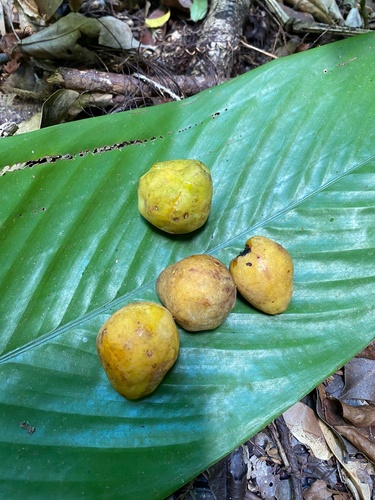
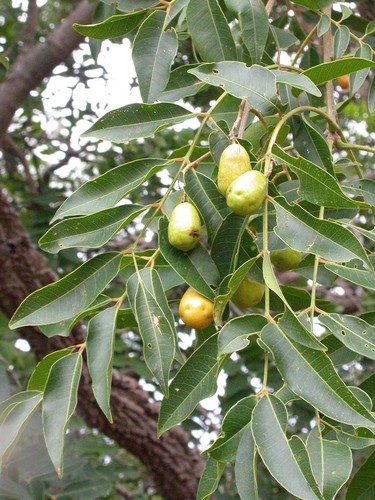
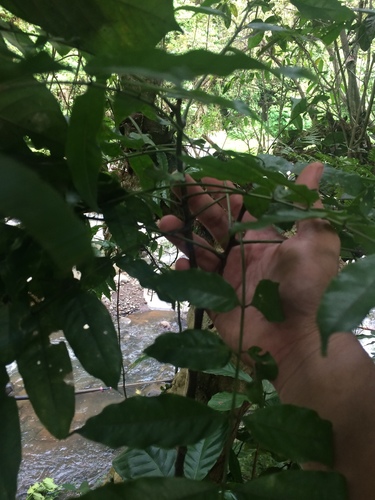
A tree. It grows 16 m high. It has a clean trunk and no buttresses. The fruit are in grape-like clusters. They have a sap that blackens and stains. The seed kernels are oily and edible.
Edible Uses
The fruit and seed kernels are eaten; both fruit and seeds/nuts are sold locally.
Medicinal Uses
The bark turns black when boiled, and the liquor is used as an antiseptic wash for sores and wounds. The leaves are applied as a healing poultice on ulcers.
Distribution
A tropical plant. It grows in the forest in West Africa.
Where It Grows
Africa, Central Africa, Congo R, Gabon, Guinea, Guinée, Liberia, Sierra Leone, West Africa,
Cultivation
A dioecious species, both male and female forms need to be grown if fruit and seed are required.
Other Uses
The bark exudes a clear, sticky, pungent resin which becomes black on exposure. This can stain hands and clothing and is difficult to remove even by petrol solvent. The fruit yields a similar watery resinous sap that blackens and stains. The fruits are in grape-like clusters, each about 25mm long. The wood is greyish to greenish yellow and somewhat variegated. The grain is fairly straight; texture fine. The wood is lustrous and has no distinct odour or taste. It is heavy, hard, tough and strong, and somewhat splintery. It is not easy to work when dry, but takes a fine polish. It is used for planks and construction in local house building
Other Information
It is sold locally.
Synonyms
Also Known As
Blimah, Dologa-chango
References (10)
- Burkill, H. M., 1985, The useful plants of west tropical Africa, Vol. 1. Kew.
- Dalziel, J. M., 1937, The Useful plants of west tropical Africa. Crown Agents for the Colonies London.
- Jardin, C., 1970, List of Foods Used In Africa, FAO Nutrition Information Document Series No 2.p 165
- JSTOR Global Plants edible
- Menninger, E.A., 1977, Edible Nuts of the World. Horticultural Books. Florida p 55 (As Sorindeia longifolia)
Show all 10 references Hide references
- Nkeoua, G. & Boundzanga, G. C., 1999, Donnees sur les produits forestieres non ligneux en Republique du Congo. FAO. p 38
- Peters, C. R., O'Brien, E. M., and Drummond, R.B., 1992, Edible Wild plants of Sub-saharan Africa. Kew. p 53
- Raponda-Walker, A & Sillans, R., 1961, Les Plantes Utiles du Gabon. Editions Paul Lechevalier, Paris. p 61
- Wickens, G.E., 1995, Edible Nuts. FAO Non-wood forest products. FAO, Rome. p 108
- World Checklist of Useful Plant Species 2020. Royal Botanic Gardens, Kew