Trichoscypha arborea
(A. Chev.) A. Chev.
Bush bon-bon
gbif· cc-by-nc-nd
Ehoarn Bidault
gbif· cc-by-nc-nd
Tariq Stévart
gbif· cc-by-nc-nd
Ehoarn Bidault
Description
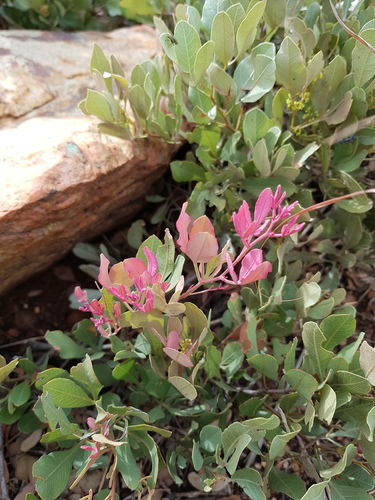
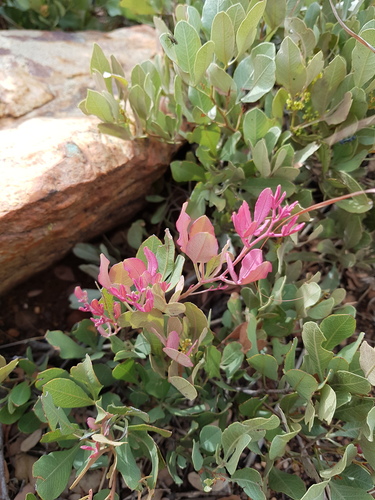
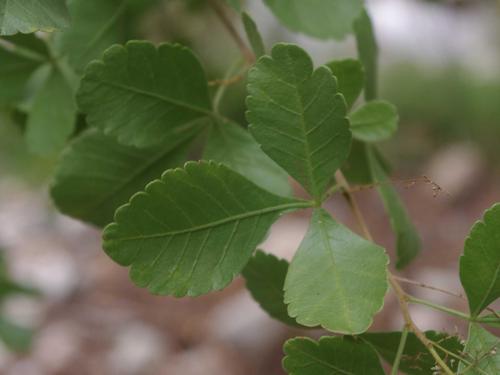
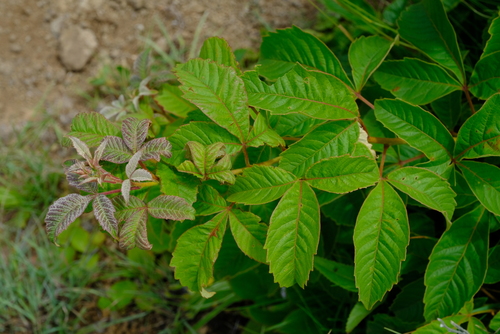
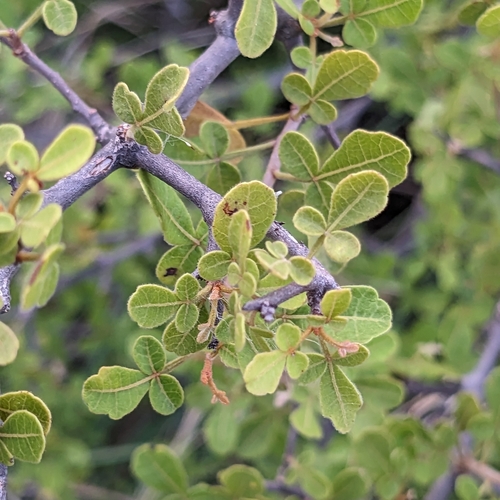
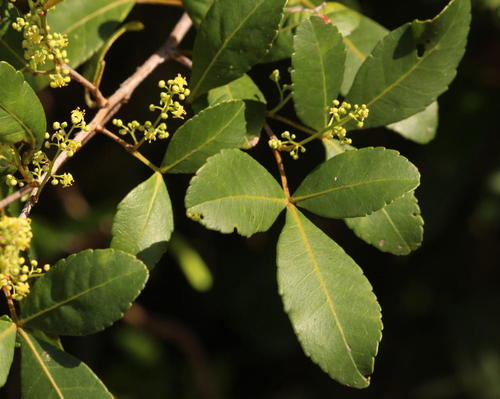
A tree. It grows 30 m high. The trunk is straight and 1 m around. It has small buttresses. The leaves are compound with leaflets along the stalk. There are 6-8 pairs of leaflets. They are oblong to narrowly oval. They are 25 cm long by 8 cm wide. The leaves tend to be clustered near the ends of small branches. The flowering shoots are 80 cm long. They have reddish hairs. The fruit are narrowly oval and 2.5 cm long. They are red and sweet.
Edible Uses
Fruit - raw. A sweetish edible pulp that is a bit fibrous around the seed. The mean weight of a fruit is 45g, with about 80% of a sweet pulp. The red fruit is an ellipsoid drupe 20 - 25mm long and 15 - 20mm in diameter with a sweetish, yellow flesh.
Traditional Uses
The fruit is juicy and is eaten raw and used for juice.
This uses section is brief — help expand it
Medicinal Uses
The bark contains a resin which is used to prevent miscarriage and in the treatment of amenorrhoea, diarrhoea and dysentery.
Distribution
A tropical plant. It grows in the evergreen rain-forest.
Where It Grows
Africa, Benin, Cameroon, Central Africa, Congo R, Côte d'Ivoire, Ghana, Ivory Coast, Liberia, Nigeria, Sierra Leone, Togo, West Africa,
Cultivation
Prefers a moist but freely draining soil. A dioecious species, both male and female forms need to be grown if fruit and seed are required.
Propagation
Seed - best sown as soon as it is ripe, but some seed will still germinate after 3 years. Germination commences after 20 - 56 days, with up to 80 - 90% of the seed sprouting. Seedlings develop a dark red taproot with slender lateral roots; the first 5 - 10 leaves of seedlings are simple, the first compound leaves not developping until 6 - 12 months after germination.
Other Uses
The bark contains resin which is suitable for vanish production and for medicinal purposes. The heartwood is variable in colour, from pinkish grey to reddish brown or yellowish brown with a green-pinkish tinge, often with darker streaks; it is distinctly demarcated from the greyish sapwood. The grain is often interlocked; texture rather fine and even; the wood is lustrous, odourless and tasteless when dry. The wood is moderately heavy; hard; tough; moderately durable, with an expected outdoor service life of 8 - 15 years; it is liable to attacks by Lyctus borers, termites and marine borers. The drying characteristics are satisfactory, although the rates of shrinkage may be considerable. The wood is not difficult to saw and work, but has a tendency to develop rough surfaces. It is used for hut-construction, canoes and planks. It is also carved into fetish masks, etc. It is suitable for light flooring, joinery, interior trim, furniture, cabinet work, musical instrument, pestles, toys, novelties, veneer, plywood, hardboard and particle board. It is recorded to have some industrial importance in the production of paper pulp, alone or in a mixture with other woods.
Production
In Congo fruit are produced May to October.
Other Information
It is sold locally.
Synonyms
Also Known As
Alakui, Alekouli, Allahia, Anaku, An-thanka, Ekong, Gbeh, Kpomaluwei, Mongolia, Ndabo, Ndrakou, Wuinto
References (14)
- Abbiw, D.K., 1990, Useful Plants of Ghana. West African uses of wild and cultivated plants. Intermediate Technology Publications and the Royal Botanic Gardens, Kew. p 48
- Awodoyin, R.O., Olubode, O.S., Ogbu, J.U., Balogun, R.B., Nwawuisi, J.U. and Orji, K.O., 2015, Indigenous Fruit Trees of Tropical Africa: Status, Opportunity for Development and Biodiversity Management. Agricultural Sciences, 6, 31-41 (As Trichoscypha ferruginea)
- Billong Fils, P. E., et al, 2020, Ethnobotanical survey of wild edible plants used by Baka people in southeastern Cameroon. Journal or Ethnobiology and Ethnomedicine. 16:64 p 9
- Burkill, H. M., 1985, The useful plants of west tropical Africa, Vol. 1. Kew.
- Dalziel, J. M., 1937, The Useful plants of west tropical Africa. Crown Agents for the Colonies London.
Show all 14 references Hide references
- Diop, A. l., et al, 2021, Cultural importance of wild edible plants in three sympatric communities: Agni, Akyé and Gwa in the Department of Alépé (Southeast of Côte d’Ivoire). Ethnobotany Research and Applications 22:35. p
- INFOODSUpdatedFGU-list.xls
- JSTOR Global Plants edible
- Moutsambote, J., 1996, Vegetation forestiere et plantes alimentaires de la region de la Sangha. Chp. 11 of Bien Manger et Bien Vivre. ORSTOM p 119 (As Trichoscypha ferruginea)
- Nkeoua, G. & Boundzanga, G. C., 1999, Donnees sur les produits forestieres non ligneux en Republique du Congo. FAO. p 38
- Peters, C. R., O'Brien, E. M., and Drummond, R.B., 1992, Edible Wild plants of Sub-saharan Africa. Kew. p 53
- Savill, P. S. & Fox, J. E. D., Trees of Sierra Leone. p 39
- Vivien, J., & Faure, J.J., 1996, Fruitiers Sauvages d'Afrique. Especes du Cameroun. CTA p 32
- World Checklist of Useful Plant Species 2020. Royal Botanic Gardens, Kew