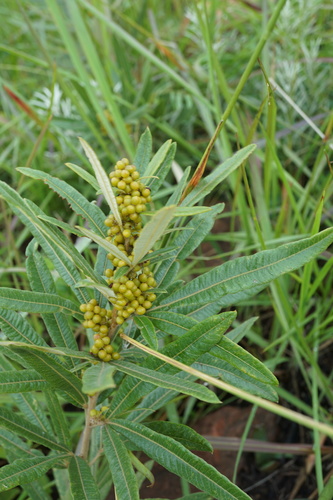
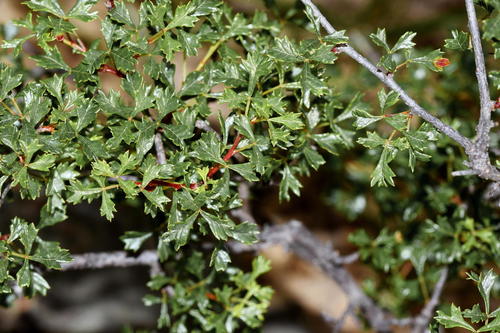
Trichoscypha lucens
Oliv.
wikimedia· cc0
Wikimedia Commons - Engl. and Brehmer
Description
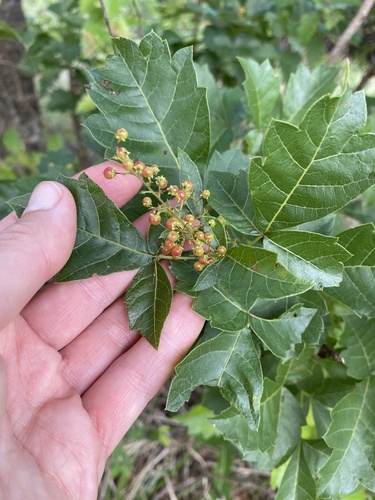
A shrub or small tree. It grows 6.5 m high or can be 25 m high. The trunk can be 15-35 cm across.
This description is brief — help expand it
Edible Uses
Fruit - raw. The pulp is sweet when ripe and is sometimes eaten. The fruit is an ovoid drupe 15 - 20mm long, 10 - 15mm in diameter with red hairs.
Traditional Uses
The fruit pulp is sweet when ripe and can be eaten.
This uses section is brief — help expand it
Medicinal Uses
The plant (part not specified) is used in the treatment of costal pains and stiff-neck.
Known Hazards
It is believed that the leaves of this tree can cause an allergic rash when touched. So people are advised not to keep this tree near their homes.
Distribution
A tropical plant. It grows in closed forest in West Africa.
Where It Grows
Africa, Central African Republic, CAR, Côte d'Ivoire, Ghana, Guinea, Guinée, Ivory Coast, Kenya, Liberia, Mozambique, Nigeria, Uganda, West Africa, Zambia, Zimbabwe,
Other Uses
The bark exudes a dirty orange-yellow resin with an aromatic smell. The wood is strong, tough and durable. It is used for making canoes, tool handles, knife and sword sheaths and is sawn into planks. The wood is carved into fetish masks.
Synonyms
Also Known As
Anonkoya, Daokro
References (8)
- Abbiw, D.K., 1990, Useful Plants of Ghana. West African uses of wild and cultivated plants. Intermediate Technology Publications and the Royal Botanic Gardens, Kew. p 48 (As Trichoscypha oba)
- Aubrev., 1934, Bull. Soc. Bot. France 81:648 (As Trichoscypha oba)
- Breteler, F. J., 2004, The genus Trichoscypha (Anacardiaceae) in Lower Guinea and Congolia: A synoptic revision. ADANSONIA, sér. 3 • 2004 • 26 (1) : 97-127
- Burkill, H. M., 1985, The useful plants of west tropical Africa, Vol. 1. Kew. (Also as Trichoscypha oba)
- Ferns, Useful Tropical Plants.
Show all 8 references Hide references
- Irvine, 1961, (As Trichoscypha oba)
- JSTOR Global Plants edible (As Trichoscypha oba)
- World Checklist of Useful Plant Species 2020. Royal Botanic Gardens, Kew