Annona rensoniana
(Standl.) H. Rainer
Membranous rollinia, Renson annona
iNaturalist· cc-by-nc-sa
(c) Mateo Hernandez Schmidt, some rights reserved (CC BY-NC-SA), uploaded by Mateo Hernandez Schmidt
iNaturalist· cc-by-nc
(c) Arturo C. Mendoza, some rights reserved (CC BY-NC), uploaded by Arturo C. Mendoza
iNaturalist· cc-by-nc-sa
(c) Mateo Hernandez Schmidt, some rights reserved (CC BY-NC-SA), uploaded by Mateo Hernandez Schmidt
Description
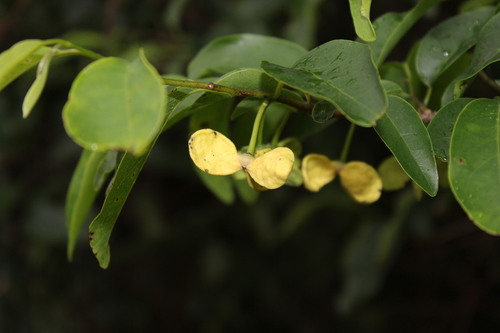
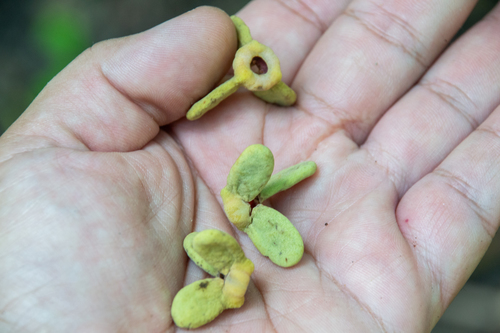
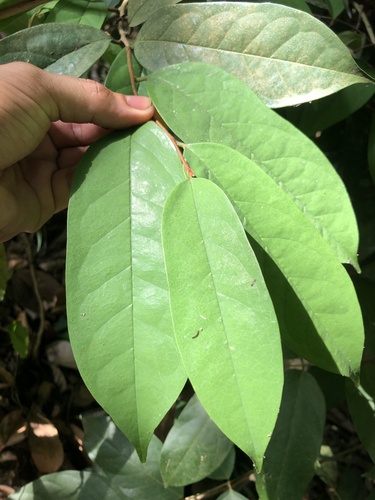
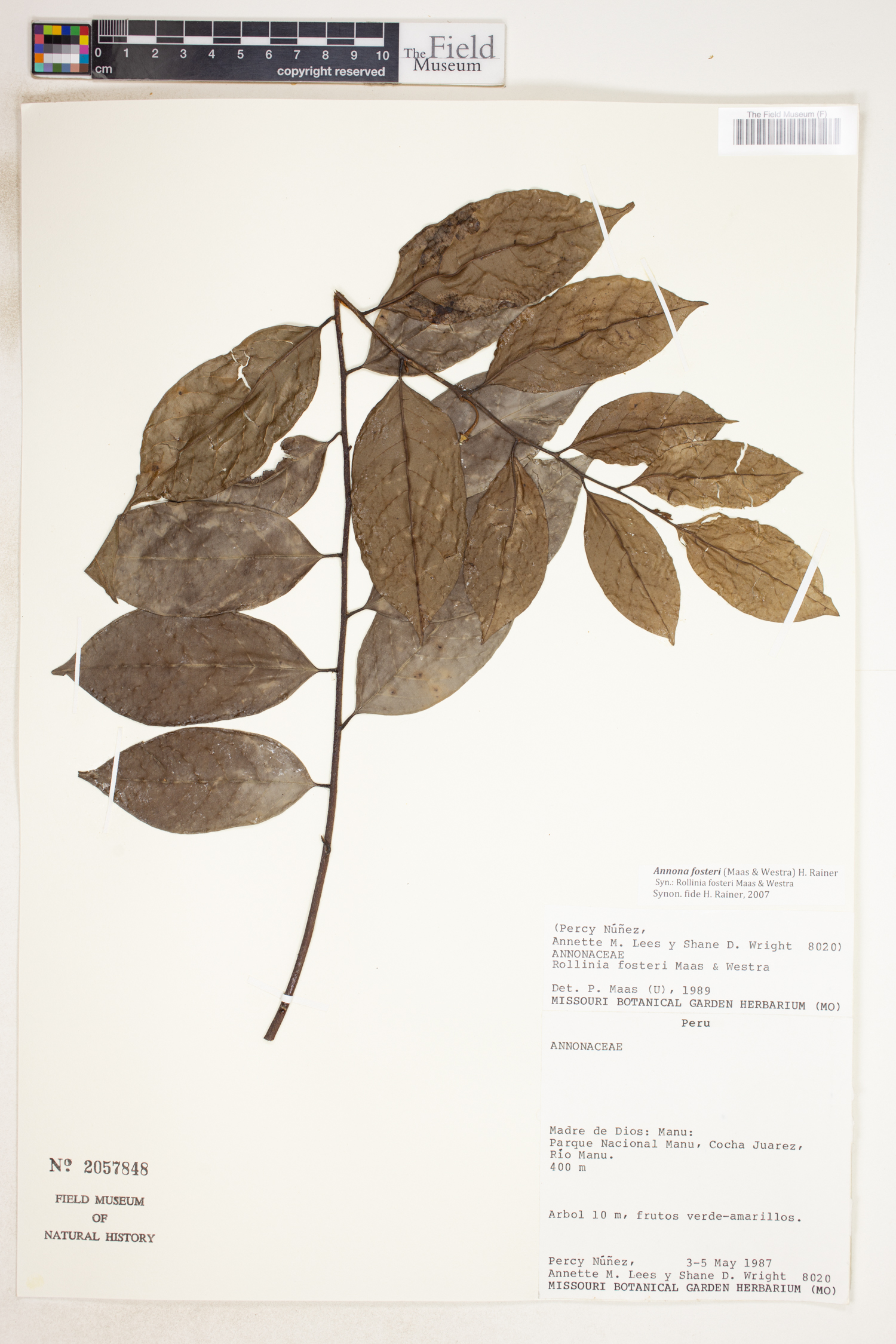
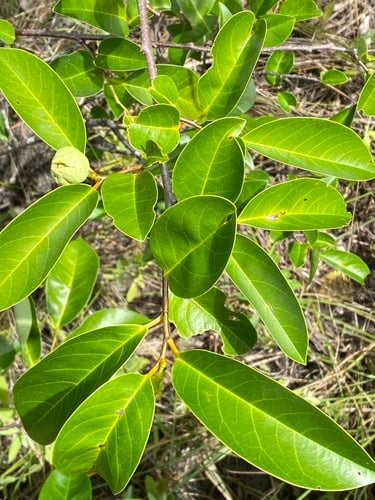
A tree. It grows 3-15 m tall. The trunk is 40 cm across. The young twigs have rusty hairs. The leaves are grey-green above and pale green underneath. They are 12-25 cm long by 6-11 cm wide. They often have white hairs. The flowers are near the leaves in groups of 1-4. The flowers are green to brown. The fruit is almost round and 2-5 cm across. They are yellow.
Edible Uses
Fruit - raw. The pulp is eaten. The yellow, subglobose fruit is 20 - 50cm in diameter, composed of around 70 - 100 carpels each containing a large seed.
Traditional Uses
The ripe fruit are eaten.
This uses section is brief — help expand it
Distribution
It is a tropical plant. It grows between 350-1,580 m above sea level. It grows in forests.
Where It Grows
Andes, Belize, Central America, Colombia, Costa Rica, El Salvador, Guatemala, Honduras, Mexico, Nicaragua, North America, Panama, South America,
Cultivation
The plant grows well in wet soils and also in soils rich in calcium.
Other Uses
The wood is sometimes used. Used for making ox yokes.
Production
Flowers occur throughout the year and fruit from April to December.
Synonyms
Also Known As
Anon de monte, Chulumuyu, Churumuyo
References (11)
- Grandtner, M. M., 2008, World Dictionary of Trees. Wood and Forest Science Department. Laval University, Quebec, Qc Canada. (Internet database http://www.wdt.qc.ca) (As Rollinia membranacea)
- Grandtner, M. M. & Chevrette, J., 2013, Dictionary of Trees, Volume 2: South America: Nomenclature, Taxonomy and Ecology. Academic Press p 39
- Hermandez Bermejo, J.E., and Leon, J. (Eds.), 1994, Neglected Crops. 1492 from a different perspective. FAO Plant Production and Protection Series No 26. FAO, Rome. p14 (As Rollinia rensoniana)
- Kew Plants of the World onLine
- Lopez-Diago, D. & Garcia, N., 2021, Wild edible fruits of Colombia. Biota ColomBiana 22 (2) p 29
Show all 11 references Hide references
- Maas, P. J. M., et al, 1992, Rollinia, Flora Neotropica Vol. 57. p 124 (As Rollinia membranacea)
- Murillo-A, J., 2001, Annonaceae of Colombia. Biota Colombiana 2(1): 49-51 (As Rollinia membranacea)
- Piedra-Malagón, E. M. et al, 2022, Edible native plants of the Gulf of Mexico Province. Biodiversity Data Journal 10: e80565 p 9
- Reis, S. V. and Lipp, F. L., 1982, New Plant Sources for Drugs and Foods from the New York Botanical Garden herbarium. Harvard. p 71 (As Rollinia rensoniana)
- Roa, J. A. G. & Boada, D. S. G., 2018, Fundación para el Fortalecimiento de la Fruticultura y Plantas Alimenticias no Convencionales en Colombia.
- Segura, S. et al, 2018, The edible fruit species in Mexico. Genet Resour Crop Evol (2018) 65:1767–1793 (As Rollinia rensoniana)