Manilkara bidentata
(A. DC.) A. Chev.
Common balata, Bulletwood
iNaturalist· cc-by-nc
(c) Nils Servientis - Bivouac Naturaliste, some rights reserved (CC BY-NC), uploaded by Nils Servientis - Bivouac Naturaliste
iNaturalist· cc-by-nc
(c) Nils Servientis - Bivouac Naturaliste, some rights reserved (CC BY-NC), uploaded by Nils Servientis - Bivouac Naturaliste
iNaturalist· cc-by-nc
(c) Nils Servientis - Bivouac Naturaliste, some rights reserved (CC BY-NC), uploaded by Nils Servientis - Bivouac Naturaliste
Summary
Source: WikipediaManilkara bidentata is a species of flowering plant in the family Sapotaceae, native to a large area of northern South America, Central America and the Caribbean. Common names include bulletwood, balatá, ausubo, massaranduba, quinilla, and (ambiguously) "cow-tree".
Description
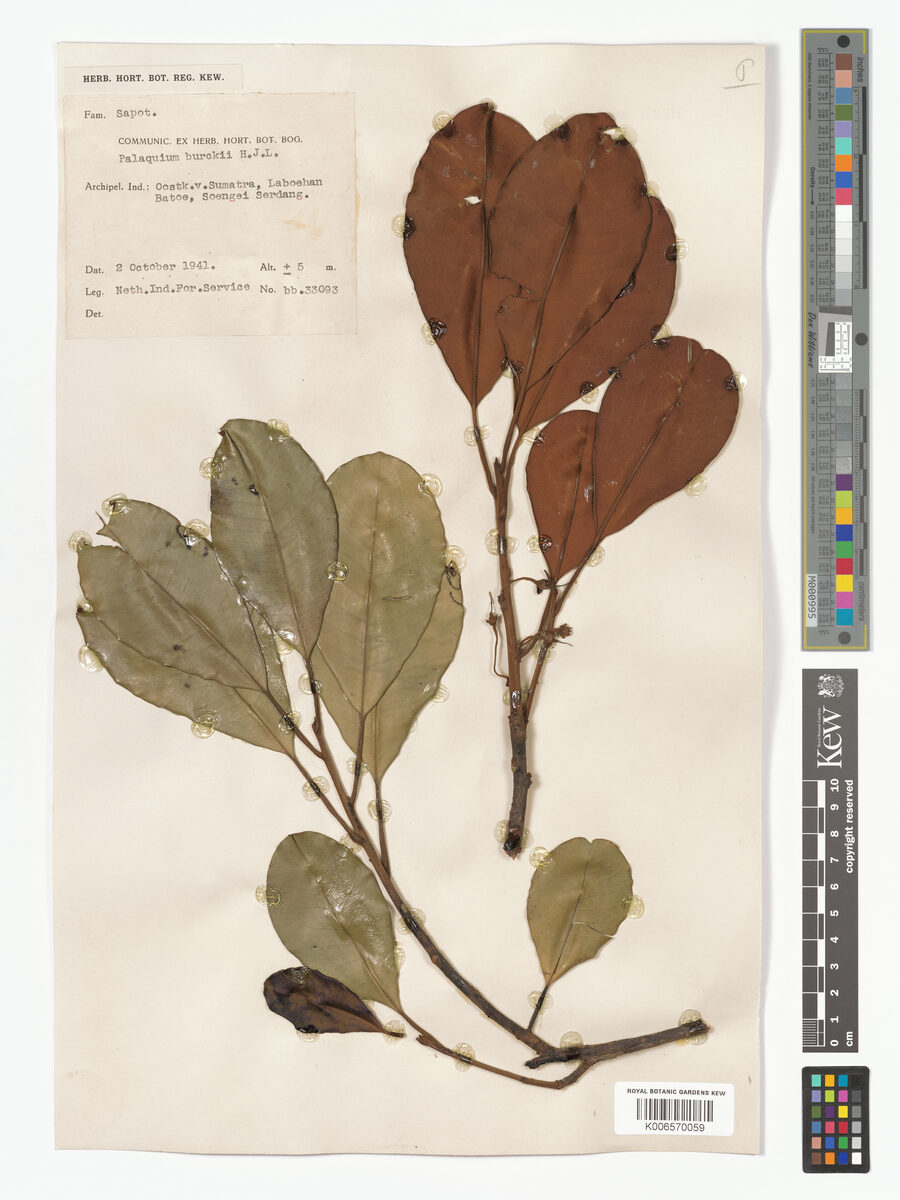
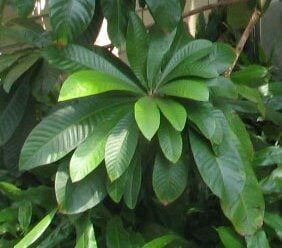
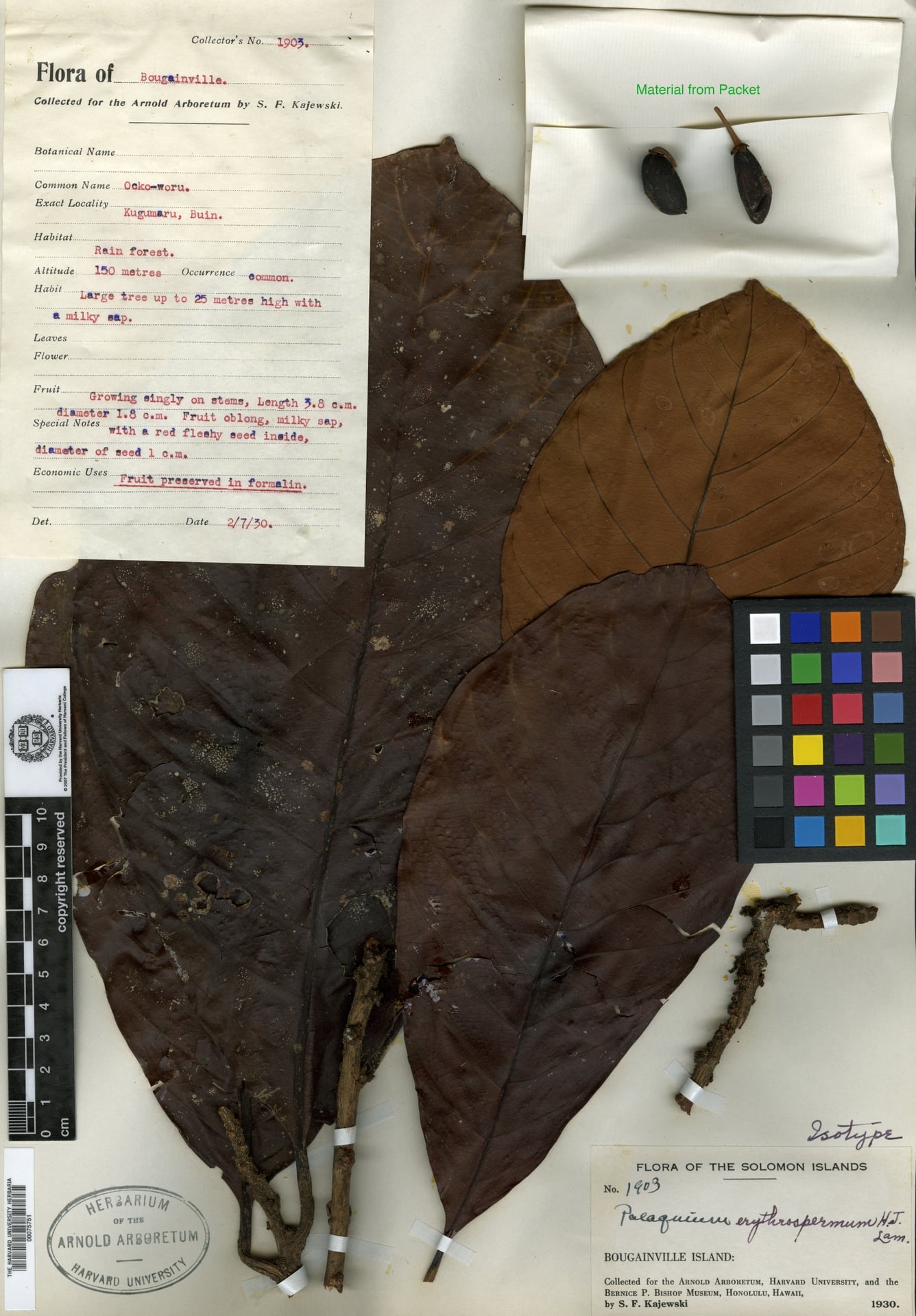
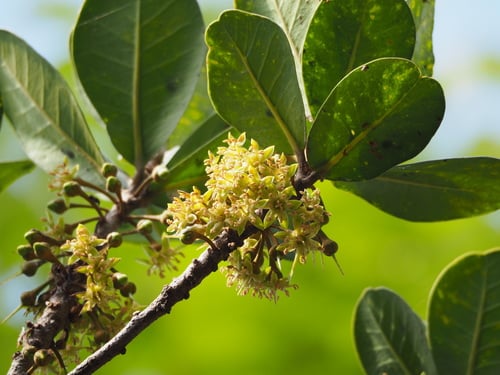
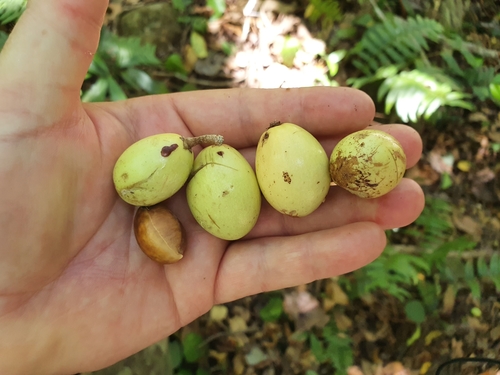
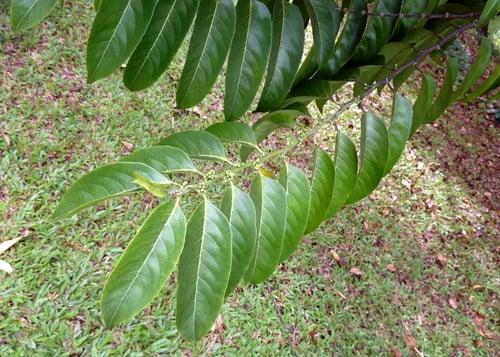
A large tree. It can grow 35 m high. The trunk is large and there are small buttresses. The bark has vertical cracks. The leaves are simple and alternate. The leaves are tightly bunched at the ends of the branches. The leaves are 6-30 cm long by 3-12 cm wide. The leaves are shiny green above and light brown underneath. The flowers are small and white or yellow. The fruit are round with a small tip. They turn orange when ripe. There are one or two seeds. The are dark brown with a light brown patch. They are a flattened oval shaped and 2 cm long by 1 cm wide.
Edible Uses
The globose berries, about 25mm in diameter, are eaten raw. Each berry typically contains a single shiny black seed surrounded by sweet, gummy pulp. The sap from closely related species can serve as a substitute for cow's milk — it has the consistency and taste of cream — but overindulgence can cause severe constipation.
Traditional Uses
The latex has been used for chewing gum.
This uses section is brief — help expand it
Medicinal Uses
A latex extracted from the stems is used as an effective treatment for dysentery, as is a decoction made by combining the bark with the barks of Hymenaea sp. and Humiria sp. The bark alone is emetic. The leaves are used to treat paralysis of the limbs.
Distribution
It is a tropical plant. It grows in wet lowland forest. It can be on sand or clay soil.
Where It Grows
Amazon, Antilles, Barbados, Bolivia, Brazil, Central America, Colombia, Dominican Republic, Ecuador, Guadeloupe, French Guiana, Guianas, Guyana, Haiti, Martinique, Mexico, North America, Panama, Peru, Puerto Rico, South America, St Lucia, Suriname, Trinidad & Tobago, Venezuela, West Indies,
Cultivation
Plants are grown from seed.
Propagation
Seed has very short viability and is best sown as soon as it is ripe. Germination rates can be as low as 10%, though sowing immediately after harvest can achieve up to 60% germination. Germination is slow and irregular, with some seed not germinating until the second year. Seeds should be sown in moist leaves, as they are not capable of emerging from the soil unaided. Bare root plantings after one year in the nursery have met with limited success; seedlings left too long in beds develop a problematic taproot. In the wild, seedlings tolerate heavy shade and herbaceous cover, averaging about 12cm height at the end of the first year and around 4.5 metres after five years. Artificial regeneration is best achieved by direct sowing of fruits or transplanting potted seedlings. In experimental work at the Institute of Tropical Forestry, seeds sown in nursery beds in full sun grew twice as tall after 10 months as those grown in shade. Direct out-planting of potted seedlings under heavy shade in limestone forest on the north coast showed survival rates greater than 90% after 10 months, though seedlings proved sensitive to drought, wilting and yellowing after prolonged dry periods.
Other Uses
The tree is tapped for its milky latex, the source of balata gum — a non-elastic rubber similar to gutta-percha. Some trees have been tapped productively for over 25 years. The latex is coagulated by fire or dried in the sun and then fashioned into souvenirs and novelties. When the sap is allowed to evaporate and coagulate, it produces a hard, durable material that can be made flexible again with hot water without becoming brittle. Before synthetic materials became widespread, this gutta-percha was used extensively as insulation for electrical wiring and underwater telegraph cables, and was moulded into ornate furniture, pistol grips, acid-resistant containers, and mourning jewellery. It served as the core of golf balls and remains in use in dentistry as a temporary tooth filling and as a filling material inside tooth restorations, valued for its bio-inertness. The heartwood is light red when freshly cut, darkening to reddish brown with purplish shades upon drying; it is clearly distinguished from the 4–6cm wide band of whitish to pale brown sapwood. The wood is finely and uniformly textured, usually straight-grained though sometimes interlocked, and occasionally has a characteristic odour when fresh that disappears on drying. It is very hard, very heavy, tough, strong, elastic, and highly durable even in contact with soil, resisting fungi, dry wood borers, and termites, though it is susceptible to marine borers. It seasons slowly with a high risk of checking and distortion, and is poorly stable in service once dry. The wood has a fairly high blunting effect, making stellite-tipped and tungsten carbide tools advisable. It rates excellent for boring, fair for planing, and poor for turning, but finishes very well. Pre-boring is required for nailing and screwing; gluing is suitable for internal purposes only and requires care due to the wood's density. Commercially valued for its resemblance to mahogany, it is widely used for railway sleepers, bridging, heavy construction, furniture, turnery, flooring, violin bows, and billiard cues. Its strength and high wear resistance also suit it for textile and pulp mill equipment, and its excellent steam-bending properties make it appropriate for boat frames and other bent work.
Production
In Guyana flowering is May to August and fruiting February to April. Trees only fruit well every 3 - 4 years.
Other Information
Fruit are enjoyed. Eating too many can cause constipation.
Notes
There are about 70 Manilkara species. 30 in America, 20 in Africa and 15 in Asia/Pacific.
Synonyms
Also Known As
Ausubo, Balata, Balata burue, Barata, Bully tree, Burue, Iriar, Kobero, Kube arau, Maparajuba, Nispero, Nispero de montana, Parata, Purue, Quinilla
References (14)
- Condit, R., et al, 2011, Trees of Panama and Costa Rica. Princeton Field Guides. p 438
- Grandtner, M. M., 2008, World Dictionary of Trees. Wood and Forest Science Department. Laval University, Quebec, Qc Canada. (Internet database http://www.wdt.qc.ca)
- Grandtner, M. M. & Chevrette, J., 2013, Dictionary of Trees, Volume 2: South America: Nomenclature, Taxonomy and Ecology. Academic Press p 380
- Johnson, M. and Colquhoun, A., 1996, Preliminary Ethnobotanical Survey of Kurupukari: An Amerindian Settlement of Central Guyana. Economic Botany, Vol. 50, No. 2, pp. 182-194
- Kermath, B. M., et al, 2014, Food Plants in the Americas: A survey of the domesticated, cultivated and wild plants used for Human food in North, Central and South America and the Caribbean. On line draft. p 519
Show all 14 references Hide references
- Lopez-Diago, D. & Garcia, N., 2021, Wild edible fruits of Colombia. Biota ColomBiana 22 (2) p 51
- Maas, P.J. M., Non-Timber Forest Products of the North-West District of Guyana Part 2. The 85 most important NTFP species. p 150
- Polak, A. M., 1992, Major Timber Trees of Guyana. A Field Guide. Tropenbos Series 2. Wageningen. p 127
- Reis, S. V. and Lipp, F. L., 1982, New Plant Sources for Drugs and Foods from the New York Botanical Garden herbarium. Harvard. p 234
- Roa, J. A. G. & Boada, D. S. G., 2018, Fundación para el Fortalecimiento de la Fruticultura y Plantas Alimenticias no Convencionales en Colombia.
- Segura, S., et al, 2018, The edible fruit species in Mexico. Genet Resour Crop Evol (2018) 65:1767–1793
- Vael, L., 2015, Ethnobotanical study of the plant use in the natural landscape of two mestizo communities in the Ucayali region of the Peruvian Amazon. Universiteit Gent.
- Van Roosmalen, M.G.M., & Garcia, O. M., 2000, Fruits of the Amazonian Forest. Part 2: Sapotaceae. Acta Amazonica 30(2): 187-290
- www.colecionandofrutas.org