Chrysophyllum oliviforme
L.
Satin-Leaf, Damson-plum
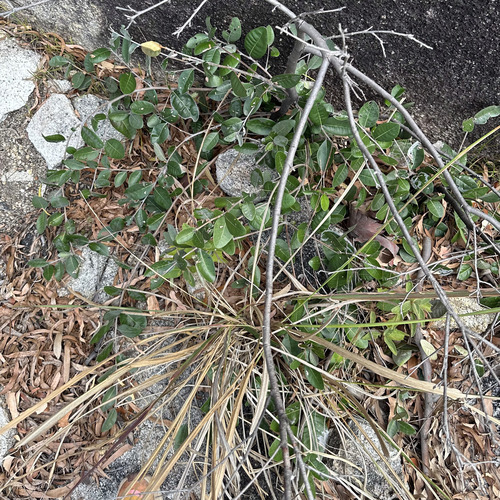
iNaturalist· cc-by-nc
(c) John L. Clark, some rights reserved (CC BY-NC), uploaded by John L. Clark
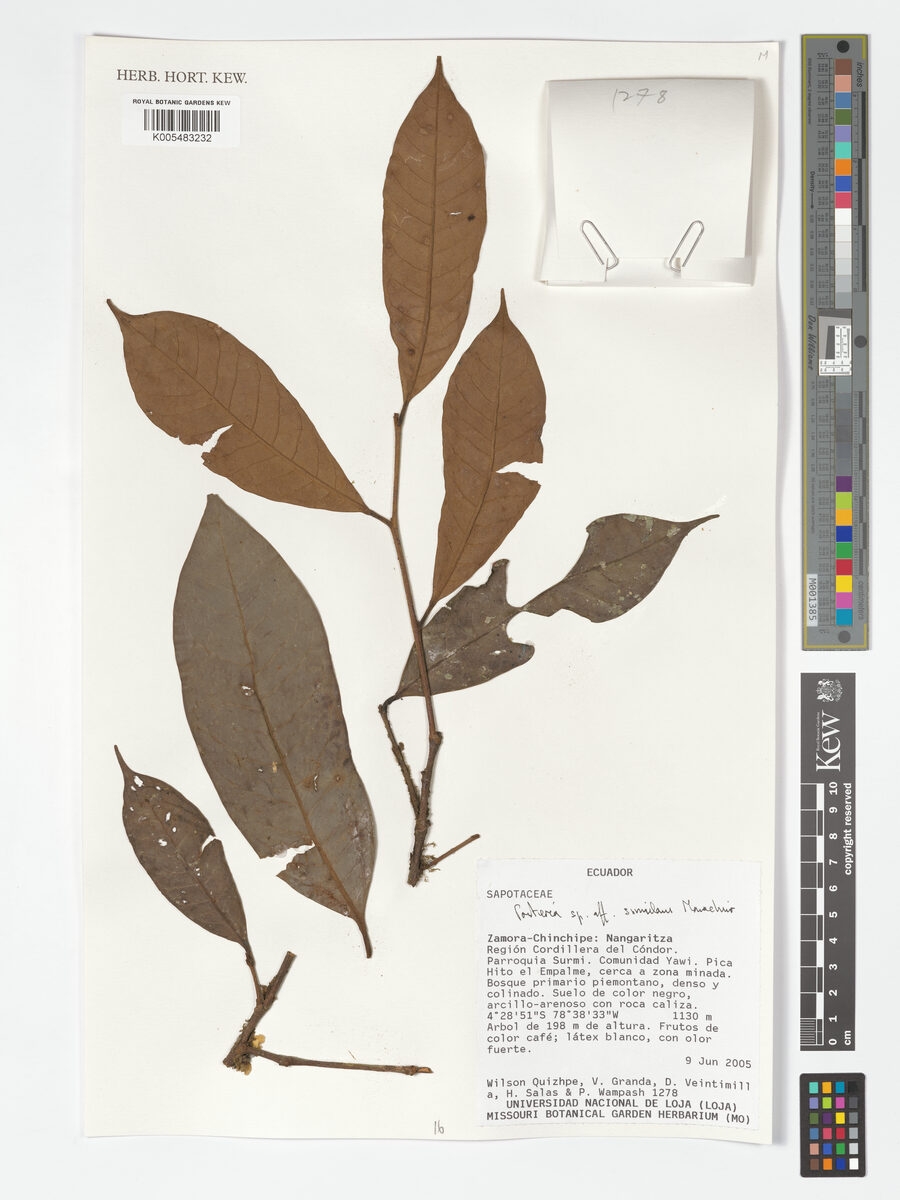
iNaturalist· cc-by
(c) Jay Horn, some rights reserved (CC BY), uploaded by Jay Horn
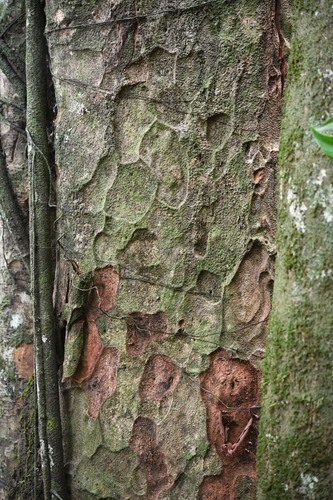
iNaturalist· cc-by-nc
(c) Martin Reith, some rights reserved (CC BY-NC), uploaded by Martin Reith
Summary
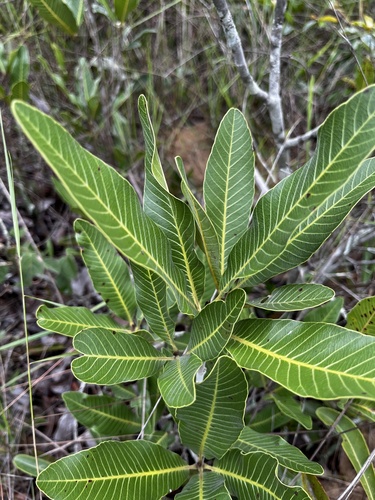
Source: WikipediaChrysophyllum oliviforme, commonly known as the satinleaf, is a medium-sized tree native to Florida, the Bahamas, the Greater Antilles, and Belize. It is also known as damson plum, wild star-apple and saffron-tree. It gets the name "satinleaf" from the distinctive colors of the leaves. The top of the leaf is dark green while the bottom is light brown or copper. This distinctive look makes it a very aesthetically pleasing tree that is commonly used as an ornamental in yards and public spaces.
Description
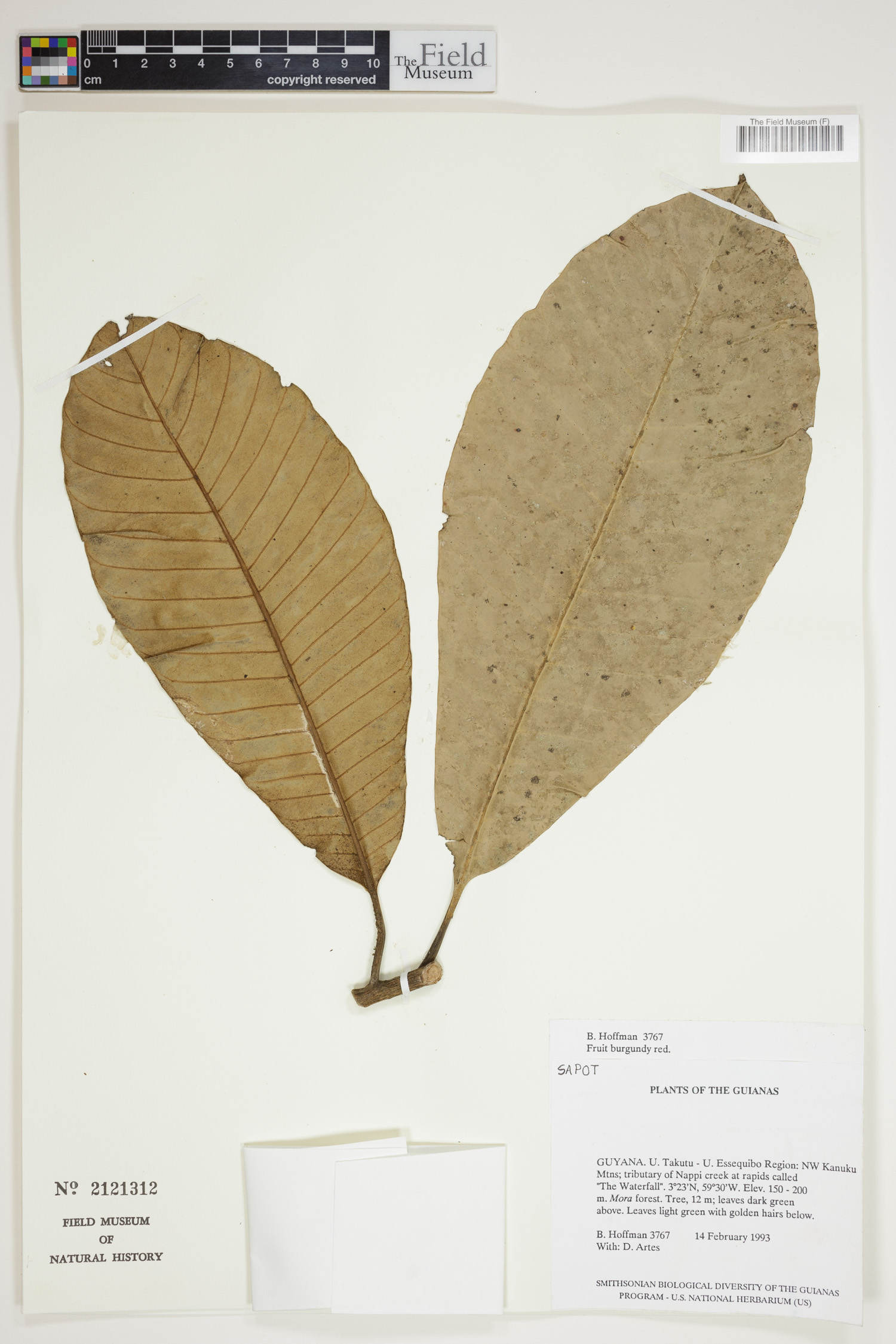
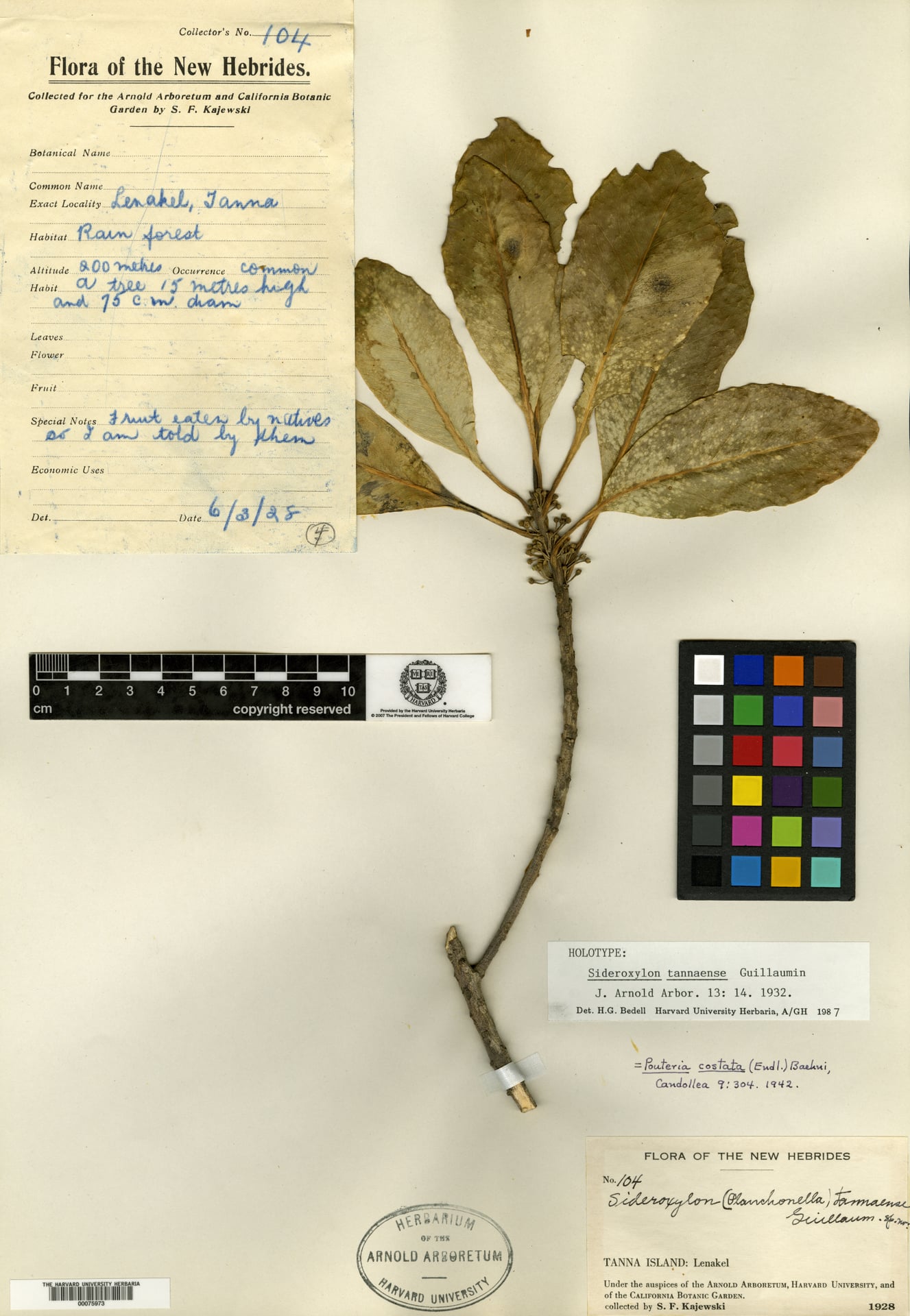
A tree that loses its leaves. It grows 10 m high. The bark is thin and reddish-brown. It is scaly. The tree yields a milky latex when cut. The leaves are small and leathery. They are 10 cm long and oval. They are dark green and shiny on top. They have velvety rusty hairs underneath. The fruit are olive-like and dark purple. They have one seed. The seed is narrowly oval and 1.5 cm long. The pulp is fairly dry. It is edible.
Edible Uses
Fruit - raw or cooked. The lavender pulp of the small dark purple fruit is sweet, melting and has a good flavour. The skin is gummy or rubbery with a milky sap. The pulp has an agreeable flavour, similar to dates. The fruit also makes an excellent jelly. The fruit is 13 - 27mm long and contains a single hard seed.
Traditional Uses
The fruit are eaten raw or cooked. They can be used for jelly. The latex is chewed as a chewing gum.
This uses section is brief — help expand it
Distribution
A tropical plant. It suits hot humid climates. In Jamaica it grows up to 900 m above sea level.
Where It Grows
Antilles, Asia, Australia, Bahamas, Belize, Caribbean, Central America, Colombia, Cuba, Dominican Republic, Ecuador, Haiti, Hawaii, Hispaniola, India, Indonesia, Jamaica, Malaysia, North America, Pacific, Philippines, Puerto Rico, SE Asia, South America, Sri Lanka, USA, West Indies*,
Cultivation
Plants are grown from seed. They can also be grown by cuttings and air-layering.
Propagation
Seed - takes up to six weeks to germinate. Greenwood cuttings. Air layering. Grafting.
Other Uses
The light brown wood is hard, very heavy, and strong. It is used for construction, beams, and doors and windows.
Production
It is fairly slow growing.
Other Information
It is cultivated.
Notes
There are about 80-150 Chrysophyllum species. They are mostly in tropical America. There are 44 species in tropical America.
Synonyms
Also Known As
Buah susu, Caimitillo de perro, Date-plum, Olive plum, Saffron-tree, Satin-leaf, Satinleaf, Wild star-apple
References (28)
- Barwick, M., 2004, Tropical and Subtropical Trees. A Worldwide Encyclopedic Guide. Thames and Hudson p 113
- Bodkin, F., 1991, Encyclopedia Botanica. Cornstalk publishing, p 256
- Burkill, I.H., 1966, A Dictionary of the Economic Products of the Malay Peninsula. Ministry of Agriculture and Cooperatives, Kuala Lumpur, Malaysia. Vol 1 (A-H) p 540 (As Chrysophyllum monopyrenum)
- Coronel, R.E., 1982, Fruit Collections in the Philippines. IBPGR Newsletter p 9
- Ekman Herbarium records Haiti
Show all 28 references Hide references
- Facciola, S., 1998, Cornucopia 2: a Source Book of Edible Plants. Kampong Publications, p 227
- Grandtner, M. M., 2008, World Dictionary of Trees. Wood and Forest Science Department. Laval University, Quebec, Qc Canada. (Internet database http://www.WDT.QC.ca)
- Hedrick, U.P., 1919, (Ed.), Sturtevant's edible plants of the world. p 189 (As Chrysophyllum monopyrenum)
- Hibbert, M., 2002, The Aussie Plant Finder 2002, Florilegium. p 67
- Krishen P., 2006, Trees of Delhi, A Field Guide. DK Books. p 53
- Macmillan, H.F. (Revised Barlow, H.S., et al) 1991, Tropical Planting and Gardening. Sixth edition. Malayan Nature Society. Kuala Lumpur. p 297 (As Chrysophyllum monopyrenum)
- Meerman, J. C., 1993, Provisional Annonated Checklist of the Flora of the Shipstern Nature Reserve. Occasional Papers of The Belizean Natural History. Vol.2, Nos. 1-11 p 26
- Melander, M., 2007, Endangered plants on the market in Havana City, Cuba. Uppsala University, Sweden p 19
- Miguel, E., et al, 1989, A checklist of the cultivated plants of Cuba. Kulturpflanze 37. 1989, 211-357
- Milow, P., et al, 2013, Malaysian species of plants with edible fruits or seeds and their evaluation. International Journal of Fruit Science. 14:1, 1-27
- Morton,
- Plants of Haiti Smithsonian Institute http://botany.si.edu/antilles/West Indies
- Prodr. 49. 1788
- PROSEA (Plant Resources of South East Asia) handbook, Volume 2, 1991, Edible fruits and nuts.
- Recher, P, 2001, Fruit Spirit Botanical Gardens Plant Index. www.nrg.com.au/~recher/ seedlist.html p 1
- Reis, S. V. and Lipp, F. L., 1982, New Plant Sources for Drugs and Foods from the New York Botanical Garden herbarium. Harvard. p 234
- Sosef, M. S. M., Hong, L. T., & Prawirohatmodjo, S., (Eds.), 1998, Timber tree: Lesser-known timbers. Plant Resources of South-East Asia, 5(3), p 140
- Staples, G.W. and Herbst, D.R., 2005, A tropical Garden Flora. Bishop Museum Press, Honolulu, Hawaii. p 517 (Drawing)
- Syst. nat. ed. 10, 2:937. 1759
- Torre, de la, L., et al, 2008, Enciclopedia de las Plantas Útiles del Ecuador. Herbario QCA. Pontificia Universidad Católica del Ecuador. p 569
- USDA, ARS, National Genetic Resources Program. Germplasm Resources Information Network - (GRIN). [Online Database] National Germplasm Resources Laboratory, Beltsville, Maryland. Available: www.ars-grin.gov/cgi-bin/npgs/html/econ.pl (10 April 2000)
- Wiersema, J. H. & Leon, B., 2013, World Economic Plants. A Standard Reference CRC Press. 2nd Ed. p 173
- World Checklist of Useful Plant Species 2020. Royal Botanic Gardens, Kew