Leucaena trichandra
(Zucc.) Urban
Hairy stem lead tree
gbif· cc-by
Royal Botanic Gardens, Kew
gbif· cc-by
Royal Botanic Gardens, Kew
gbif· cc-by
Royal Botanic Gardens, Kew
Description
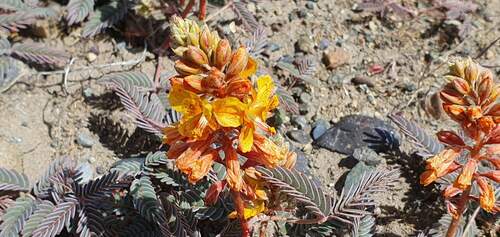
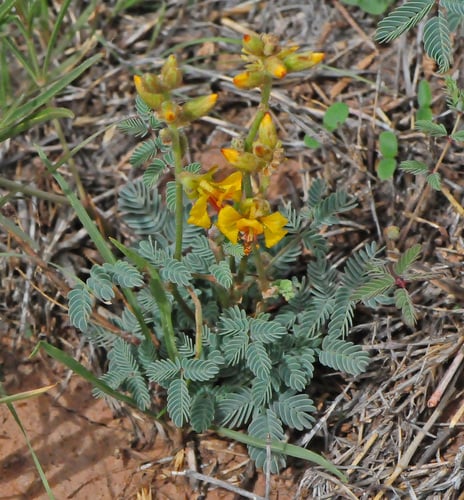
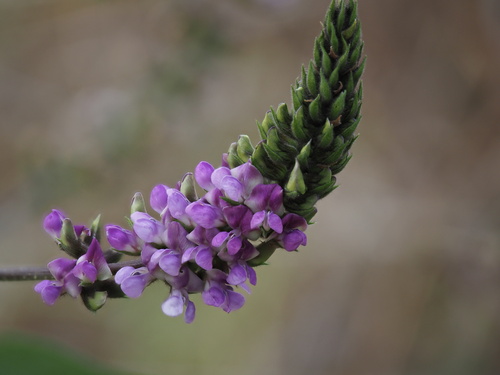
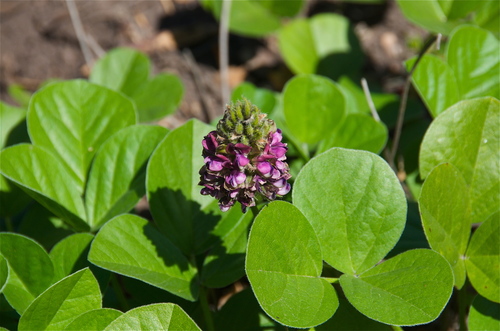
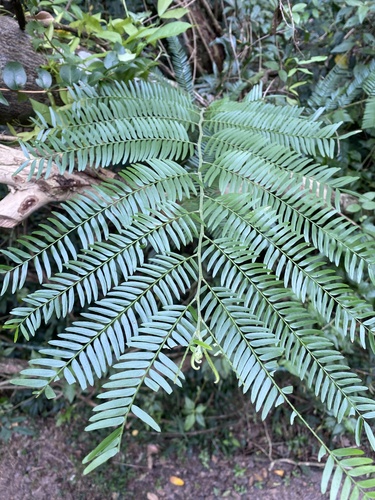
A shrub or small tree. It can be 2 m tall or up to 18 m tall. The trunk can be 50 cm across. The leaves are twice divided with 11-20 pairs of pinnae and leaflets 4-7 mm long. The flower heads are 7-10 mm across. The fruit are pods 7-11 cm long by 13-23 mm wide. The seeds are 3-4 mm wide.
Edible Uses
Leucaena species are grown for their variety of uses, including as green manure, a charcoal source, livestock fodder, and for soil conservation. The seeds (jumbie beans) can be used as beads. Leucaena planted for firewood on an area of 120 km2 (46 sq mi) will yield an energy equivalent of 1 million barrels of oil per year. Anthelmintic medicines are made from extracts of Leucaena seeds in Sumatra, Indonesia. Some species (namely Leucaena leucocephala) have edible fruits (as unripe) and seeds. The seeds of Leucaena esculenta (in Mexico called guaje or huaje) are eaten with salt in Mexico. In other species high levels of mimosine may lead to hair loss and infertility in non-ruminants.
Distribution
It is a tropical plant. It grows as an understorey trees in mid altitudes. It grows between 200-2,500 m above sea level. It is best in places where the average temperature is 17-22°C and an average rainfall of 1,000-1,800 mm per year.
Where It Grows
Africa, Asia, Australia, Belize, Central Africa, Central America, Congo, Costa Rica, El Salvador, Guatemala, Honduras, Indonesia, Mexico, Nicaragua, North America, SE Asia, Tanzania, USA,
Cultivation
Plants can be grown from seeds. The seeds can have a hard seed coat and should then be put in warm water and soaked for 12-24 hours.
Propagation
Seed - it has a hard seedcoat and may benefit from scarification before sowing to speed up germination. This can usually be done by pouring a small amount of nearly boiling water on the seeds (being careful not to cook them!) and then soaking them for 12 - 24 hours in warm water. By this time they should have imbibed moisture and swollen - if they have not, then carefully make a nick in the seedcoat (being careful not to damage the embryo) and soak for a further 12 hours before sowing. Cuttings of semi-ripe wood.
Other Uses
An attractive wood, it is hard, heavy and durable, but not available in sufficient quantities for commercial exploitation. It is used locally for heavy construction. The wood is used as a source of high quality poles and corner posts for house construction. The wood density varies with seed source. Wood from superior seed sources have average mean density of 0.7 and moderately high proportions of durable heartwood that forms rapidly. The wood is valued for firewood, which is rated as good quality and easy to split. Trees are commonly retained in cropping lands and have been used to provide shade in coffee plantations, often with species of Inga and Erythrina, and generally in frost-free highland-tropical locations. The lopped leaves and twigs can be applied as green manure.
Notes
Also as Mimosaceae.
Synonyms
Also Known As
Lobadaviyia, Quebracho, Shashi, Tze, Vainillo
References (3)
- Grandtner, M. M., 2008, World Dictionary of Trees. Wood and Forest Science Department. Laval University, Quebec, Qc Canada. (Internet database http://www.wdt.qc.ca)
- ILDIS Legumes of the World http:www:ildis.org/Legume/Web
- www.worldagroforestrycentre.org/treedb/