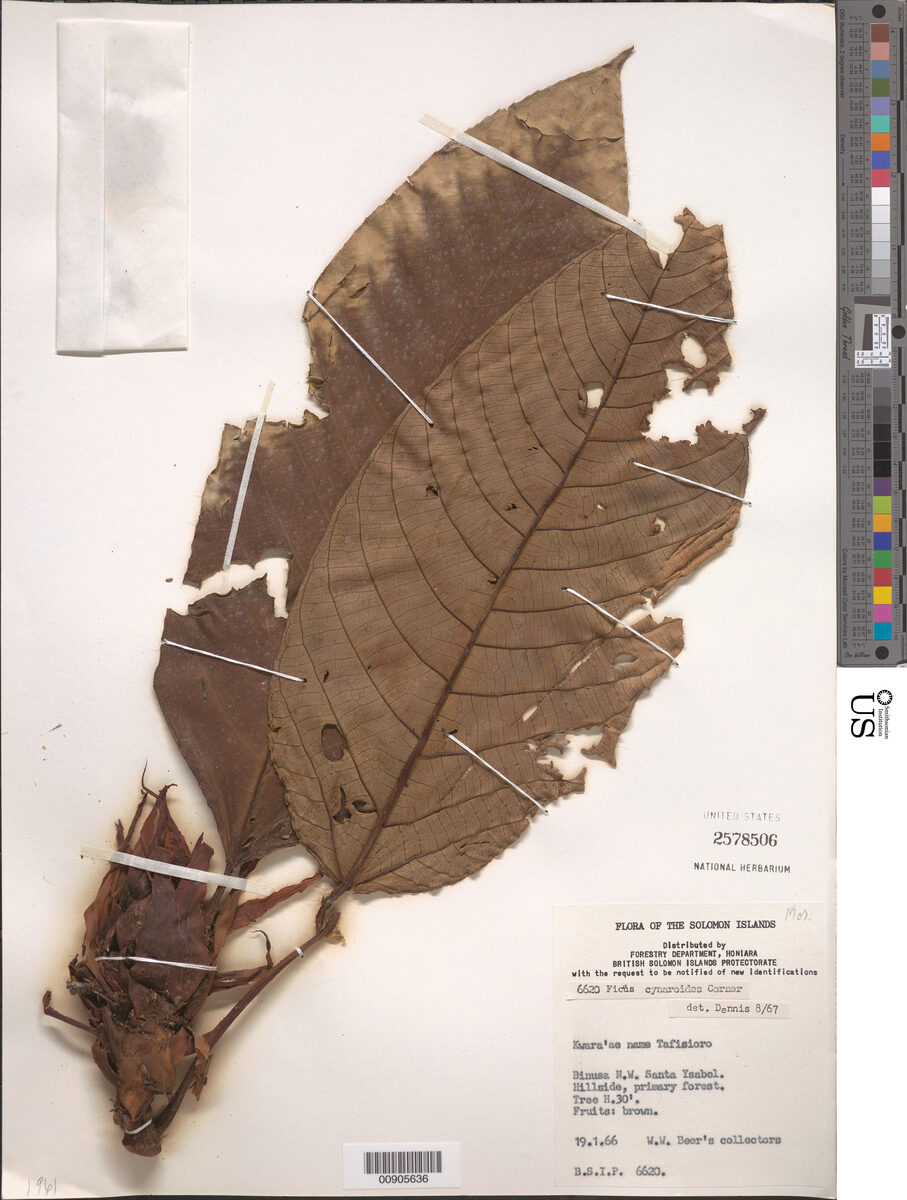
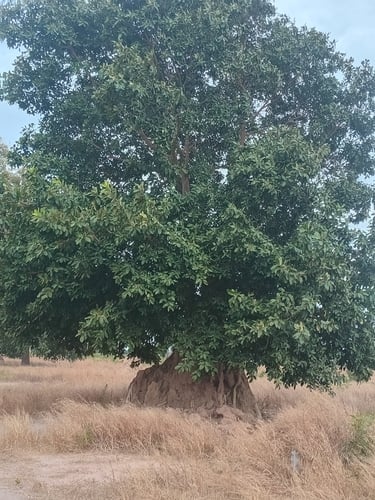
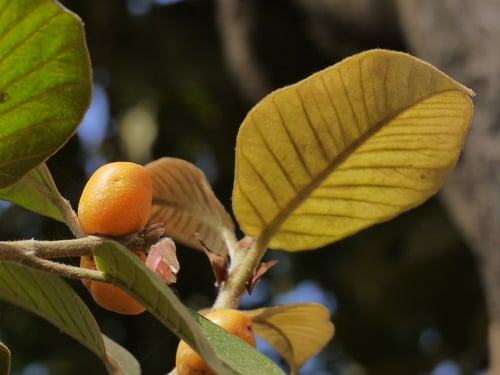
Ficus trigonata
L.
Black fig
iNaturalist· cc-by
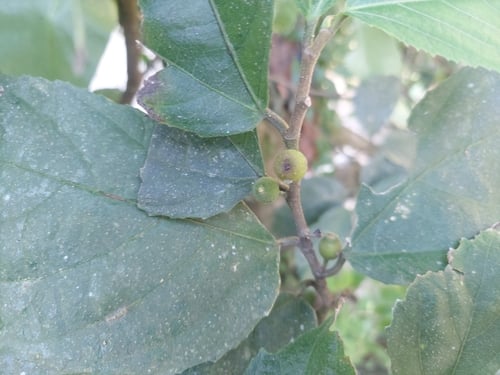
(c) Neptalí Ramírez Marcial, some rights reserved (CC BY), uploaded by Neptalí Ramírez Marcial
iNaturalist· cc-by
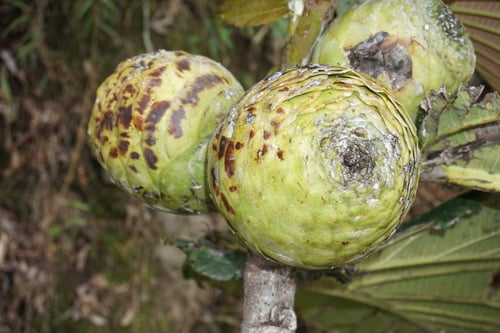
(c) Juan Antonino Sandoval, some rights reserved (CC BY), uploaded by Juan Antonino Sandoval
iNaturalist· cc-by-nc-sa
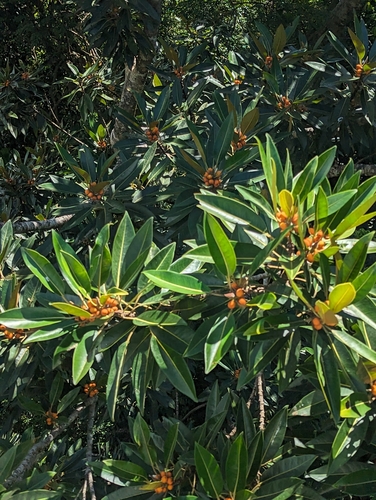
(c) Lauren Harter, some rights reserved (CC BY-NC-SA), uploaded by Lauren Harter
Summary
Source: WikipediaFicus trigonata is a species of tree in the family Moraceae. It is native to North America and South America.
Description
A fig. It is a strangler or a large tree. It can grow 30 m tall and be 4 m wide at the base due to buttresses and then with a trunk 8-0-150 cm wide. The buttressing roots can be 3 m tall. The leaf stalks are 2-5 cm long. The leaves are oval and 13-25 cm long by 7-10 cm wide. They are usually rounded at the base and taper to the tip. The figs are rounded and in pairs. They are 2-3 cm across. They are hairy and have red dots.
Edible Uses
The fruit are edible.
Distribution
It is a tropical plant.
Where It Grows
Antilles, Belize, Bolivia, Brazil, Caribbean, Central America, Colombia, Costa Rica, Cuba, Dominican Republic, Ecuador, El Salvador, Guatemala, Guianas, Guyana, Haiti, Honduras, Martinique, Mexico, Nicaragua, North America, Panama, Puerto Rico, South America, Suriname, Trinidad-Tobago, West Indies, Winward Is.,
Nutrition
| Part | Moisture | kJ | kcal | Protein | Vit A | Vit C | Iron | Zinc |
|---|---|---|---|---|---|---|---|---|
| Fruit | 0 | — | — | 5.6 | — | — | — | — |
Synonyms
Also Known As
Amate, Amate de corral, Chimon, Higo, Jaguey, Renaco
References (4)
- Grandtner, M. M., 2008, World Dictionary of Trees. Wood and Forest Science Department. Laval University, Quebec, Qc Canada. (Internet database http://www.wdt.qc.ca)
- Grandtner, M. M. & Chevrette, J., 2013, Dictionary of Trees, Volume 2: South America: Nomenclature, Taxonomy and Ecology. Academic Press p 257
- Kew Plants of the World Online
- Plants of Haiti Smithsonian Institute http://botany.si.edu/antilles/West Indies