Ficus aurea
Nutt.
Florida strangler fig
iNaturalist· cc-by-sa
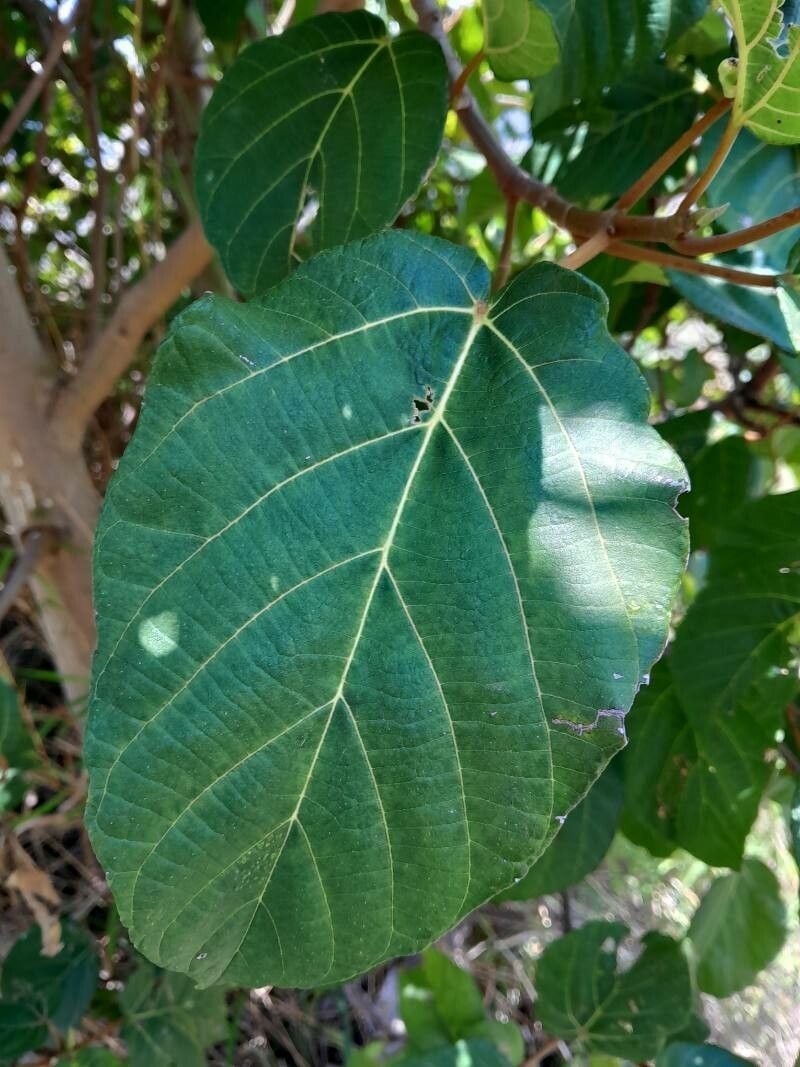
(c) Judy Gallagher, some rights reserved (CC BY-SA), uploaded by Judy Gallagher
iNaturalist· cc-by-nc
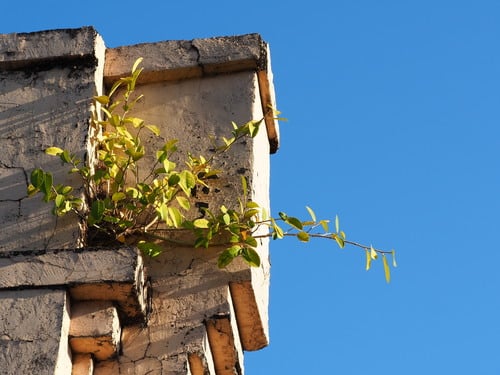
(c) woopla, some rights reserved (CC BY-NC)
Summary
Source: WikipediaFicus aurea, commonly known as the Florida strangler fig (or simply strangler fig), golden fig, or higuerón, is a tree in the family Moraceae that is native to the U.S. state of Florida, the northern and western Caribbean, southern Mexico and Central America south to Panama. The specific epithet aurea was applied by English botanist Thomas Nuttall who described the species in 1846. Ficus aurea is a strangler fig. In figs of this group, seed germination usually takes place in the canopy of a host tree with the seedling living as an epiphyte until its roots establish contact with the ground. After that, it enlarges and strangles its host, eventually becoming a free-standing tree in its own right. Individuals may reach 30 m (100 ft) in height. Like all figs, it has an obligate mutualism with fig wasps: figs are only pollinated by fig wasps, and fig wasps can only reproduce in fig flowers. The tree provides habitat, food and shelter for a host of tropical lifeforms including epiphytes in cloud forests and birds, mammals, reptiles and invertebrates. F. aurea is used in traditional medicine, for live fencing, as an ornamental and as a bonsai.
Description
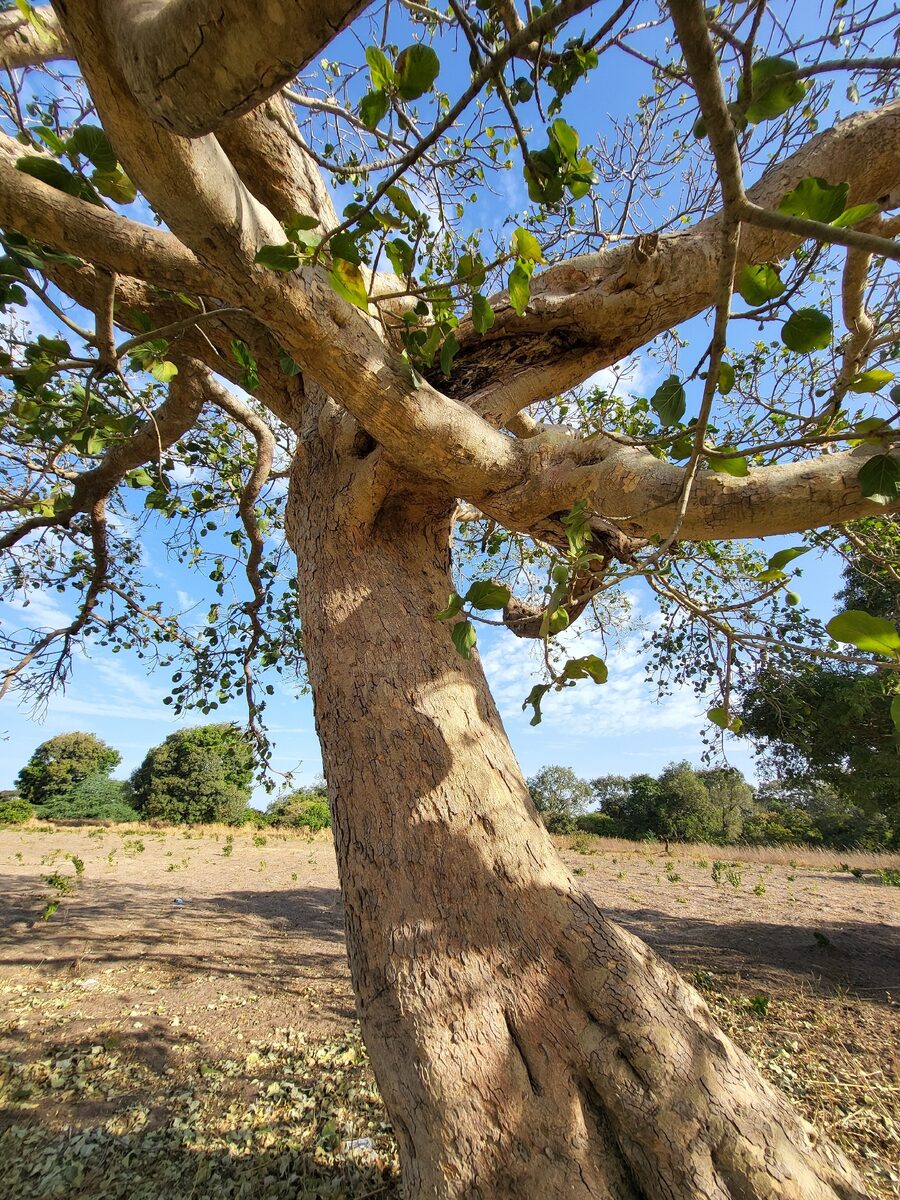
A fig. It is a tree. It germinates in the tops of trees and it grows attached to the trees until the roots contact the ground It strangles the tree becoming a free-standing tree. It can be 30 m tall. The size and shape of the leaves varies. They are usually 10 cm long. They can have a wedge shaped or heart shaped base. They are green and turn yellow when ripe. They can be 1 cm across.
Edible Uses
The fruit are edible.
Medicinal Uses
Ficus aurea, amongst other related Ficus species, has been a source of bark for preparing amate, the bark paper used for codices in the Mesoamerican civilizations. The oldest example dates back to 75 CE and was found in a shaft tomb culture site in Huitzilapa, Jalisco in Mexico. The fruit of Ficus aurea is edible and was used for food by the Native Americans and early settlers in Florida; it is still eaten occasionally as a backyard source of native fruit. The latex was used to make a chewing gum, and aerial roots may have been used to make lashings, arrows, bowstrings and fishing lines. The fruit was used to make a rose-coloured dye. F. aurea was also used in traditional medicine in The Bahamas and Florida. Allison Adonizio and colleagues screened F. aurea for anti-quorum sensing activity (as a possible means of anti-bacterial action), but found no such activity. Individual F. aurea trees are common on dairy farms in La Cruz, Cañitas and Santa Elena in Costa Rica, since they are often spared when forest is converted to pasture. In interviews, farmers identified the species as useful for fence posts, live fencing and firewood, and as a food species for wild birds and mammals. Ficus aurea is used as an ornamental tree, an indoor tree and as a bonsai. Like other figs, it tends to invade built structures and foundations, and needs to be removed to prevent structural damage. Although young trees are described as "rather ornamental", older trees are considered to be difficult to maintain (because of the adventitious roots that develop off branches) and are not recommended for small areas. However, it was considered a useful tree for "enviroscaping" to conserve energy in south Florida, since it is "not as aggressive as many exotic fig species," although it must be given enough space.
Distribution
It is a tropical plant.
Where It Grows
Bahamas, Belize, Caribbean, Central America, Costa Rica, Cuba*, Dominican Republic, El Salvador, Guatemala, Haiti, Honduras, Jamaica*, Mexico, Nicaragua, North America, Panama, USA, West Indies*,
Cultivation
An easily grown and very tolerant plant, it succeeds in full sun to partial shade. Succeeds in a range of well-drained soils from sandy to clay, including fairly acid or alkaline conditions. Plants are tolerant of occasional inundation of the soil. Moderately tolerant of salt-laden winds. Plants are very drought tolerant. Seeds germinate easily in the landscape allowing the tree to invade nearby land. Some care, therefore, needs to be taken that the species of wasp that fertilizes this plant is not introduced into areas where the plant is grown as an ornamental. A fast-growing tree. The plant produces surface roots that can lift sidewalks or interfere with mowing. When grown as an ornamental, the many slim but rigid trunks that are produced from the crown can become a maintenance headache as they roots need to be removed to keep a neat-looking landscape. The shiny, thick, dark green leaves create dense shade and the surface roots add to the problem of maintaining a lawn beneath this massive tree. The fruit drops and makes a mess beneath the tree. Fig trees have a unique form of fertilization, each species relying on a single, highly specialized species of wasp that is itself totaly dependant upon that fig species in order to breed. The trees produce three types of flower; male, a long-styled female and a short-styled female flower, often called the gall flower. All three types of flower are contained within the structure we usually think of as the fruit. The female fig wasp enters a fig and lays its eggs on the short styled female flowers while pollinating the long styled female flowers. Wingless male fig wasps emerge first, inseminate the emerging females and then bore exit tunnels out of the fig for the winged females. Females emerge, collect pollen from the male flowers and fly off in search of figs whose female flowers are receptive. In order to support a population of its pollinator, individuals of a Ficus spp. Must flower asynchronously. A population must exceed a critical minimum size to ensure that at any time of the year at least some plants have overlap of emmission and reception of fig wasps. Without this temporal overlap the short-lived pollinator wasps will go locally extinct.
Other Uses
A latex is obtained from the plant. It can be used as a masticatory. The heartwood is light brown, the sap-wood lighter. The wood is coarse-grained, compact, exceedingly light, soft, very weak, not durable. It is little, if at all, used - not even for fuel.
Synonyms
Also Known As
Amate, Higo
References (7)
- Ferns, Useful Tropical Plants
- Grandtner, M. M., 2008, World Dictionary of Trees. Wood and Forest Science Department. Laval University, Quebec, Qc Canada. (Internet database http://www.wdt.qc.ca)
- Kermath, B. M., et al, 2014, Food Plants in the Americas: A survey of the domesticated, cultivated and wild plants used for Human food in North, Central and South America and the Caribbean. On line draft. p 369
- Moerman, D. F., 2010, Native American Ethnobotany. Timber Press. p 233
- Piedra-Malagón, E. M., et al, 2022, Edible native plants of the Gulf of Mexico Province. Biodiversity Data Journal 10: e80565 p 25
Show all 7 references Hide references
- Plants of Haiti Smithsonian Institute http://botany.si.edu/antilles/West Indies
- Reis, S. V. and Lipp, F. L., 1982, New Plant Sources for Drugs and Foods from the New York Botanical Garden herbarium. Harvard. p 41